
 English
 Español
Top 7 Call Center Workforce Management Software Reviews
Find the best call center workforce management software reviews to compare features, usability, and integration for your contact center team.
Read More
Find the best quality assurance tools list for contact centers. Compare top QA platforms to improve agent performance and deliver better customer service.

A quality score is just a number. By itself, it doesn’t fix a broken process, help an agent grow, or improve a customer’s experience. The real value comes from what happens next. How do you turn that score into a meaningful coaching conversation or a targeted training session? Many contact centers struggle right here, collecting mountains of quality data that never translates into real action. This guide is designed to bridge that gap. We’ll move beyond simple evaluation and explore how to build a connected quality program. We’ll provide a comprehensive quality assurance tools list and show you how to choose a platform that turns insights into sustainable performance improvement.
At its core, contact center quality assurance (QA) software is a tool designed to help you monitor, evaluate, and improve customer interactions. Think of it as a system for creating consistency and making sure your agents are adhering to company standards. It moves your team beyond random spot-checks and into a structured process for reviewing calls, chats, and emails.
This software provides the framework for defining what a high-quality interaction looks like for your business. You can build scorecards, provide specific feedback, and track performance trends over time. This helps managers and QA specialists systematically review interactions to ensure every customer receives the same level of service and care. By centralizing all your quality efforts into one platform, it becomes much easier to spot patterns, identify opportunities for team-wide improvement, and deliver a better customer experience.
The most effective platforms don’t just score interactions; they help you build a Connected Quality Assurance program. This means linking quality data to other performance tools, giving you a complete view of your team's contributions. This holistic approach allows you to see how quality efforts influence everything from agent development to customer satisfaction, turning quality management from a simple task into a strategic advantage.
Beyond just maintaining standards, QA software gives you the insights needed to make meaningful improvements across your team. It helps you understand agent performance on a deeper level, pinpoint specific training needs, and refine your operational processes. For example, if you notice several agents are struggling with the same customer question, it’s a clear signal that you might need to update your knowledge base or provide targeted training on that topic.
This systematic evaluation is also crucial for enhancing the customer experience. When agents feel confident and supported with clear feedback, customers notice the difference. QA tools also help you track key performance metrics and ensure you're meeting compliance requirements, which is non-negotiable in many industries. It’s about creating a positive feedback loop that supports continuous improvement for your agents and delivers better outcomes for your customers.
When you start looking for quality assurance software, you’ll find the options are far from one-size-fits-all. The right platform depends on your goals, team structure, and how you plan to use quality insights. Generally, QA tools fall into three main categories: automated platforms that use AI, manual systems that facilitate human reviews, and integrated suites that connect quality data with performance improvement. Understanding these differences is the first step to choosing a tool that truly supports your team and your customers.
These tools are built for scale. Using artificial intelligence, they analyze 100% of your customer interactions, from calls to chats. The software automatically scores conversations, flags keywords, and gauges customer sentiment. This approach is powerful for processing huge volumes of data and identifying large-scale trends or compliance issues. While they generate a ton of data, the challenge is often translating those insights into specific, actionable feedback for agents. The goal is to make your quality program smarter and faster, giving you a complete view of your operations.
On the other end are manual evaluation systems. These platforms provide the framework for your QA specialists to personally review a sample of agent interactions. Think of them as a digital scorecard designed to streamline a human-led review process. The biggest advantage is nuance; a human evaluator can understand context and complex issues in a way AI sometimes can’t. This structured process is excellent for providing detailed, personalized feedback. However, it’s also time-intensive, and since you only review a small percentage of interactions, you might miss bigger-picture trends.
Integrated suites offer the best of both worlds. These platforms act as a central hub, connecting your quality assurance data to other functions like coaching and training. Instead of just scoring an interaction, an integrated system helps you use that information to create real change. For example, a low QA score could automatically trigger a targeted coaching session or assign a relevant eLearning module. By creating a connected quality assurance program, you move beyond simply monitoring performance. You start actively developing your team and improving the entire customer experience in a holistic way.
Choosing a quality assurance platform is about more than just scoring interactions. The right tool should be the engine that drives meaningful, sustainable performance improvement across your team. While some platforms focus solely on analyzing what happened during a call, the best solutions help you understand the why behind the data and empower you to act on it. A great QA platform doesn't just generate scores; it helps you build a stronger, more effective team.
As you evaluate your options, look for a system that connects the dots between quality monitoring, agent development, and business outcomes. It should provide a clear path from identifying a performance gap to closing it with targeted support. The goal is to find a partner that helps you transform raw data into tangible actions like personalized coaching, relevant training, and consistent feedback. Look for these four key features to ensure you’re choosing a platform that will truly support your team’s growth and success.
Your contact center is unique, and your quality scorecards should be too. A one-size-fits-all approach simply doesn’t work because your business goals and customer expectations are specific to your organization. The ability to customize scorecards is essential for a successful QA program. Clear goals should guide your scorecards and training, ensuring your QA program actually drives business outcomes, not just scores.
Look for a platform that lets you build scorecards from scratch or modify templates to align with your key performance indicators (KPIs). Whether you need to focus on compliance for a specific industry, first-call resolution, or empathy, your quality assurance tools should give you the flexibility to measure what matters most. This ensures your team is always focused on the behaviors that have the biggest impact on your customer experience.
Identifying areas for improvement is only the first step. A robust QA program doesn’t just monitor performance; it actively helps your team get better. The most effective QA platforms bridge the gap between evaluation and development by integrating coaching and learning directly into the workflow. When a quality review highlights a skill gap, the system should make it easy to take immediate action.
Imagine being able to link a specific interaction to a coaching session or automatically assign a relevant eLearning module based on a scorecard result. This creates a powerful, closed-loop system for agent development. Instead of being separate activities, quality assurance and dynamic coaching become part of a single, unified process designed to help every agent succeed and grow in their role.
In a fast-paced contact center, you can’t afford to wait weeks for performance reports. Both leaders and agents need immediate visibility into how they’re doing. Real-time performance dashboards provide an at-a-glance view of individual and team performance, making it easy to spot trends, celebrate wins, and address challenges proactively. This instant feedback loop helps everyone stay aligned and focused on their goals.
When agents can see their own progress, they become more invested in their development. Dashboards that are clear, intuitive, and accessible empower agents to take ownership of their performance. For leaders, this visibility helps simplify team management and ensures you can provide support exactly when and where it’s needed. These dashboards are key to creating a culture of continuous improvement and employee engagement.
Your QA platform shouldn’t operate in a silo. To get a complete picture of agent performance, your tool needs to connect with the other systems you rely on every day, like your CRM and workforce management platforms. A platform designed for busy contact centers should offer integrations with the tools you already use, creating a single source of truth for performance data.
This connectivity eliminates the need to toggle between different systems and manually piece together information. By pulling data from multiple sources, you can build a holistic view of each agent’s performance, considering not just interaction quality but also operational metrics. A well-integrated system like C2Perform streamlines your workflow, saves time, and provides deeper, more actionable insights that drive better business decisions.
Choosing the right software is a big decision, but the good news is there are excellent options available no matter your team’s size or specific needs. Some platforms use AI to automate reviews, while others focus on making manual scoring as efficient as possible. The best tools go beyond just scoring interactions; they connect quality data to meaningful coaching and agent development. This connection is what turns a good quality program into a great one, creating a culture of continuous improvement where agents feel supported and empowered to grow.
When quality assurance is tied directly to performance management, you can see a real impact on everything from agent confidence to customer satisfaction. It stops QA from feeling like a punitive process and reframes it as a developmental one. Instead of just getting a score, agents get a clear path to improvement with targeted feedback and resources. This approach not only helps individual agents succeed but also strengthens the entire team by ensuring everyone is aligned with your service standards. Here’s a look at four of the best quality assurance tools that can help your contact center deliver consistently great service.
C2Perform stands out by treating quality assurance not as a separate task, but as a core part of your entire performance management strategy. It’s built to connect the dots between QA scores and the actions that actually drive improvement. Instead of just identifying what happened on a call, the platform helps you operationalize that data through targeted Dynamic Coaching and learning assignments.
This integrated approach ensures that feedback from quality monitoring is never lost. It becomes part of a continuous development cycle for each agent. By linking QA with other performance metrics, C2Perform’s Connected Quality Assurance provides a complete view of an employee’s contribution, helping you support and develop your team in a more holistic way.
Klaus is a popular choice for teams looking to use AI to streamline their QA process. Its main strength is its ability to automatically analyze a high volume of customer conversations across different channels. By flagging interactions that need attention, from difficult conversations to examples of excellent service, Klaus helps you spot trends and coaching opportunities much faster.
This automation frees up your quality specialists and team leaders from hours of manual review. Instead of searching for the right conversations to score, they can spend their time on what matters most: providing constructive feedback and developing agent skills. It’s a great fit for teams that want to increase their review coverage and use AI to make their quality program more efficient.
If you’re looking for a robust, all-in-one platform dedicated to quality management, MaestroQA is a strong contender. It gives teams the tools to monitor, score, and improve customer interactions with a high degree of control. One of its key features is the ability to build highly customizable scorecards that align perfectly with your business goals and service standards.
MaestroQA also provides detailed reporting and analytics, which makes it easier to track agent performance and identify areas for team-wide training. It helps organizations create a consistent and scalable quality program. For teams that need a dedicated system to manage every aspect of their QA workflow, from evaluation to reporting, MaestroQA offers a comprehensive solution.
Scorebuddy is designed to make the manual scoring process as simple and effective as possible. It’s an incredibly user-friendly platform that allows managers to quickly build tailored scorecards, evaluate interactions, and share direct feedback with agents. The platform focuses on clarity and ease of use, which can help with team adoption and engagement.
While some tools focus heavily on automation, Scorebuddy excels at supporting a human-centric QA process. It provides a straightforward way to gather the insights you need to guide performance improvements without a steep learning curve. For teams that value a hands-on approach to quality and want a simple, effective tool for manual evaluations, Scorebuddy is an excellent choice.
The process of selecting a QA tool can feel overwhelming. Every platform promises to revolutionize your operations, but the best choice is the one that aligns with your specific operational needs and long-term goals. Instead of getting caught up in a long list of features, focus on the outcomes you want to achieve. Are you trying to improve First Call Resolution? Reduce agent turnover? Create a more consistent customer experience? Your answers will point you toward the right solution.
A powerful QA program doesn’t just monitor performance; it actively enhances the customer experience by helping you spot and fix issues before they affect more customers. The right tool facilitates this by making it easy to identify trends, share feedback, and connect quality insights to meaningful development opportunities. Think of it as choosing a partner for your performance goals, not just a piece of software. When you start your search, keep three core principles in mind: the ability to turn data into action, a user-friendly design that encourages adoption, and a holistic approach to agent development. These pillars will help you find a platform that doesn't just gather data, but becomes a central part of your strategy for building a more skilled and engaged team.
Data is only valuable when you can do something with it. Many QA platforms are great at generating scores and reports, but they stop there, leaving you with a mountain of information and no clear path forward. Look for a tool that closes the loop between insight and action. The best systems help you transform quality scores into specific, targeted coaching opportunities. For example, if an agent consistently struggles with a specific part of a call, the platform should make it easy to assign a relevant eLearning module or a piece of knowledge base content to reinforce their training. This approach turns QA from a simple evaluation process into a dynamic engine for continuous improvement.
Even the most feature-rich platform is useless if your team finds it difficult to use. Adoption is everything. When evaluating tools, consider everyone who will interact with the system, from QA analysts and team leaders to the agents themselves. The interface should be intuitive, clean, and easy to understand. Choosing the right tool depends on how well it fits with your other development tools and your team's existing skills. A complicated system creates friction and can discourage use, while a user-friendly platform makes it simple for leaders to track performance and for agents to access feedback, understand their goals, and take ownership of their development.
Analyzing what happened on a single call provides useful quality insights, but it only tells part of the story. True agent development requires a much broader view. An agent is more than their last interaction; they have career goals, attendance records, and ongoing development plans. A QA tool that focuses exclusively on interaction analysis misses this critical context. Look for a connected quality assurance platform that integrates with a larger performance ecosystem. This allows you to coach the whole person, combining QA feedback with other important metrics to create a complete, supportive, and effective development strategy that drives sustained performance improvement.
Selecting the right quality assurance software is a major step, but the real work begins with implementation. A successful rollout is less about the technology itself and more about the people who will use it every day. A thoughtful approach that prioritizes communication, collaboration, and support will make the transition smooth and set your team up for long-term success.
Change can be intimidating, especially when it involves performance evaluation. To get your team excited about a new QA tool, focus on how it will help them grow and succeed. Frame the software not as a way to catch mistakes, but as a tool for their professional development. Explain how it will lead to fairer, more consistent feedback and provide clear examples of what great performance looks like. When agents understand that the goal is to provide more targeted, effective support through dynamic coaching, they are more likely to embrace the new system. Transparency is key, so be open about the reasons for the change and how it will benefit everyone from agents to customers.
Don’t build your new QA process in a vacuum. The best way to ensure a new tool meets your team's needs is to involve them from the very beginning. Create a small implementation group that includes team leaders, QA analysts, and a few trusted agents. Ask for their input on everything from scorecard design to reporting features. These individuals can help you pilot the software, identify potential roadblocks, and become advocates for the new system among their peers. When people feel like they are part of the decision-making process, they develop a sense of ownership. This collaborative approach ensures your connected quality assurance program is built for your team, by your team.
Even the most intuitive software requires proper training. A single launch-day session isn’t enough to make your team feel confident. Plan for comprehensive, hands-on training that allows everyone to use the tool in a safe environment. Follow up with ongoing support, like holding office hours for questions or creating a dedicated channel for troubleshooting. You can also build a library of resources, such as short video tutorials or quick-reference guides, within your learning management system. The goal is to empower your team with the knowledge and resources they need to feel comfortable and proficient with the new platform long after the initial rollout is complete.
Once you’ve rolled out a new quality assurance tool, the real work begins. It’s not enough to just have the software; you need to know if it’s actually making a difference. Measuring the impact of your QA platform helps you justify the investment, fine-tune your strategy, and show your team that their hard work is paying off. The right tool should deliver clear, tangible improvements across your contact center, from agent performance to customer happiness.
The key is to look beyond the scores on a quality form. A successful QA program creates a ripple effect that touches every part of your operation. You can measure this impact by focusing on three core areas: hard data from your key performance indicators (KPIs), qualitative feedback from the people who matter most (your agents and customers), and the consistency of your evaluation process. By tracking these elements, you can build a complete picture of your QA tool’s value and ensure it’s driving meaningful, sustainable improvement.
The most direct way to see if your QA tool is working is to look at the numbers. Your contact center KPIs are the vital signs of your operation, and a strong QA program should have a positive effect on them. Start by benchmarking your performance before implementing the new tool, then track these metrics over time. Key indicators to watch include First Call Resolution (FCR), Average Handle Time (AHT), Customer Satisfaction (CSAT), and Net Promoter Score (NPS).
For example, a well-designed quality assurance program helps agents provide accurate and complete information, which directly improves FCR. When agents have the right answers and follow the best processes, they solve customer issues on the first try, reducing repeat calls and frustration. A great QA tool automates much of the manual work, giving you more time to focus on coaching that addresses the root causes behind these KPIs.
Data tells you what is happening, but feedback from your people tells you why. Your agents are using the QA tool every day, so their perspective is invaluable. Are they finding the feedback they receive clear, fair, and helpful? Do they feel the platform supports their growth? An effective tool should empower agents, not discourage them. Regular check-ins and surveys can help you gauge agent sentiment and identify areas for improvement.
Customer feedback is the other side of the coin. By implementing AI-driven QA, you can enhance agent training and improve key metrics like call resolution rates. Are you seeing a decrease in complaints related to issues your QA program targets? Are customer comments becoming more positive? Connecting dynamic coaching efforts to the voice of the customer shows a direct line between your quality initiatives and the customer experience.
Consistency is the bedrock of a fair and effective QA program. If different evaluators score the same interaction differently, it erodes agent trust and makes it impossible to track real progress. This is where calibration sessions come in. These meetings bring your evaluators together to review and score the same interactions, discuss their reasoning, and align on scoring standards.
A well-executed QA program empowers teams to maintain consistency and uncover coaching opportunities. Your QA tool should support this process by making it easy to select interactions for review and compare scores side-by-side. Measuring the improvement in scoring alignment over time is a powerful way to demonstrate your tool's impact on operational excellence. When your team is calibrated, the feedback you provide is more credible, and your agent engagement improves as a result.
Is fully automated, AI-powered QA always the best option? Not necessarily. While analyzing 100 percent of your interactions generates a massive amount of data, the information is only useful if you can act on it. The real challenge isn't just gathering data; it's turning those insights into meaningful performance improvement. A platform that helps you operationalize the data through targeted coaching and training can be more valuable than one that simply scores every conversation without providing a clear path forward.
How can I convince my agents that a new QA tool is for their benefit, not for punishment? The key is to frame the new tool as a resource for their professional development. Be transparent from the start and communicate how it will lead to fairer, more consistent feedback. Show them how the platform connects evaluations to supportive coaching and learning opportunities that are designed to help them succeed. When agents see the system as a tool for growth rather than a method for catching mistakes, they are much more likely to embrace it.
What's the difference between QA insights and actual coaching? Think of it this way: QA insights tell you what happened during a specific customer interaction. Effective coaching, on the other hand, explores the why and helps an agent understand how to improve. True coaching looks at the whole person, considering their career goals, attendance, and overall performance trends, not just a single call. A platform that only analyzes interactions misses this larger context, which is essential for driving sustained improvement.
My team is already doing manual reviews with spreadsheets. Why should we switch to dedicated software? Spreadsheets are a common starting point, but they often create information silos. Dedicated software brings all your quality efforts into one place, creating a single source of truth. This makes it much easier to spot trends, ensure evaluators are calibrated, and track performance over time. Most importantly, an integrated platform connects quality data directly to coaching and training, closing the loop between identifying a skill gap and fixing it.
How do I know if our QA program is actually working? You can measure its success by looking at a few key areas. First, track your core contact center metrics, like First Call Resolution and Customer Satisfaction, to see if they improve over time. Second, gather feedback directly from your agents to ensure they feel the process is fair and supportive of their growth. Finally, run regular calibration sessions to confirm your evaluators are scoring consistently, which is the foundation of a trustworthy and effective program.
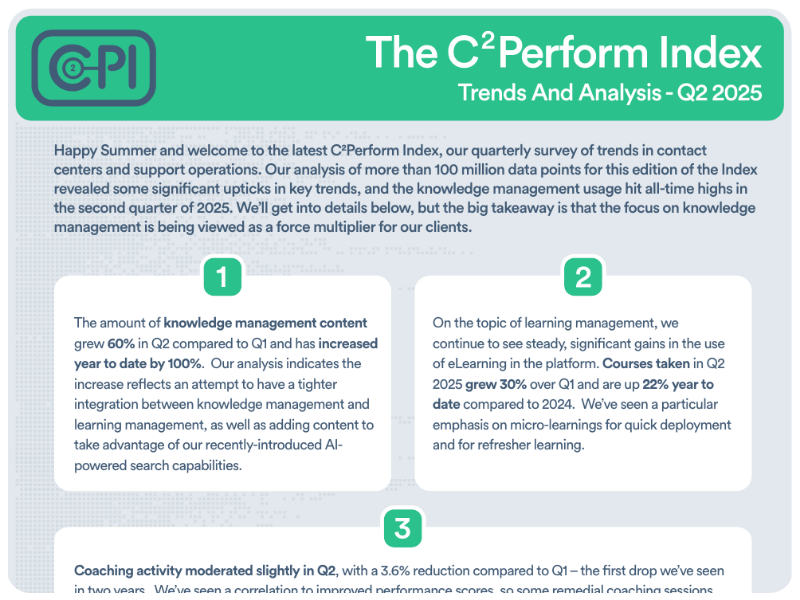
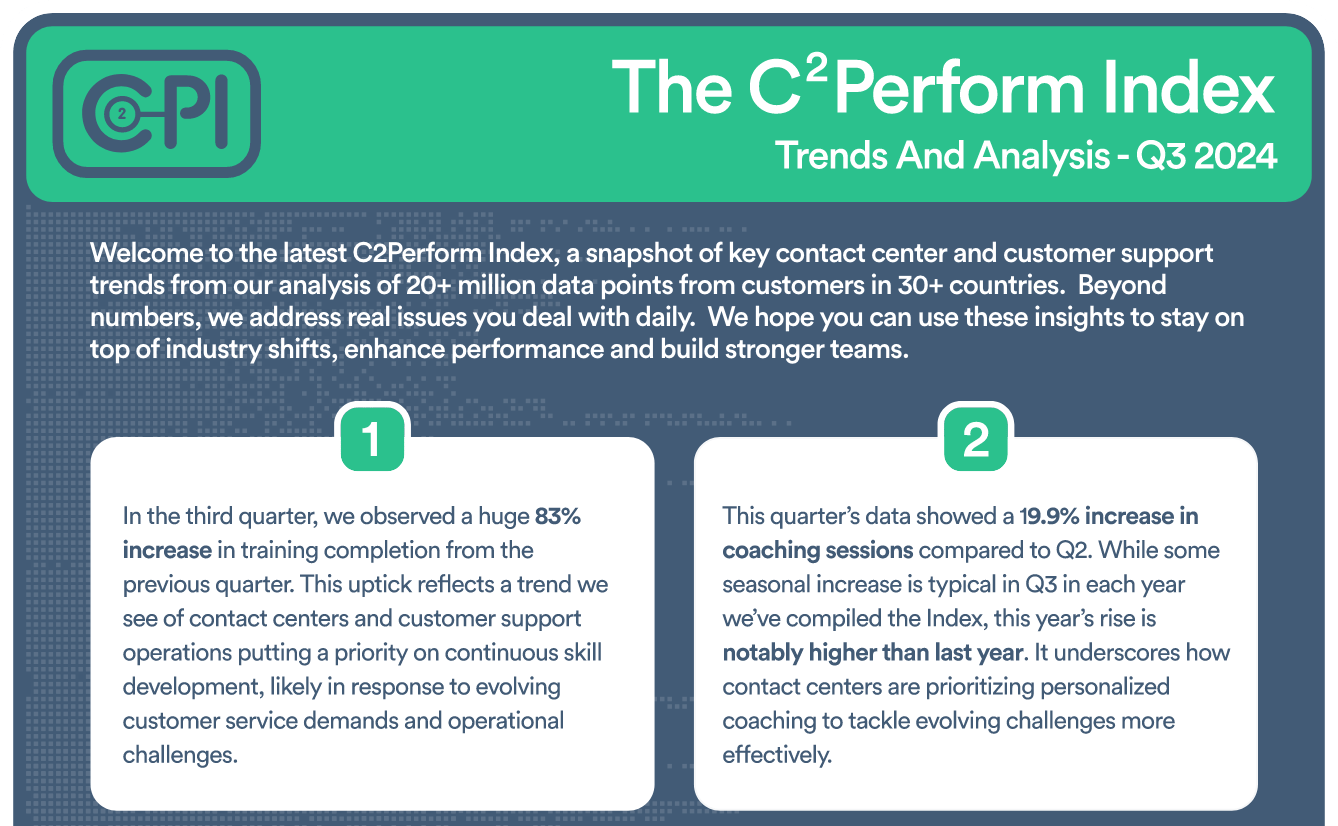
Insightful Analysis on Contact Center and Customer Support Trends

Check out our eBook, New Thinking About an Old Problem


Join contact center and customer support professionals around the world who can’t wait to see the C2PI every quarter.


300 Colonial Center Drive, Suite 100
Roswell, GA 30076
Copyright © 2025 C2Perform. All Rights Reserved. Privacy Policy Acceptable Use Policy