
 English
 Español
Claims Processing Systems: A Rollout Plan
A claims processing systems rollout guide covering workflow readiness, knowledge migration, role-based learning, QA governance, and adoption.
Read More
employee engagement strategies
Find out how to improve agent morale and reduce attrition with practical tips on training, recognition, communication, and supportive workplace strategies.

Your contact center can feel like a leaky bucket. You spend so much time and money recruiting and training new agents, only to watch them drain away a few months later. It’s exhausting, expensive, and terrible for team morale. But what if you could stop patching the holes and actually fix the bucket for good? High attrition isn't a single problem; it's a symptom of deeper issues like burnout, poor communication, and a lack of support. This guide provides a clear, actionable framework for leaders who are tired of the constant churn and want to know how to improve agent morale and reduce attrition by building a culture where people genuinely want to stay and grow.
Before you can fix a leaky bucket, you have to find the holes. High agent attrition isn't just a single problem; it's usually a combination of factors that wear down even the most enthusiastic team members. When agents feel overwhelmed, unsupported, or unappreciated, they start looking for the exit. A recent survey found that a staggering 71% of service agents thought about quitting in the last six months. Understanding the root causes is the first step toward building a workplace where people want to stay and grow. Let's look at some of the most common reasons your best agents might be walking out the door.
Agents are often the first line of defense, dealing with high-pressure situations and demanding customers all day. When you add an overwhelming workload and clunky, disconnected systems to the mix, it’s a recipe for burnout. Juggling multiple applications to find a single piece of information is frustrating and inefficient, making it nearly impossible for agents to feel successful in their roles. This daily struggle with technology and volume leads to stress and a sense of powerlessness, which are major drivers of turnover. Providing a unified platform can reduce agent stress by bringing all their necessary tools into one intuitive interface.
No one likes feeling like they’ve been thrown into the deep end without learning how to swim. When employees don't receive thorough training, they don't fully understand their roles or have the skills to handle complex customer issues. This lack of preparation can crush an agent's confidence and make them feel set up to fail. A robust Learning Management system is more than just a nice-to-have; it's essential for building competent, confident agents who can deliver exceptional customer experiences. Without clear paths for development and growth, ambitious agents will inevitably look for opportunities elsewhere.
People want to know that their work matters. In a high-stress environment like a contact center, a little appreciation can go a long way. When agents consistently go the extra mile without any acknowledgment, they start to feel like just another number. According to one report, employees are 2.7 times more likely to be engaged if they know they'll be recognized for their efforts. Simple acts of recognition, from a manager's thank you to a peer-to-peer shoutout, make agents feel valued and seen. Using Engagement Tools can help formalize this process and ensure good work never goes unnoticed.
Clear communication is the backbone of any successful team. When agents don't receive clear expectations or consistent feedback, they're left guessing about their performance. This uncertainty creates anxiety and prevents them from improving. On the flip side, feedback that is purely negative or delivered poorly can be just as damaging. A culture of open, constructive dialogue is vital. Implementing a Communications Hub ensures that important updates are shared consistently, while a structured coaching program provides a framework for supportive, performance-focused conversations that help agents grow instead of making them feel criticized.
While pay is always a factor, it often becomes the breaking point when other needs aren't being met. If agents are already dealing with high stress, poor training, and a lack of appreciation, an inadequate salary feels like the final straw. It’s important to offer competitive compensation, but it's equally important to create a supportive environment that values work-life balance. When you invest in your agents' well-being through better tools, training, and recognition, you create a culture where they feel respected as whole people. This holistic support can be just as powerful as a pay raise in retaining top talent.
You can’t fix a retention problem without looking at how it starts. High agent morale begins the moment a candidate applies for a job, not after their first few difficult calls. When you focus on hiring the right people and giving them a strong start, you create a foundation of engagement that lasts. A thoughtful approach to hiring and onboarding shows new team members that you’re invested in their success from day one. This initial experience sets the tone for their entire tenure, making them feel valued, prepared, and connected to the team.
It all comes down to three key steps: hiring for culture fit, setting crystal-clear expectations, and building confidence with a robust onboarding program. Getting these pieces right means you’re not just filling seats; you’re building a resilient team of people who want to be there. This proactive approach reduces the anxiety that comes with any new role and equips agents with the tools and mindset they need to handle challenges. By investing upfront in your people, you’ll see a direct impact on their performance, satisfaction, and loyalty. This isn't just about reducing turnover; it's about creating a workplace where people feel supported enough to thrive, which ultimately translates to a better customer experience.
Skills can be taught, but a great attitude is harder to find. To build a team that sticks together, look beyond the resume and hire people who align with your company culture. During interviews, screen for strong communication skills, a collaborative spirit, and a genuine desire to help others. Be transparent about the role from the very beginning—the good, the challenging, and the day-to-day reality. When you’re upfront, you attract candidates who are genuinely suited for the environment, which helps create a more cohesive and positive team. C2Perform's Talent management tools can help you identify and track the key competencies that define a great fit for your team.
Nothing causes anxiety for a new hire like uncertainty. From their first day, make sure agents have a clear understanding of their responsibilities, daily tasks, and what success looks like in their role. This clarity eliminates confusion and helps them feel secure and focused. When expectations are well-defined, agents can concentrate on learning and performing instead of worrying if they’re doing the right thing. A centralized Communications Hub is a great way to document and share these expectations, ensuring every team member has access to the same information and feels confident in their work.
A great onboarding program does more than just explain the job; it builds the confidence agents need to excel. Go beyond presentations and incorporate hands-on activities, shadowing sessions with experienced agents, and real-world simulations. This allows new hires to practice in a safe environment before they start taking live calls. A structured Learning Management system can help you organize this training, delivering consistent and effective onboarding that prepares agents for the challenges ahead. When agents feel competent and prepared, they’re more satisfied with their jobs and better equipped to provide excellent customer service.
When agents feel stuck in a role with no clear path forward, they start looking elsewhere. Investing in their growth isn't just a nice-to-have—it's a core retention strategy. Great training and development programs show your team that you care about their careers and are willing to help them succeed. This goes far beyond the initial onboarding process. It’s about creating a culture of continuous learning where agents feel supported, confident, and capable of handling any challenge that comes their way.
By providing the right tools and opportunities, you empower your agents to build their skills, which directly translates to better performance and higher job satisfaction. A well-supported agent is a confident agent, and a confident agent is more likely to stay with your company for the long haul. A comprehensive Learning Management system can help you structure these opportunities, making development a consistent and integrated part of the agent experience. From building foundational skills to offering advanced training, a focus on development is your best defense against attrition.
Confidence is a direct result of competence. When agents feel unsure of how to handle a customer's request or where to find the right information, their stress levels rise and their morale plummets. You can prevent this by moving beyond theoretical training and incorporating practical, hands-on learning. Use real-world call simulations, role-playing exercises, and shadowing sessions with seasoned agents to build their skills in a low-pressure environment. This approach allows them to make mistakes, ask questions, and gain real experience before they ever take a live call. When agents are well-prepared for the complexities of their role, they feel more secure and ready to perform at their best.
Learning shouldn't end once onboarding is over. The most engaged agents are the ones who see a future with your company. Offering continuous learning opportunities demonstrates that you're invested in their long-term professional growth, not just their immediate output. This can include workshops on new skills, certifications, or clear pathways for advancement. Pairing this with a mentorship program can be incredibly effective. Connecting newer agents with experienced team members provides personalized guidance and fosters a supportive environment. A Dynamic Coaching platform can help formalize this process, making it easy to track progress and facilitate meaningful conversations that drive development.
Nothing frustrates an agent more than not being able to find an answer while a customer is waiting. In today's fast-paced, often remote work environment, agents need instant access to accurate information. A centralized and easy-to-search knowledge base is essential. This empowers agents to resolve issues independently, reducing their reliance on supervisors and increasing first-contact resolution rates. When your team can confidently find policies, procedures, and product information in seconds, they feel more capable and self-sufficient. A strong Knowledge Management system serves as a single source of truth, ensuring consistency and building agent confidence with every interaction.
Let’s be honest: traditional, hours-long training sessions can be a drag. To keep your agents engaged, break down complex topics into bite-sized, easily digestible modules. This microlearning approach allows them to learn at their own pace without being pulled away from their work for long periods. You can make it even more effective by adding a layer of fun with gamification. Use leaderboards, badges, and points to create friendly competition and recognize progress. These Engagement Tools transform training from a requirement into a rewarding experience, which helps improve knowledge retention and keeps your team motivated to learn.
When communication breaks down, morale is often the first casualty. Vague instructions, a lack of feedback, and a culture where agents don't feel heard can quickly lead to disengagement and turnover. Building a strong culture starts with making communication intentional, consistent, and supportive. It’s about creating an environment where everyone knows what’s expected of them, feels safe to share their ideas, and receives the guidance they need to succeed. This isn't just about sending out memos; it's about fostering genuine dialogue.
A transparent communication strategy shows your team that you respect and value them. When agents feel connected to their leaders and the company's mission, they are more invested in their work and more likely to stay. Using a central Communications Hub can ensure that important updates, policy changes, and team wins are shared consistently, so no one is left out of the loop. By focusing on clear, empathetic, and two-way communication, you can transform your workplace culture and make your contact center a place where people want to build a career, not just hold a job.
Nothing creates anxiety quite like uncertainty. When agents don't know what a "good job" looks like, they spend more time guessing than performing. Your role as a leader is to clearly communicate what’s required to get the job done effectively. This means defining success with specific metrics, outlining processes, and explaining the why behind their work.
Regular, constructive feedback is just as important as setting initial expectations. Don't wait for annual reviews to let agents know how they're doing. Consistent feedback helps them adjust their performance in real-time, builds their confidence, and shows that you're invested in their growth. This creates a continuous improvement loop where agents feel supported and empowered to meet their goals.
Communication should always be a two-way street. Your agents are on the front lines every day, and they have valuable insights into customer pain points and inefficient processes. Creating a space where they feel comfortable sharing their input is essential for both morale and operational improvement. When you actively listen to and act on employee feedback, you show them that their voice matters.
You can gather input through regular surveys, suggestion boxes, or simply by maintaining an open-door policy. The key is to make it a standard part of your culture, not a one-time event. Using Engagement Tools can help you systematically collect and analyze feedback, making it easier to identify trends and turn agent suggestions into meaningful changes.
Regular check-ins are the bedrock of strong manager-agent relationships. One-on-one meetings provide a dedicated space to discuss individual performance, career goals, and any challenges an agent might be facing. These sessions should be collaborative conversations focused on development, not just a review of metrics. This is your chance to listen, offer personalized guidance, and build trust.
Team meetings are equally important for fostering a sense of unity and shared purpose. Use this time to celebrate wins, discuss team-wide challenges, and align on goals. A Dynamic Coaching platform can help you structure these conversations and track progress, ensuring every agent gets the consistent support they need to thrive.
Conversations about performance gaps can be tough, but they don't have to be negative. Frame these discussions as opportunities for growth, not criticism. A supportive approach focuses on finding solutions together rather than placing blame. Start by understanding the agent's perspective and any obstacles they might be facing. Be specific about the issue, using concrete examples.
Grounding these conversations in objective data from your Connected Quality Assurance program can help remove emotion and focus the discussion on specific behaviors. Work with the agent to create a clear, actionable plan for improvement, and schedule regular follow-ups to offer support and track progress. When agents see that you're committed to their success, you build loyalty.
Feeling unseen is one of the fastest ways to lose a great agent. When your team members are handling tough customer interactions all day, a little appreciation goes a long way. But a generic, one-size-fits-all approach to rewards often misses the mark. To truly make an impact, recognition needs to be thoughtful, timely, and tied to the things your agents actually care about—like their personal contributions and future career goals.
Building a culture of appreciation doesn't have to be complicated or expensive. It’s about creating a system where good work is consistently seen and celebrated, both by leadership and by peers. When agents feel valued, they’re not just more likely to stay; they’re also more motivated to perform at their best. Using integrated engagement tools can help you formalize this process, making it easy to give shoutouts, track achievements, and reward your team in ways that genuinely resonate. It shifts recognition from a rare event to a daily habit, weaving it directly into your team’s workflow and culture.
A simple "thank you" can be incredibly powerful, especially when it’s specific. Instead of a generic "good job this month," try something like, "I was really impressed with how you handled that difficult call yesterday. You were patient and found a great solution for the customer." This shows you’re paying attention to individual efforts. Recognizing achievements, big and small, is crucial for making agents feel valued.
Make it a habit to share positive feedback as it happens, not just during a weekly meeting or annual review. Timely praise reinforces good behavior and lets your team know their hard work doesn't go unnoticed. A platform that supports dynamic coaching can help you track these moments and ensure you’re consistently acknowledging the great work your team is doing every day.
While immediate recognition is great for morale, agents also need to see a path forward. Linking incentives directly to performance metrics and career development shows them that their hard work pays off in the long run. Offering promotion opportunities is an effective strategy that motivates agents to build their skills and invest in their future with your company.
When you promote from within, you not only retain a top performer but also show the entire team that growth is possible. Use your talent management system to map out clear career paths, identify high-potential agents, and provide the training they need to advance. This turns a job into a career, giving your best people a compelling reason to stay.
Recognition is even more powerful when it comes from all directions. Managers aren't the only ones who see the great work happening on the floor. Agents often have the best view of their colleagues going the extra mile to help a customer or support a teammate. Creating a space for peer-to-peer shoutouts builds a stronger, more collaborative team culture.
You can facilitate this through a dedicated channel in your communications hub or by implementing gamification with points and leaderboards. Celebrating successes publicly boosts morale and fosters a bit of friendly competition. When agents feel empowered to recognize each other, it creates a positive feedback loop that lifts the entire team.
Money isn't the only motivator. In fact, non-monetary rewards can sometimes be more meaningful because they show you understand what your team values beyond a paycheck. Creating a supportive workplace where you frequently show appreciation is essential for morale. Consider what would make your agents' lives easier or more enjoyable.
This could be an extra day of PTO, the first choice of shifts for the next month, a budget for a professional development course, or even a catered lunch for the team after a tough week. These kinds of perks demonstrate that you care about your employees' well-being and work-life balance. The key is to offer a variety of options so people can choose what matters most to them.
The right technology should feel like a helpful partner, not another obstacle for your agents to overcome. When your team is wrestling with clunky, outdated systems, their frustration builds, and their focus shifts from helping customers to fighting their tools. By investing in intuitive, integrated technology, you can remove daily friction, automate tedious tasks, and give your agents the resources they need to feel confident and in control. This isn't about adding more software; it's about choosing the right platform that simplifies workflows and empowers your team to do their best work with less stress.
Nothing drains an agent's energy faster than toggling between a dozen different windows to find a single piece of information. When agents have to hunt for answers, both they and the customer become frustrated. You can eliminate this common pain point by providing easy-to-use software that brings everything together. A centralized Knowledge Management system, for example, puts policies, procedures, and answers right at their fingertips. This allows agents to resolve issues faster and more accurately, which makes them feel more competent and successful in their roles. When their tools work for them, not against them, their job becomes instantly more manageable.
For many agents, the quality assurance process feels like a "gotcha" moment where they’re just waiting to be called out for mistakes. It’s time to change that perception. Modern Connected Quality Assurance tools can transform QA from a source of anxiety into a valuable opportunity for growth. By using software to review interactions fairly and consistently, you can provide objective, specific advice that helps agents improve. When feedback is delivered quickly and framed constructively, agents see it as a supportive measure designed to help them succeed. This approach builds trust and turns QA into a collaborative process focused on development, not discipline.
Are important updates getting lost in a sea of emails, chat messages, and team meeting notes? When information is scattered, it’s easy for agents to miss critical changes, leading to confusion and inconsistent service. A unified Communications Hub solves this by creating a single source of truth for all company announcements. When integrated with your knowledge base, it ensures that every agent has immediate access to the most current information. This not only reduces the mental load on your team but also fosters a more transparent culture where everyone feels informed and aligned with team goals.
An agent’s main workspace should be clean, intuitive, and easy to use. A complicated interface with a steep learning curve only adds to their cognitive load and becomes a daily source of irritation. The goal is to provide a single, reliable platform that simplifies their workflow. Imagine a dashboard where an agent can view their performance metrics, access Dynamic Coaching feedback, and complete a quick training module—all without leaving the application. By automating routine tasks and presenting information clearly, you free up your agents to focus on what truly matters: creating positive customer experiences.
Making meaningful changes to improve agent morale is a fantastic goal, but even the best-laid plans can hit a few bumps. The key is to anticipate these challenges so you can address them head-on instead of getting derailed. Thinking through these common hurdles will help you create a smoother transition for everyone involved and ensure your efforts have a lasting impact.
To get the resources you need, you have to connect your agent morale initiatives to the company’s bottom line. Leadership needs to see a clear return on investment. Instead of just talking about happier employees, build a business case that shows how new tools or training programs will reduce costly agent turnover, improve first-call resolution, and increase customer satisfaction scores. When you align training goals with business objectives, you’re no longer asking for an expense—you’re proposing a smart investment. Frame your request around performance metrics and show how a platform with integrated coaching can directly impact those numbers.
Let’s be honest: change can be stressful. Introducing new software or processes, even if they’re for the better, can make agents feel anxious. They worry about learning a new system while keeping up with their daily workload. To make the transition easier, communicate early and often. Explain why the changes are happening and how they will make agents' jobs easier in the long run. Involve your team leads or top-performing agents in the selection and rollout process to create champions for the new system. A central Communications Hub can ensure everyone receives the same message and has a place to ask questions, making the entire process feel more collaborative and less like a top-down mandate.
High turnover is a persistent challenge in contact centers, and it can be especially disruptive during a period of change. When experienced agents leave, they take valuable knowledge with them, which can slow down the team and hurt morale. To counter this, you need a rock-solid onboarding process and an easily accessible knowledge base. This ensures new hires can get up to speed quickly and find answers independently, reducing the burden on their peers. By investing in strong talent management and knowledge systems, you create stability and continuity, even when your roster changes.
Nothing kills motivation faster than being forced to sit through outdated training or searching for information that no longer applies. If your agents can’t trust their resources, they’ll feel unsupported and frustrated. Your training and knowledge materials should be living documents, not static files. A modern Learning Management system makes it simple to update content, push out quick microlearning modules, and track comprehension. When agents know they have reliable, up-to-date information at their fingertips, their confidence and performance will follow.
Improving agent morale isn't a project with a finish line; it's a continuous cycle of listening, acting, and refining. Once you've put new initiatives in place, you need to know if they're actually working. Are your agents happier? Are they staying longer? Measuring your success is the only way to ensure your efforts are making a real difference and to keep the positive momentum going. This involves tracking the right numbers, consistently asking for feedback, and being willing to adjust your strategy based on what you learn. It’s about creating a system where improvement is part of your team's DNA.
You can’t fix what you don’t measure. To understand the real impact of your efforts, you need to track a mix of metrics. Start with the hard numbers: agent attrition, absenteeism, and promotion rates. But don't stop there. You also need to capture the human element. Use tools like employee Net Promoter Score (eNPS) and sentiment analysis to gauge how people are feeling. Understanding the effectiveness of your internal communication is key to improving engagement and productivity. By combining quantitative data with qualitative feedback from one-on-ones, you get a complete picture of morale and can pinpoint exactly where to focus your energy.
The annual employee survey is useful, but it can’t give you a real-time sense of your team’s pulse. That’s where pulse surveys come in. These are short, frequent check-ins—just a few questions sent out weekly or bi-weekly—that help you spot issues before they escalate. You can ask about workload, access to tools, or feelings about a recent change. Regularly tracking engagement this way shows your team you care about their day-to-day experience. Use a central Communications Hub to make sending these surveys and collecting responses simple, turning feedback into an easy, ongoing conversation.
Gathering feedback is only half the battle; what you do with it is what truly matters. Create a transparent feedback loop where you not only collect input but also share the results and your action plan with the team. When agents see their suggestions leading to real change, it builds trust and makes them feel valued. Employee feedback is one of the most powerful drivers for improving your workplace. Whether it’s tweaking a workflow or adjusting your coaching style, this process of continuous refinement shows you’re committed to getting things right. It transforms feedback from a simple survey into a collaborative tool for growth.
Ultimately, your efforts to improve morale should also lead to better performance. It’s crucial to connect the dots between your initiatives and key business outcomes. Are agents who receive consistent, Dynamic Coaching seeing their performance metrics improve? Are your quality assurance scores on the rise? Modern contact centers face immense pressure to retain agents and keep them well-trained. By analyzing the impact of your training and coaching programs, you can demonstrate their value and make a strong case for continued investment in your team’s development. This data proves that when you support your people, the business thrives too.
We have high turnover, but our budget is tight. Where should we start? If you're working with a limited budget, the most impactful place to start is with communication and recognition. These are low-cost, high-return areas. Focus on creating a culture where agents feel heard by implementing regular one-on-one check-ins and encouraging peer-to-peer shoutouts. Clarifying expectations and providing consistent, supportive feedback doesn't cost anything but can significantly reduce agent anxiety and make them feel more connected to their role and the team.
How can we make training more engaging for our agents? The key is to move away from long, formal training sessions. Instead, break down information into smaller, bite-sized pieces that agents can complete in just a few minutes between calls. This microlearning approach is less disruptive and helps with knowledge retention. You can also make learning more interactive by using gamification, like badges or leaderboards, to create some friendly competition. Most importantly, ensure agents have an easy-to-search knowledge base so they can find answers on their own, which builds their confidence and competence on the job.
Our managers are swamped. How can they provide better coaching without adding more to their plate? This is a common challenge, and the solution is to make coaching more efficient, not more time-consuming. Instead of relying on lengthy review sessions, use a platform that helps structure coaching conversations around specific, data-backed examples from quality assurance reviews. This allows managers to have shorter, more focused check-ins that are targeted toward actual skill development. When coaching is integrated directly into the daily workflow, it becomes a consistent, supportive habit rather than another big task on a manager's to-do list.
Besides money, what are some effective ways to make agents feel appreciated? While fair compensation is important, genuine appreciation often comes from thoughtful, non-monetary rewards. Consider offering perks that improve work-life balance, like an extra day of paid time off or first pick of shifts for the upcoming month. Public recognition is also powerful, so make sure you're celebrating individual and team wins during meetings. Even a specific, timely "thank you" that highlights exactly what an agent did well can make them feel seen and valued far more than a generic gift card.
How do we know if our efforts to improve morale are actually working? You'll want to look at both the hard numbers and the softer feedback. Track key metrics like your agent attrition rate, absenteeism, and internal promotion rates to see if they're moving in the right direction. At the same time, use short, frequent pulse surveys to get a real-time sense of how your team is feeling. The most important step is to create a feedback loop where you share what you've learned from these surveys and communicate the changes you're making. When agents see their input leads to action, you'll know you're on the right track.
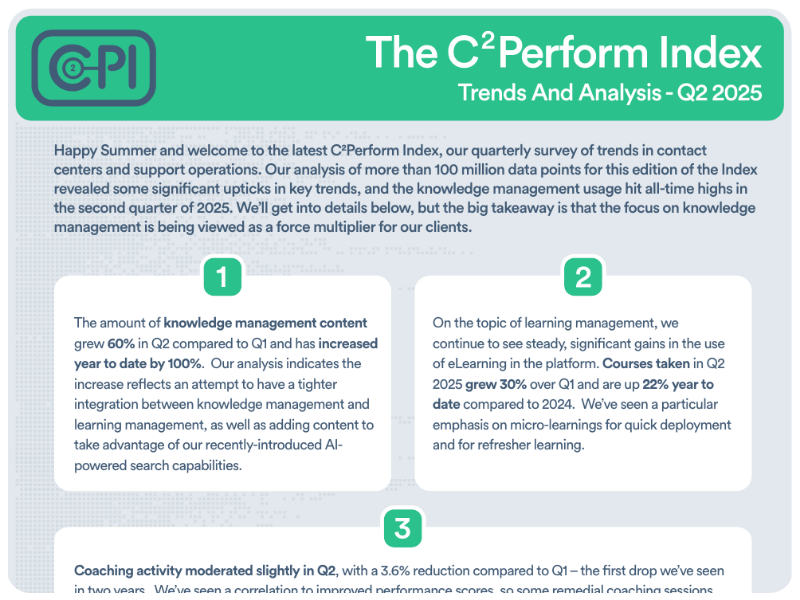
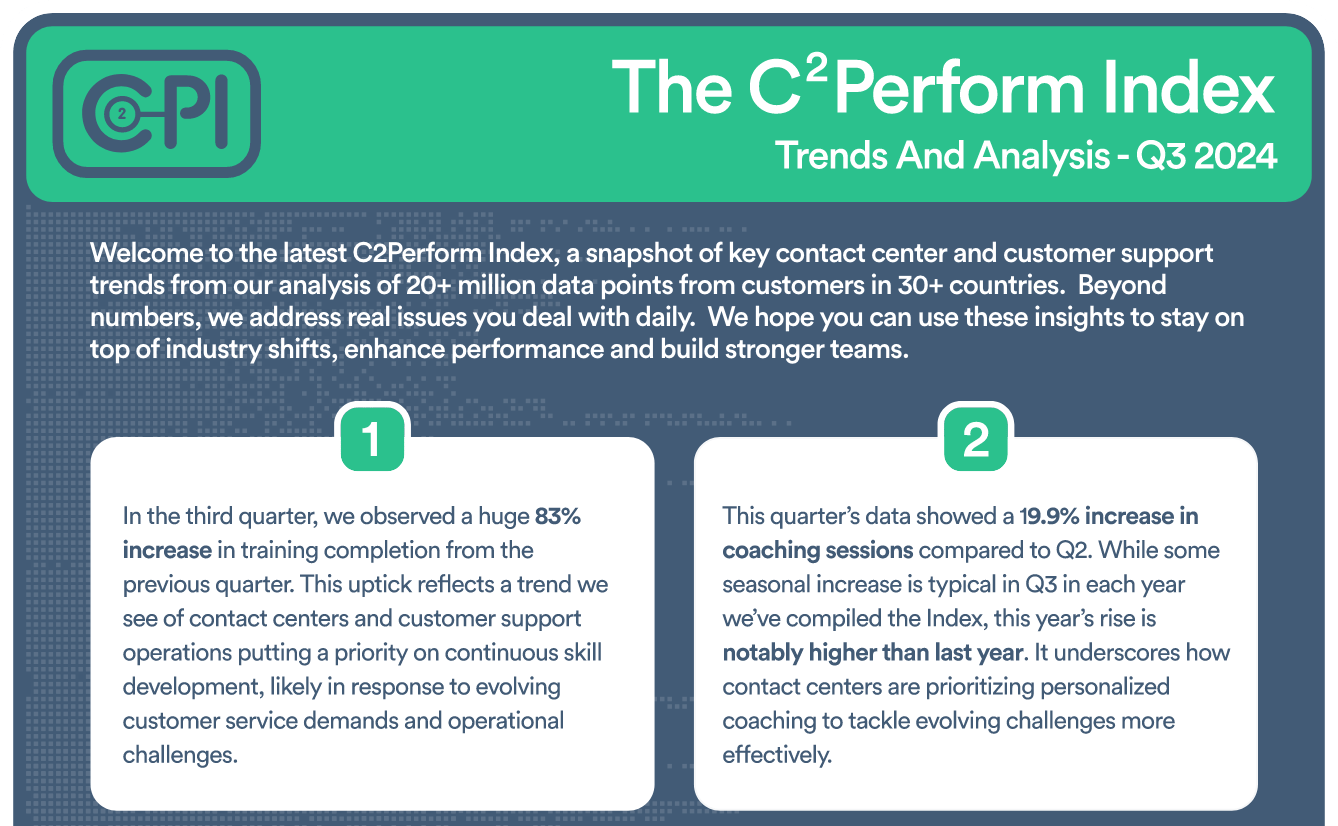
Insightful Analysis on Contact Center and Customer Support Trends

Check out our eBook, New Thinking About an Old Problem


Join contact center and customer support professionals around the world who can’t wait to see the C2PI every quarter.


300 Colonial Center Drive, Suite 100
Roswell, GA 30076
Copyright © 2026 C2Perform. All Rights Reserved. Privacy Policy Acceptable Use Policy