
 English
 Español
Contact Center QA Trend Analysis
Learn how to validate contact center QA trends, investigate what is changing, and turn quality findings into focused coaching, learning, and knowledge updates.
Read More
A process performance measurement system helps you track, analyze, and improve operations with clear metrics for better team results and business outcomes.

Every customer interaction is the final step in a long chain of internal processes. When a customer experiences a long wait time or gets an incorrect answer, it’s often a symptom of a hidden breakdown in one of those processes. This is where a process performance measurement system becomes so critical for your business. It acts as a diagnostic tool, giving you a clear view of how your internal workflows directly impact the customer journey. By measuring and analyzing each step, you can pinpoint the exact sources of friction and inefficiency that damage customer loyalty. This allows you to fix problems at their root, creating a smoother experience for everyone.
If you’ve ever felt like you’re guessing about what’s working in your operations, a process performance measurement system is what you need. It’s a structured way to move from assumptions to answers, giving you a clear picture of your team’s performance and the health of your processes. Think of it as a framework for tracking, analyzing, and improving how work gets done.
At its core, a process performance measurement system is a systematic approach to evaluating how efficient and effective your operations are. It involves collecting and analyzing data to see if your processes are helping you reach your business goals. You might hear these measures called performance metrics or key performance indicators (KPIs). Whatever you call them, their job is the same: to give you objective insights into what’s happening. This isn't about micromanaging; it's about understanding performance so you can support your team and make smart adjustments when things are off track.
Without a good measurement system, it’s nearly impossible to spot hidden problems, identify top performers, or make confident decisions. Measuring your process performance helps you see exactly where things are going well and where they’re breaking down. This allows you to fix issues before they impact the customer experience. A solid system helps you learn and continuously improve by turning performance data into clear dashboards and actionable insights. It’s the foundation for building effective Dynamic Coaching programs and helping your team members develop their skills in a targeted, meaningful way.
When you’re managing a busy contact center or back-office team, it’s easy to get caught up in the day-to-day grind of putting out fires. But taking a step back to measure your process performance is what separates good teams from great ones. It’s about more than just hitting targets; it’s about understanding the "how" and "why" behind your results so you can build systems that work. A solid measurement system acts as your operational compass, providing clear direction and highlighting areas that need attention before they become major problems. By consistently measuring your processes, you can spot hidden inefficiencies, make confident decisions based on real data, and create a more supportive and productive environment for your team. It transforms your operations from reactive to proactive, allowing you to anticipate challenges and opportunities instead of just responding to them. This shift doesn’t just improve key metrics like customer satisfaction and employee retention; it also sets you up for sustainable growth. It connects the dots between individual actions, team performance, and overarching business objectives, giving you a holistic view of your organization's health. Without this view, you're flying blind, making it impossible to know if a change in one area will negatively affect another. With it, you have a clear path forward for continuous, strategic improvement that benefits everyone from your frontline agents to your bottom line.
Think of process measurement as a diagnostic tool for your operations. Without it, you’re essentially guessing where the problems are. Measuring performance helps you pinpoint bottlenecks, identify redundant steps, and see exactly where workflows are breaking down. When you know that a specific part of your claims process is consistently causing delays, you can fix it. This clarity allows you to refine your workflows for maximum efficiency, ensuring tasks are completed faster and with fewer errors. Ultimately, it helps your entire operation run more smoothly, reduces friction for your team, and allows you to achieve your business goals more effectively.
Your internal processes have a direct impact on your customers. A clunky, inefficient process often leads to longer wait times, incorrect information, and frustrated customers. By measuring process performance, you can see how your operational choices affect the customer journey. For example, tracking how agents use your Knowledge Management system can reveal opportunities to improve First Call Resolution. When you measure and refine the steps your team takes to solve a problem, you’re not just making things better internally. You’re creating a more seamless and positive experience that builds customer loyalty and trust in your brand.
Gut feelings can only get you so far. To make strategic improvements, you need solid data. A performance measurement system gives you the objective evidence needed to make informed decisions and justify changes to leadership. Instead of saying, "I think this process is slow," you can say, "This process takes 30% longer than our benchmark and is impacting our customer satisfaction scores." This data-driven approach helps you prioritize improvements, allocate resources effectively, and build a culture of continuous learning. With a Connected Quality Assurance program, you can gather the insights needed to move forward with confidence.
No one likes feeling like they’re in the dark about their performance. Clear, consistent measurement gives your team members a transparent look at their contributions and areas for growth. When employees understand what’s expected of them and can see their progress, they feel more empowered and motivated. Digital tools can support regular check-ins and self-assessments, giving employees an active role in their development. This data also fuels more effective, personalized feedback. Instead of generic advice, you can provide Dynamic Coaching that addresses specific behaviors, helping your team build skills and advance in their careers. This approach shows your team you're invested in their success, which is key to reducing turnover.
Once you know which processes you want to improve, the next question is: what does "good" actually look like? You can't measure everything, and trying to will only lead to data overload and analysis paralysis. The key is to choose a balanced set of metrics that give you a complete picture of your performance. Think of it like a car's dashboard. You don't just look at the speedometer; you also check the fuel gauge, engine temperature, and oil pressure. Each one tells you something different but equally important.
For your operations, this means looking at performance from a few different angles: efficiency, effectiveness, quality, and the people driving it all. By selecting a handful of key performance indicators (KPIs) from each of these categories, you can create a measurement system that tells you not just what is happening, but why it's happening. This holistic view is what allows you to make smart adjustments that lead to real, sustainable improvements for your team and your customers.
Efficiency is all about how well you use your resources. Are your teams getting the most out of the time, tools, and effort they put in every day? These metrics help you spot bottlenecks, reduce waste, and make your workflows smoother. A core efficiency metric is Cycle Time, which measures the total time it takes to complete a process from beginning to end. For a contact center, this could be the time from when a customer ticket is created to when it’s fully resolved. Shorter cycle times usually mean a more efficient process, which often translates to happier customers and a more productive team.
While efficiency is about doing things right, effectiveness is about doing the right things. Is your process actually achieving its intended goal? An efficient process that produces the wrong outcome isn't helpful to anyone. For example, you might be able to close support tickets quickly (efficiency), but if the customer’s issue isn’t truly solved and they have to call back, the process isn't effective. This is where you measure outcomes against your goals. There are countless ways to measure business process performance, so it's vital to pick metrics that align with what success means for that specific process, like First Contact Resolution (FCR) or customer satisfaction scores.
Quality metrics tell you how well your output meets customer expectations and internal standards. This is where you track things like customer complaints, error rates, and adherence to scripts or procedures. In regulated industries like insurance or banking, compliance is a huge piece of the quality puzzle. Your measurement system needs to track whether your team is following required protocols. A strong knowledge management system with version control is critical here, ensuring agents always use the most current, approved information. Consistently tracking quality helps you build a culture of continuous improvement and maintain customer trust.
Your processes are only as good as the people who execute them. Employee performance metrics help you understand how individual team members are contributing to your operational goals. This isn't about micromanaging; it's about identifying coaching opportunities and celebrating successes. When you connect process data to individual performance, you can provide targeted feedback and support. Technology can help you move beyond simple performance management to create a culture of development. By using a dynamic coaching platform, you can turn performance data into personalized learning paths, helping every employee grow in their role.
Once you know what you want to measure, the next step is figuring out how to measure it. There are several proven techniques you can use to get a clear picture of how your processes are performing. You don’t have to pick just one; often, the most effective approach is to combine a few of these methods to get a well-rounded view of your operations. Think of these techniques as different lenses you can use to examine your business, each one revealing unique details and opportunities for improvement.
Before you can improve a process, you need to understand it completely. Process mapping is a straightforward way to do this. It involves creating a visual diagram of a workflow from start to finish. By laying out every step, decision point, and handover, you can easily spot where things are getting stuck, where tasks are being duplicated, or where unnecessary steps are slowing everyone down. This visual approach makes it easier to get your team on the same page and identify concrete ways to make a process more efficient and effective.
Quality assurance scorecards are a classic tool for a reason. They provide a structured way to evaluate performance against a set of predefined standards. A great scorecard moves beyond a simple checklist and offers a balanced view of performance, looking at factors like customer satisfaction, process adherence, and efficiency. Using a Connected Quality Assurance system helps you apply these scorecards consistently across all interactions, whether they happen over the phone, in an email, or through a chat. This gives you a reliable stream of data to understand both individual and team performance.
How do you know if your performance is good, great, or just average? Benchmarking helps you answer that question by comparing your processes and results against industry leaders or top competitors. This comparison can reveal performance gaps and inspire new ways to refine your operations. Another powerful technique is Statistical Process Control (SPC), which uses data to monitor your processes over time. By tracking variations, you can catch small issues before they become big problems, helping you maintain a consistent level of quality and service for your customers.
Manually tracking performance metrics is time-consuming and prone to errors. This is where technology can make a huge difference. The right software tools can automate data collection, analyze trends, and present insights in easy-to-understand dashboards. A unified performance management platform takes this a step further by connecting data from different sources. This allows you to see how a quality score relates to an agent’s training history or how process changes impact customer satisfaction, turning raw data into a clear path for targeted coaching and development.
Building a system to measure process performance can feel like a huge undertaking, but it doesn’t have to be. When you break it down into clear, manageable steps, you can create a framework that provides real insight without overwhelming your team. Think of this as your roadmap. A well-designed measurement system isn't just about tracking numbers for the sake of it; it’s about understanding what’s working, identifying areas for improvement, and creating a clear path forward.
The goal is to move from guessing to knowing. By systematically measuring your key processes, you can pinpoint exactly where friction occurs, celebrate successes backed by data, and give your team the specific feedback they need to excel. Following these steps will help you build a system that not only measures performance but actively helps you improve it.
Before you measure anything, you need to know why you’re measuring it. Start by asking what you want to achieve. It’s essential to make sure these goals fit with your company's overall plan. For example, if a company-wide objective is to improve customer retention, your contact center goal might be to increase First Call Resolution (FCR) by 15%.
Once you have clear objectives, it’s time to get your leadership team on board. This is about more than just securing a budget. Gaining their support ensures that your measurement initiative is seen as a strategic priority. When leaders champion the project, it sends a powerful message to the entire organization that this work is valued, making it easier to get the cross-departmental cooperation you’ll need later on.
You can’t measure everything, and you shouldn’t try to. The next step is to figure out which processes are most important for reaching your goals. Take a look at your operations and identify the workflows that have the biggest impact on your customers and your bottom line. Which processes, if improved, would make the most significant difference in achieving the goals you set in step one?
For a back-office or contact center team, this might be the customer onboarding journey, the claims processing workflow, or the Connected Quality Assurance cycle. By focusing your efforts on these high-impact areas, you ensure that your measurement system delivers the most valuable insights right from the start.
With your key processes identified, it’s time to pick the best ways to measure how well they are doing. There are countless metrics to choose from; one study found a list of 140 different ways to measure business process performance. The trick is to select a few that are directly tied to your goals and provide actionable information.
Avoid the temptation to track vanity metrics that look impressive but don’t tell you much. Instead, focus on what matters. For instance, instead of just tracking the number of calls an agent handles, you might measure their average handle time, customer satisfaction scores, and adherence to compliance standards. Choosing the right metrics ensures you’re collecting data that can be used to drive meaningful change and support Dynamic Coaching conversations.
Now it’s time to think about the practical side of things. How will you actually gather this information? It’s critical to make sure you gather information consistently and that it's accurate and timely. Decide which tools you’ll use, who will be responsible for data collection, and how often you’ll report on the findings. A solid plan prevents confusion and ensures the data you collect is reliable.
Just as important is preparing your team. Get ready by building a team and involving important people from different departments. Train them not only on how to use any new software but also on the purpose behind the measurements. Explain how the data will be used constructively to support their growth and development, not to micromanage them. This transparency builds trust and helps everyone feel invested in the success of the new system.
Introducing a new process performance measurement system is a big step, and like any significant change, it can come with a few bumps in the road. But don't let that discourage you. Most of these challenges are entirely predictable and manageable with a bit of planning. The key is to anticipate them so you can create a smoother transition for everyone involved.
From getting your team excited about the change to making sure your data is clean and reliable, a proactive approach makes all the difference. You might also be dealing with tight budgets or older technology that doesn’t play well with new systems. And once you’re up and running, you need to make sure the metrics you’re tracking stay relevant and actually lead to action. Let’s walk through these common hurdles and how you can handle them.
Any new system is only as good as the people who use it, which is why getting team buy-in is your first and most important task. Implementing new ways of measuring performance often requires a cultural shift, and people might worry that they’re just being watched more closely.
To get ahead of this, communicate openly about the purpose of the system. Frame it as a tool for growth and development, not just for oversight. Explain how it will provide clearer feedback and more targeted support to help them succeed. Involving frontline leaders and top agents in the selection and design process can also create a sense of ownership. A central Communications Hub can be a great way to share updates, answer questions, and keep everyone on the same page.
Your measurement system runs on data, so its quality is non-negotiable. Many organizations struggle with inconsistent or incomplete data pulled from different sources, which can make your performance insights unreliable. Before you launch, it’s wise to conduct a data audit to understand what information you have and where it lives.
Plan how your new system will integrate with your existing tools, like your CRM or workforce management platform. A smooth integration is crucial for creating a single source of truth. Look for a platform that can connect your various data streams, from quality scores to operational KPIs. Establishing clear data governance from day one will ensure the information you’re collecting remains accurate and trustworthy as you move forward.
You don’t need an unlimited budget or the latest technology to improve your performance measurement. However, outdated contact center technology can certainly make things more difficult. If you’re working with legacy systems or a tight budget, a phased implementation is a smart approach. Start by focusing on one or two key processes where you can demonstrate a clear return on investment.
This success can help you build a case for further expansion. Consider a unified platform that combines tools like Connected Quality Assurance and coaching into one system. This can simplify your tech stack and reduce the strain on your resources over time. Prioritizing user-friendly software also minimizes the need for extensive IT support, empowering your team to manage the system themselves.
It’s easy to get lost in a sea of data. The goal isn’t to track every possible metric; it’s to track the right ones. To avoid analysis paralysis, stick to the key performance indicators that are directly tied to your most important business goals. If a metric doesn’t give you insight you can act on, it might be more of a distraction than a help.
It’s also important to review your metrics regularly to ensure they are still relevant. Business priorities change, and your measurement system should adapt accordingly. Most importantly, make sure every piece of data has a purpose. Link your quality insights directly to actionable outcomes, like personalized Dynamic Coaching plans or updated knowledge base articles. This turns measurement from a passive activity into a powerful driver of continuous improvement.
Relying on manual methods to track performance is not just slow, it’s often inconsistent. Spreadsheets and manual data entry can lead to errors and give you a rearview mirror look at performance instead of a live picture. The right technology transforms your measurement system from a tedious administrative task into a dynamic tool for growth. It helps you gather accurate data, see what’s happening in real time, and connect performance insights directly to coaching and development. This shift allows your leaders to spend less time crunching numbers and more time doing what they do best: leading their teams.
Manually pulling data from different systems to track performance is a huge time sink for managers. It’s also prone to human error, which can lead to inaccurate reports and misguided decisions. Performance management software automates this entire process. It can pull data from your call records, quality scorecards, and other operational platforms automatically. This means you get real-time assessments that are more accurate and much faster. Instead of waiting until the end of the month for a performance report, you can see how your team is doing right now. This frees up your leaders to focus on analyzing trends and providing immediate support, rather than getting bogged down in administrative work. With tools for Connected Quality Assurance, you can build a reliable foundation of data to measure what truly matters.
Once your data is collected, you need an easy way to understand it. That’s where dashboards come in. Instead of sifting through dense spreadsheets, dashboards visualize your key metrics in clear, easy-to-read charts and graphs. This allows leaders to spot performance trends, identify top performers, and catch potential issues before they become major problems. Dashboards also make performance transparent for your team members. When agents can see their own progress in real time, they feel more empowered and engaged in their development. They can track their performance against goals and understand exactly where they need to focus. This creates a culture of ownership and continuous improvement, where everyone is aligned and working toward the same objectives. These visual tools are key to keeping your team connected and motivated.
Your contact center likely uses several different technology platforms, from your CRM to your workforce management tool. When these systems don't communicate, you get a fragmented view of employee performance. You might see a quality score in one system and attendance data in another, but you can't easily connect the dots. Outdated or disconnected technology can frustrate both agents and leaders, making it difficult to get a complete picture. A unified performance management platform solves this by integrating with your existing tools. It pulls data from multiple sources into one central hub, giving you a holistic view of each employee. This allows you to see how different metrics influence each other and understand the full context behind performance. A centralized system ensures everyone is working with the same complete and accurate information.
The ultimate goal of measuring performance is to improve it. Technology makes this connection seamless. Instead of generic, one-size-fits-all training, you can use performance data to create personalized development plans for every team member. For example, if the system flags that an agent is struggling with first-call resolution, it can automatically assign a relevant micro-learning module or a knowledge base article for them to review. This approach makes coaching far more effective. You can move from simply managing performance to fostering a culture of continuous improvement. By linking data directly to action, you can provide targeted support exactly when and where it’s needed. This helps employees build skills more efficiently and shows them you’re invested in their growth. With Dynamic Coaching, you can turn performance insights into real, measurable development.
Collecting performance data is one thing; using it to make a real difference is another. Many organizations find themselves swimming in metrics from various platforms but struggle to connect that information to meaningful action. You might have detailed quality scores and operational KPIs, but how do you translate those numbers into better performance and a stronger team? The key is to build a system that doesn't just measure what happened but actively guides what happens next.
A great measurement system helps your organization learn and continuously improve. It’s about creating clear pathways from insight to action. Instead of letting data sit in a spreadsheet, you can use it to power targeted coaching, deliver relevant training exactly when it's needed, and create a culture where feedback helps everyone grow. Let’s walk through how you can start turning your measurement data into your most powerful tool for improvement.
The data from your quality assurance program is a goldmine for effective coaching. Instead of just reviewing a few random interactions, you can use performance data to spot trends and identify the root cause of recurring issues. A good system allows you to create dashboards that visualize performance, making it easy for leaders to see where an agent is excelling and where they might need a little extra support.
This approach shifts coaching from being reactive to proactive. You can pinpoint specific skills that need development and tailor your sessions accordingly. For example, if an agent consistently struggles with a particular type of customer query, you can focus your coaching on that exact scenario. This makes your Dynamic Coaching sessions more focused, relevant, and respectful of everyone’s time, leading to much better outcomes.
What if you could automatically connect a performance gap to the exact training needed to fix it? Modern performance systems make this possible. When your measurement tools are integrated with your learning platform, you can create a seamless path from identifying a need to delivering the solution. This is how you build a true culture of continuous improvement.
Imagine a quality scorecard reveals an agent needs a refresher on a specific compliance rule. Instead of just noting it down, the system can automatically assign a short eLearning module from your Learning Management system. This gives your team members immediate, relevant support to help them succeed. It transforms training from a once-a-year event into an ongoing, personalized part of their daily workflow.
Improvement is a two-way street. A strong measurement system creates clear and consistent feedback loops that empower everyone on the team. When employees can see their own performance data and understand how it connects to team goals, they become active participants in their own development. Digital tools can make this process much easier, facilitating regular check-ins, self-assessments, and peer feedback.
Use a centralized Communications Hub to share updates, recognize achievements, and keep feedback flowing. When feedback is timely, specific, and constructive, it helps build trust and shows your team you’re invested in their growth. This open dialogue also gives you valuable insights into process challenges or resource gaps you might not have seen otherwise.
The processes and goals of your business will change over time, and your measurement system needs to change with them. The metrics that were critical last year might not be the most important ones today. That’s why it’s so important to regularly review your performance measurement system to ensure it’s still relevant and delivering accurate information.
Schedule periodic check-ins with your leadership team to discuss your KPIs. Are they still aligned with your strategic objectives? Is your Connected Quality Assurance process capturing the right behaviors? Don’t be afraid to retire old metrics and introduce new ones that better reflect your current priorities. An effective measurement system is a living tool, not a static report, and it requires ongoing attention to remain a valuable asset for your organization.
This sounds like a lot of work. Where’s the best place to start? It can definitely feel that way, but you don’t have to measure everything at once. The best approach is to start small. Pick one single process that has a big impact on your customers or your team, like your customer onboarding workflow or your quality assurance cycle. Focus on defining what success looks like for that one area and choose just a few key metrics to track. Once you see the benefits and get comfortable with the system, you can gradually expand to other parts of your operations.
How do I convince my team that this isn't just micromanagement? This is a common and completely valid concern. The key is open communication from the very beginning. Frame the measurement system as a tool for support and development, not just for oversight. Explain how clear, objective data will lead to more fair evaluations and personalized coaching that actually helps them grow their skills. When you involve your team in the process and show them how the insights will be used to make their jobs easier and more rewarding, you build trust and get them invested in the outcome.
What’s the real difference between efficiency and effectiveness metrics? Think of it this way: efficiency is about doing things right, while effectiveness is about doing the right things. An efficient team might resolve customer calls very quickly, but if the customer has to call back because their problem wasn't actually solved, the process wasn't effective. You need both. Efficiency metrics like average handle time tell you how well you're using resources, while effectiveness metrics like First Call Resolution tell you if you're actually achieving your goal.
We already have a quality assurance program. Isn't that enough? A quality assurance program is a fantastic start, but it's only one piece of the puzzle. A complete process performance measurement system connects your QA insights to everything else. It integrates that quality data with operational KPIs, attendance records, and training history to give you a full picture of performance. This allows you to see not just what happened in an interaction, but why it happened, which is what you need to provide truly effective coaching and support.
How often should I review and update the metrics we're tracking? Your measurement system shouldn't be set in stone. Business goals change, and your metrics need to keep up. It’s a good practice to review your key performance indicators with your leadership team at least once a quarter. This gives you a chance to ask if the metrics are still aligned with your company's strategic priorities and if they are providing actionable insights. If a metric isn't helping you make better decisions, don't be afraid to replace it with one that will.
Check out our eBook, New Thinking About an Old Problem


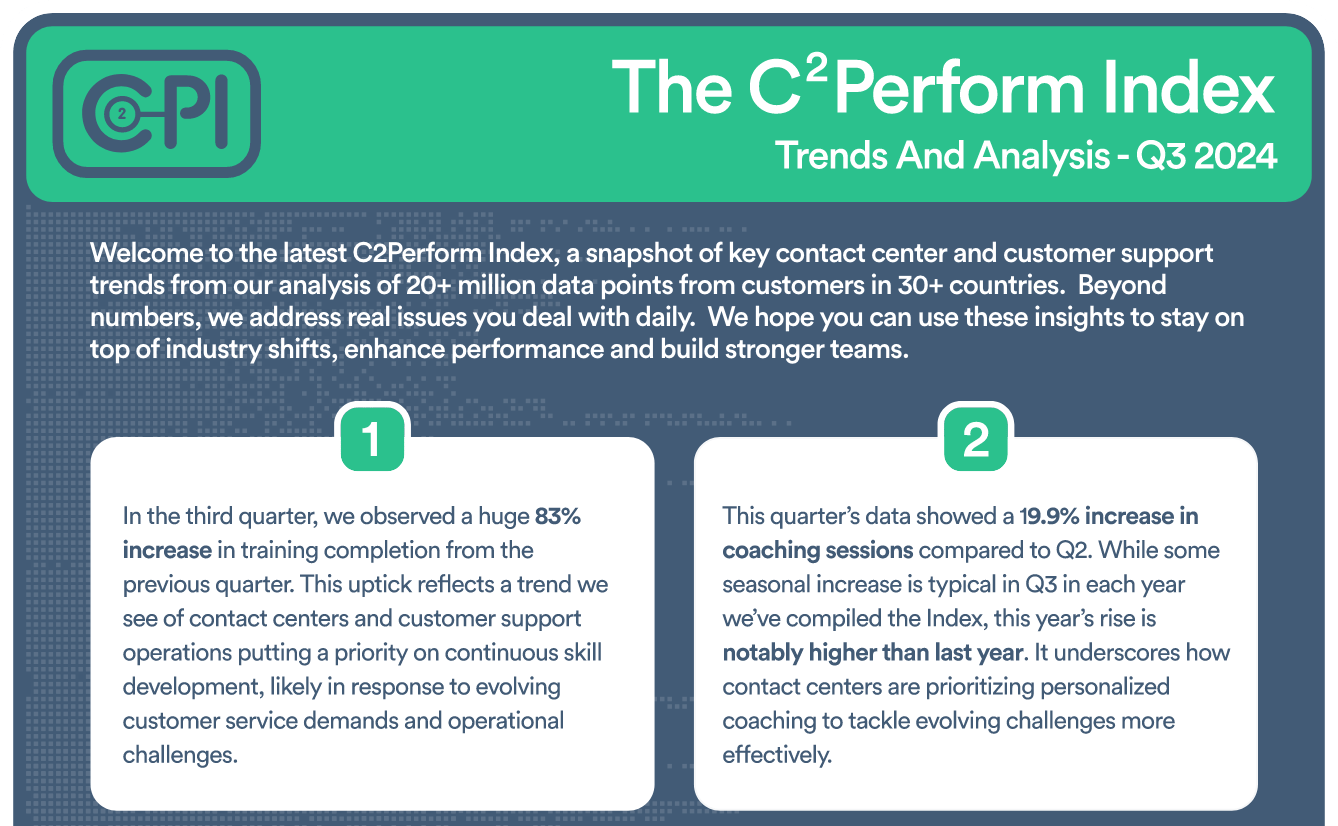
Join contact center and customer support professionals around the world who can’t wait to see the C2PI every quarter.


300 Colonial Center Drive, Suite 100
Roswell, GA 30076
Copyright © 2026 C2Perform. All Rights Reserved. Privacy Policy Acceptable Use Policy