English
 Español
Contact Center QA Trend Analysis
Learn how to validate contact center QA trends, investigate what is changing, and turn quality findings into focused coaching, learning, and knowledge updates.
Read More

See what a c2perform quality assurance demo should show, from connected evaluations to targeted coaching, assigned learning, and knowledge reinforcement.

A c2perform quality assurance demo should show more than an evaluation form or a dashboard of scores. It should make the path from an observed interaction or back-office review to practical improvement visible. The demonstration should also show who needs coaching, what they should learn, and how supervisors will follow up.
Schedule a Demo to see how connected quality assurance can turn findings into focused action.
A c2perform quality assurance demo should show how statistically valid QA sampling becomes targeted coaching, assigned eLearning, and refreshed knowledge content while complementing your existing CCaaS, CRM, and WFM systems.
That distinction matters for contact center and back-office leaders evaluating a connected performance management approach. The strongest demonstration helps you assess the workflow, the employee context behind each result, and the controls your team needs to reinforce consistent performance.
A useful c2perform quality assurance demo should show how a sampled evaluation moves from review to feedback, coaching, learning, and knowledge reinforcement within the systems your operation already uses.
Do not settle for a tour of dashboards or a list of evaluation fields. Ask the presenter to follow one realistic quality issue from beginning to end. The demonstration should make the operating workflow visible: a reviewer completes an evaluation, the result is interpreted in context, and the appropriate next action is assigned and tracked. This is the difference between collecting QA data and putting it to work.
Start with the evaluation process. Ask how your team can configure evaluations for different interactions, processes, or back-office file reviews. The demo should also explain how statistically valid sampling supports meaningful insight without implying that every interaction must receive fully automated scoring. For background on the approach, review C2Perform's quality assurance program guidance.
Request a practical scenario. For example, an evaluation identifies a knowledge gap or an inconsistent process. The presenter should show how that result can inform targeted coaching, an assigned eLearning activity, or a refresher in the knowledge base.
A strong demonstration should show a closed-loop process, including feedback, acknowledgement, follow-up, and an accessible record. It should also make clear that coaching is broader than interaction analysis. Supervisors may need to consider development goals, attendance, or an existing performance plan alongside QA results. C2Perform's explanation of QA-driven coaching provides a useful framework.
Finally, ask where the workflow connects with your CCaaS, CRM, WFM, learning, and knowledge systems. C2Perform is designed to complement those operational tools, not force teams to abandon them.
Connected QA turns evaluation findings into focused development actions by combining statistically valid sampling with coaching workflows, learning assignments, and the employee context managers need to support lasting improvement.
A useful quality assurance program does not require every interaction to receive an automated score. Statistically valid sampling can provide meaningful operational insight while keeping human judgment at the center of evaluation and development. The goal is to identify reliable patterns, understand what is affecting performance, and decide what support will help an employee apply the expected behavior consistently.
That distinction matters in a C2Perform quality assurance workflow. An evaluation should be more than a record in a reporting dashboard. When a recurring gap appears, the next step should be clear: clarify the behavior, connect it to a coaching conversation, and assign the right reinforcement. C2Perform describes this as operationalizing QA data into targeted coaching, assigned eLearning, and refresher knowledge content.
Coaching is most useful when it helps an employee understand the issue and participate in the solution. A review of coaching elements found patient-centeredness in 68% of trials, goal identification in 58.5%, and self-discovery in 46% of trials. The source examines health coaching, not contact center operations. The findings still offer a useful design principle: make the conversation specific, agree on a meaningful goal, and give the employee room to identify how to improve. See the NCBI review of coaching elements for the cited figures.
A connected workflow can help managers move from observation to action by supporting these steps:
QA feedback is one input, not a complete profile of an employee. Effective coaching may also account for attendance, career development, current performance objectives, or an active performance plan. This broader view prevents managers from treating one interaction as the entire explanation for a pattern and helps them choose support that fits the employee's situation.
QA becomes more useful when a finding leads to a specific coaching conversation, an assigned learning activity, or a targeted knowledge refresher that helps the employee apply the lesson at work.
An evaluation should not end when a score is recorded. The reviewer and supervisor need a clear path from the observed behavior to the support that will improve it. C2Perform connects quality data with targeted coaching, assigned eLearning, and refresher knowledge content. This turns a review into an opportunity for development rather than a report that sits apart from daily operations.
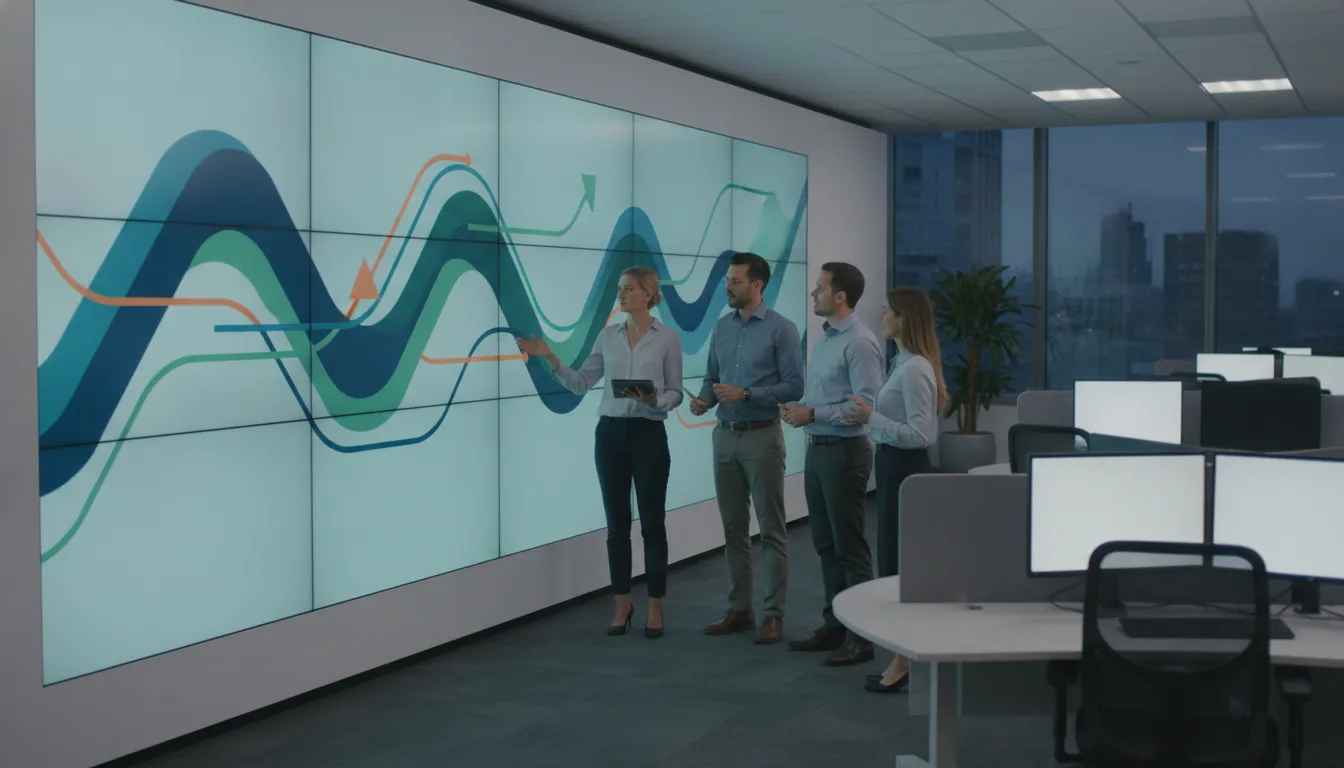
The strongest workflow is specific, visible, and repeatable. It gives QA, supervisors, and L&D a shared understanding of what the evidence means and what should happen next. It also keeps knowledge accurate for both contact center and back-office work.
QA becomes useful when a review produces a clear next action, such as targeted coaching, assigned learning, or a knowledge refresh, rather than ending as a report.
Contact centers and back-office teams use quality assurance to understand whether work follows the required process and where employees need support. That can include a customer interaction, an insurance claim file, an underwriting workflow, or another operational task. The review itself is only the starting point.
C2Perform connects evaluation results with coaching, learning, and knowledge management so leaders can move from an observation to a documented response. This approach complements existing CCaaS, CRM, WFM, and QA systems instead of asking teams to replace every tool they already use.
The distinction matters in regulated workflows. A team may need to show which procedure was available when work was completed, who changed it, and who approved the current version. Version history and audit visibility help knowledge managers keep agents and back-office specialists aligned when a policy, claims requirement, or internal process changes.
| Disconnected QA reporting | Connected operationalization |
|---|---|
| Evaluation results sit in a report with no assigned follow-up. | Results inform a documented coaching conversation, learning assignment, or knowledge refresher. |
| Supervisors see interaction performance in isolation. | Coaching considers QA findings alongside employee context and development goals. |
| Policy changes are difficult to trace across shared files. | Version history and approval visibility support a clearer audit trail. |
| Back-office audits identify variation but leave leaders to coordinate the response. | Connected workflows help turn findings into consistent operational actions. |
Connected QA should not be confused with fully automated quality scoring. Statistically valid sampling can provide meaningful insight, while human review and context determine what support is appropriate. Interaction analysis can identify a missed step or inaccurate answer, but whole-person coaching goes further. It considers development, attendance, goals, and any active performance or disciplinary plan, not only a single interaction score.
A useful demo should show how C2Perform fits around your existing CCaaS, CRM, workforce management, and quality assurance systems. It should then turn shared data into practical coaching and follow-up actions.
Start by asking the presenter to map your current operating flow. Where do interaction, customer, schedule, and evaluation data originate? Which system remains the system of record for each data type? C2Perform is designed as a complementary performance layer, not a replacement for the platforms your teams already use.
For a C2Perform quality assurance demo, request a concrete example rather than a feature tour. Show how an evaluation or imported QA result moves through the platform. The important question is what happens next: a business rule can help identify recognition or an action, a supervisor can document feedback, and the employee can acknowledge the review.
Permissions and auditability deserve equal attention. C2Perform's knowledge capabilities support permissions-driven content creation, role-based access, and version history. Ask to see the access model and change history in the demo, not just a security slide. Finally, define a practical first phase with one workflow, its source systems, the managers who will use the results, and the follow-up action that signals success.
Schedule a Demo to see connected QA workflows in action.
A practical quality assurance program includes evaluation criteria, sampling and review workflows, calibration, feedback, coaching follow-up, and reporting. In a connected model, QA findings also inform assigned learning and knowledge refreshers so teams can act on the result.
An example plan defines the interactions or work items to review, the behaviors to evaluate, the reviewers responsible, and the process for calibration. It should also explain how a result becomes an action, such as targeted coaching, an eLearning assignment, a knowledge update, or a follow-up review.
A contact center might launch a project to improve how agents handle a complex claims or customer-support process. The team can review a representative sample, identify recurring gaps, coach affected employees, refresh guidance, and track whether later evaluations show consistent improvement.
Connected QA gives supervisors a clearer path from an evaluation to a focused development conversation. It also keeps coaching broader than a single interaction by bringing in relevant employee context, such as development goals, attendance, and performance plans.
A focused demo can help you evaluate how quality findings move into coaching, learning, and knowledge reinforcement while complementing the systems your teams already use. Bring your current QA goals, workflow questions, and integration priorities so the conversation stays practical. Schedule a Demo to explore the next step with the C2Perform team.