Understand the difference between contact center quality assurance and coaching, then connect evaluations to agent development and stronger customer outcomes.
Quality assurance (QA) is the structured process of evaluating customer interactions against defined standards. Contact center coaching is the ongoing, two-way development process that helps an employee turn feedback, goals, and support into better performance. The difference matters because a scorecard can identify a performance pattern, but it cannot by itself help a person build the skill, confidence, or habit needed to change it.
Schedule Demo to see how C2Perform connects quality insights with documented coaching, learning, and follow-through.
For operations leaders, the practical question is not whether QA or coaching is more important. Both are necessary, and each has a distinct job. QA creates a consistent view of what happened in an interaction. Coaching adds the conversation, context, action plan, and accountability that move the result forward. When the two work as a connected operating rhythm, teams can respond to evidence rather than assumptions.
What is Quality Assurance in Contact Centers?
Answer: Contact center QA is a repeatable evaluation process that measures whether customer interactions meet the organization's defined standards for accuracy, process, communication, compliance, and customer experience.
A quality program typically starts with a scorecard. The scorecard defines the behaviors and requirements a reviewer should assess, such as verification steps, knowledge accuracy, call control, empathy, documentation, or escalation handling. Reviewers sample interactions, apply the same criteria, and record results. The output may include an overall score, section-level results, comments, and examples from the interaction.
That consistency is the core value of QA. It helps leaders see trends across agents, teams, queues, and time periods. It also creates a factual starting point for calibration: reviewers can compare how they interpret a standard, resolve differences, and make evaluations more reliable. A connected quality assurance platform can make the process easier to manage by keeping scorecards, evaluations, acknowledgements, disputes, and reporting in one workflow.
QA is not simply a search for mistakes. A well-designed evaluation captures effective behaviors as well as gaps. That balance gives leaders evidence to recognize work that should be repeated, not only work that needs attention. It also helps distinguish an isolated miss from a recurring pattern that warrants development.
What is Contact Center Coaching?
Answer: Contact center coaching is a structured development conversation and follow-up process that helps an employee improve a specific behavior or capability using clear expectations, practice, support, and measurable next steps.
Coaching begins with evidence, but it should not end with a review of the evidence. A manager and employee discuss what occurred, why it may have occurred, what good performance looks like, and what the employee will do next. The strongest sessions are specific. Instead of telling an agent to improve communication, a coach might agree on one observable behavior, such as confirming the customer's goal before presenting a solution.
Effective coaching also considers the whole employee. QA feedback is one input, alongside attendance, knowledge, career goals, prior action plans, customer feedback, and performance context. This is why interaction analysis and coaching are not interchangeable. An interaction can show what happened in one moment. Coaching helps a leader understand the pattern, select an intervention, and support sustained improvement.
In C2Perform, Dynamic Coaching supports documented sessions, flexible coaching guides, action plans, scheduling, and employee feedback. The point is to create an auditable development loop, not to leave useful feedback in a reviewer's notes.
Key Differences Between QA and Coaching
Answer: QA evaluates interactions against standards, while coaching develops the employee's ability to meet or exceed those standards consistently.
The following comparison separates the two disciplines while showing why they should operate together.
Dimension
Quality assurance
Coaching
Purpose
Measure interaction quality and adherence to defined standards.
Develop skills, confidence, and habits that improve future performance.
Method
Sample and evaluate interactions using a calibrated scorecard.
Discuss evidence, identify a goal, practice, agree on actions, and follow up.
Frequency
Runs on a planned sampling cadence or in response to a quality signal.
Occurs regularly and when a pattern, goal, or support need is identified.
Who does it
QA analysts, supervisors, or calibrated reviewers.
Frontline leaders, supervisors, mentors, or peers.
Tools
Scorecards, evaluations, calibrations, interaction records, and reporting.
Reliable evidence about interaction performance and operational trends.
Observable improvement, documented accountability, and continued employee development.
A useful way to remember the distinction is that QA answers, "What did we observe?" Coaching answers, "What will we do next, and how will we know it worked?" If a team only measures, employees may receive scores without a clear path to improve. If a team only coaches, leaders may rely on impressions instead of a shared standard.
Why the Difference Matters for Contact Center Leaders
Answer: Separating evaluation from development helps leaders make fairer decisions, focus coaching time on the right behaviors, and turn quality findings into an operating system for improvement.
The distinction is especially important when leaders need to scale. With multiple reviewers and supervisors, unstructured feedback can produce uneven expectations. A calibrated scorecard makes the standard visible. A documented coaching workflow makes the response to that standard visible too. Together, they provide a clearer record of what was evaluated, what was discussed, and what happened next.
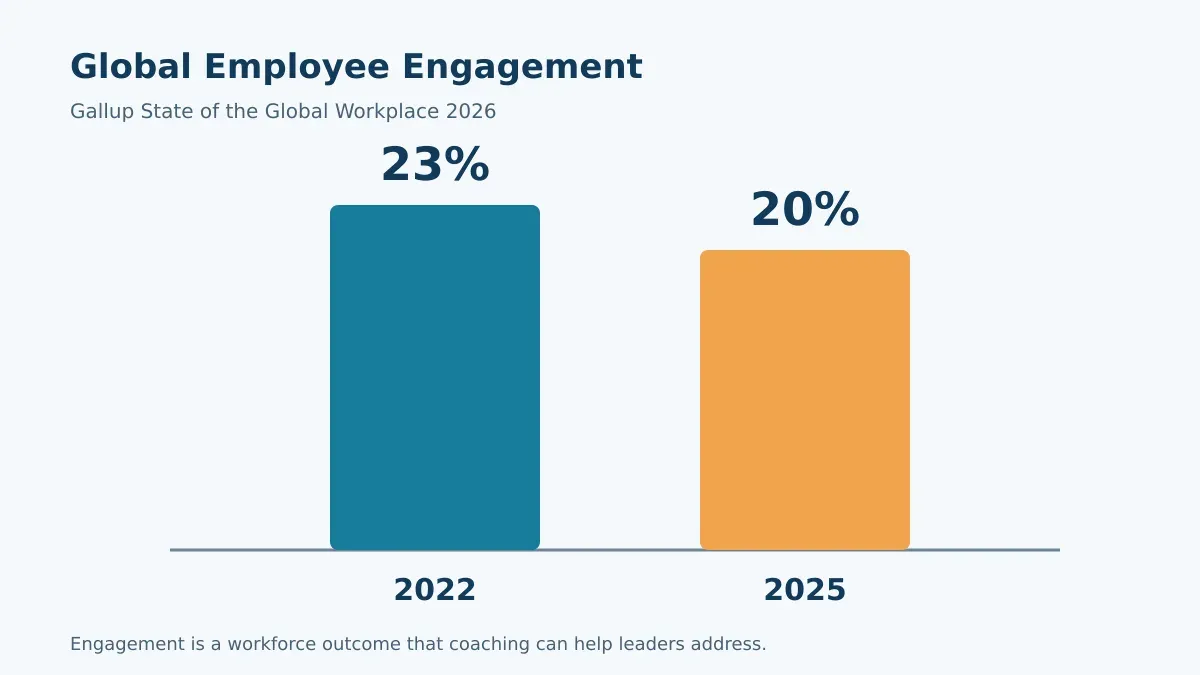
There is also an engagement dimension. Gallup reports that global employee engagement declined from 23% in 2022 to 20% in 2025. While that finding is not specific to contact centers, it is a useful reminder that managers need deliberate ways to support learning, growth, and clarity. A coaching conversation should not be treated as a score delivery meeting. It should give the employee a meaningful role in identifying the next action.
For QA leaders, this changes the question asked after an evaluation. Rather than asking only whether an agent met a target, ask what kind of support will make the next interaction stronger. The answer may be practice, a refresher knowledge article, peer observation, a learning assignment, or a manager follow-up. The right response depends on the evidence.
How QA and Coaching Work Together
Answer: QA and coaching work together in a closed loop: evaluate an interaction, identify a meaningful pattern, coach to one or more observable behaviors, assign support, and review subsequent evidence.
A connected workflow can follow five steps:
Define the standard. Build scorecards around customer, operational, and regulatory requirements that employees can understand.
Evaluate a representative sample. Use a planned approach to sampling, then calibrate reviewers so a score has a consistent meaning.
Prioritize the pattern. Look beyond a single result. Consider frequency, customer impact, risk, and whether the behavior is a skill, knowledge, process, or support issue.
Coach the employee. Use the specific interaction as evidence, invite the employee's perspective, agree on an observable goal, and document the next step.
Reinforce and measure. Connect the plan to eLearning, knowledge content, recognition, or another session. Then review later evaluations to see whether the behavior changed.
This loop is the foundation of closed-loop quality assurance. It is also what makes QA data operationally useful. When evaluation outcomes can trigger targeted coaching and learning, leaders can move from reporting a trend to addressing it with a repeatable response.
Schedule Demo to explore a connected workflow for quality evaluations, coaching plans, and employee development.
Common Mistakes When Combining QA and Coaching
Answer: The most common mistakes are treating a QA score as the coaching session, coaching to vague goals, and failing to follow up with later evidence.
Using the score as the entire conversation: Scores identify a result. Coaching needs context, employee input, a behavior goal, and a next step.
Coaching every item at once: Focus on the highest-impact behavior or a small related set. Too many priorities make follow-through difficult.
Ignoring positive examples: Recognition reinforces practices worth repeating and helps employees understand what good performance looks like.
Separating tools and records: When evaluation results, coaching notes, and learning assignments live in different places, it is harder to see whether the intervention helped.
Skipping calibration: Coaching based on inconsistent scoring weakens employee trust and makes trend reporting less dependable.
Leaders can avoid these issues by making the workflow visible. Establish who evaluates, who coaches, when follow-up occurs, and what evidence demonstrates progress. For more foundational guidance, see C2Perform's overview of building a better quality assurance program.
FAQ: Quality Assurance vs Coaching in Contact Centers
Is QA the same as coaching?
No. QA evaluates interactions against standards. Coaching uses evaluation results and other performance context to help an employee improve future performance.
Should a supervisor coach from one QA evaluation?
A single evaluation can support a conversation when it reveals a clear, high-impact behavior. Leaders should also consider whether the result reflects a recurring pattern before making broad conclusions about performance.
Who owns QA and coaching in a contact center?
QA analysts or supervisors often own evaluations, while frontline leaders usually own coaching. The exact model varies, but both groups need shared standards and visibility into the workflow.
What should happen after a coaching session?
Document the agreed behavior, support needed, follow-up date, and success measure. Then use later interaction evidence to discuss progress and adapt the plan if needed.
Build a Connected Quality and Coaching Process
Answer: A connected process makes quality findings actionable by linking each evaluation to the coaching, learning, knowledge, and follow-up that can improve the next customer interaction.
Contact center QA and coaching are complementary disciplines. QA provides the evidence and common language. Coaching turns that evidence into a human, measurable plan for development. Organizations that connect both can create a more consistent experience for customers, employees, and leaders.
Schedule Demo to see how C2Perform brings QA, coaching, learning, and knowledge management into one practical performance workflow.
The C2Perform Index
Insightful Analysis on Contact Center and Customer Support Trends
Struggling with Attrition?
Check out our eBook, New Thinking About an Old Problem
Schedule a demo to learn how an insurance claims quality assurance framework can improve claims accuracy and help your team meet compliance requirements.
Build a first call resolution knowledge management workflow that gives contact center agents accurate answers, clear ownership, and targeted follow-up.
Schedule a demo for contact center internal communications best practices. Learn how audience segmentation and multi-channel strategies keep distributed...

 English
 Español