
 English
 Español
Claims Processing Systems: A Rollout Plan
A claims processing systems rollout guide covering workflow readiness, knowledge migration, role-based learning, QA governance, and adoption.
Read More
Find 8 assurance statements for call center agents that build trust, reduce customer anxiety, and improve satisfaction in every customer interaction.

You measure dozens of KPIs, from average handle time to First Call Resolution. But are you measuring the one thing that underpins them all: customer trust? Trust isn't built by accident. It's built through consistent, empathetic communication, one conversation at a time. An agent’s ability to make a customer feel heard and supported is a powerful driver of satisfaction and loyalty. This is where a structured approach to communication becomes essential. By implementing and tracking the use of assurance statements for call center agents within your quality program, you can turn a soft skill into a measurable performance indicator. This guide will show you how to identify the right statements and integrate them into your QA and coaching workflows to see a real impact on your metrics.
Let's start with the basics. An assurance statement is a simple phrase an agent uses to make a customer feel calm and confident. It’s a verbal signal that says, "I'm here, I'm listening, and I'm focused on solving this for you." Think of it as a bridge that connects the agent and the customer, turning a potentially stressful interaction into a collaborative one. When an agent has the right information at their fingertips, often through a reliable Knowledge Management system, they can deliver these statements with genuine confidence, which makes all the difference.
So, why are these simple phrases so effective? It all comes down to human psychology. When a customer calls, they're often worried or anxious. An assurance statement immediately works to lower that anxiety. It makes the customer feel heard, understood, and supported, which is a huge step toward a positive outcome. Research shows that making a customer feel good is the second most important factor for customer satisfaction, right after actually solving their problem. By using these statements, agents aren't just being polite; they are actively managing the emotional experience of the call.
These statements also shift the entire dynamic of the conversation. Instead of feeling like they're fighting to be heard, the customer feels like they have an ally. This encourages them to work with the agent to find a solution. This teamwork is crucial for getting to the root of the issue quickly and efficiently. When you build this practice into your team's workflow, you can measure its impact through a Connected Quality Assurance program, seeing firsthand how better rapport leads to better outcomes and higher first-call resolution rates. It’s a small change in language that creates a big impact on performance.
When a customer calls, they're often looking for more than just an answer; they're looking for reassurance. This is where assurance statements become one of an agent's most powerful tools. They go beyond simple politeness, actively shaping the customer's experience from anxious to understood. These phrases are not about reading from a script. Instead, they are about showing the customer that the agent is present, capable, and on their side. By equipping your team with these statements, you give them the ability to manage the emotional side of customer service, which is often just as important as the technical solution. It’s a skill that transforms a transactional call into a positive, trust-building interaction.
Assurance statements are phrases customer service agents use to make customers feel calm and confident. When a customer is frustrated or worried, hearing something like, "I can definitely help you with that," immediately shifts the tone of the conversation. These statements show that the agent is focused on solving the customer's problem, which helps reduce their anxiety and makes them feel supported. Using specific phrases for acknowledgment and empathy helps agents connect with customers on a human level. This connection is the foundation of trust. When agents have instant access to accurate information through a centralized knowledge management system, they can deliver these assurances with genuine confidence, reinforcing the customer's belief that they've called the right place.
Building rapport is a critical factor in customer satisfaction, second only to actually solving the customer's problem. Assurance statements are your team's primary tool for building that rapport quickly and effectively. They calm customers, show that the agent cares, and build confidence that a resolution is coming. This positive feeling doesn't just end when the call does; it translates directly into higher satisfaction scores, better customer retention, and long-term loyalty. A customer who feels heard and respected is far more likely to stay with your brand, even if they initially had a problem. By tracking how and when agents use these statements through a Connected Quality Assurance program, you can directly measure their impact on your key performance indicators.
Knowing what to say is half the battle. While every customer conversation is unique, many scenarios follow predictable emotional arcs. Equipping your agents with a handful of go-to assurance statements gives them a solid foundation to build from, especially under pressure. Think of these not as rigid scripts, but as reliable starting points that can be adapted to fit the moment.
Having these phrases readily available in your Knowledge Management system can help agents feel more confident and prepared for any call that comes their way. Here are eight powerful statements your team can start using today.
Go-to statement: "I completely understand how frustrating this must be for you."
When a customer is angry, their first need is to feel heard. This statement works because it immediately validates their feelings without placing blame or admitting fault. It’s a simple act of empathy that shifts the agent from a potential adversary to an ally. By acknowledging the customer's frustration, you can de-escalate the tension and create a more collaborative space to find a solution. It shows you are listening and that you care about their experience, which is the first step toward turning a negative interaction around.
Go-to statement: "You were right to get in touch. I will get this sorted out for you."
Billing questions can make customers feel defensive or uncertain. This phrase immediately reassures them that they made the right decision by contacting you. It validates their concern and positions the agent as a problem-solver. The second half of the statement, "I will get this sorted out for you," conveys ownership and a clear commitment to action. It tells the customer they’ve reached the right person and that progress is being made, which helps build trust and reduce their anxiety about the situation.
Go-to statement: "I'm going to connect you with our specialist who can best handle this. I'll brief them so you don't have to repeat anything."
No one likes being transferred or put on hold, as it often feels like being passed around. This statement changes the narrative. It frames the transfer as a positive step toward a more expert resolution, not a dismissal. The promise to brief the next person is crucial; it shows you respect the customer's time and are actively managing the process for them. This small courtesy makes the customer feel cared for rather than abandoned during the transition.
Go-to statement: "That's a great question. To make sure I'm on the right track, my understanding is that..."
When a customer is struggling to explain their issue, it's easy for both parties to get frustrated. This statement allows the agent to gently take control and clarify the situation. It reframes their confusion as a "great question," which prevents them from feeling foolish. By repeating the problem back in your own words, you demonstrate active listening and give the customer a chance to confirm or correct your understanding. Getting this right is a key part of improving First Call Resolution.
Go-to statement: "Thank you for bringing this to my attention. I'm truly sorry you had this experience, and I'm going to address it right away."
When a customer complains, they want acknowledgment and action. This statement delivers both. It starts by thanking them, which can be disarming and shows you see their feedback as valuable. The sincere apology acknowledges their negative experience without making excuses. Most importantly, it pivots directly to a promise of immediate action. This tells the customer that their complaint has been taken seriously and that you are committed to making things right, which is essential for rebuilding trust.
Go-to statement: "I understand your concern completely. I want to assure you that I will handle your information with the utmost care as we resolve this."
Discussions about personal or financial information require a heightened level of trust. This statement directly addresses the customer's security concerns head-on. It starts with empathy ("I understand your concern") and follows with a confident promise of careful handling. In regulated industries like finance or insurance, this verbal reassurance is critical. It helps the customer feel safe and confident that they are in good hands, allowing them to focus on resolving their primary issue without added worry.
Go-to statement: "I know this delay is inconvenient, and I will personally keep you updated as I get more information."
During an outage or delay, the lack of information is often more frustrating than the problem itself. Customers are left in the dark, wondering what's happening. This statement provides two key things: empathy for their inconvenience and a promise of proactive communication. By offering to personally provide updates, the agent takes ownership of the information flow. This manages the customer's expectations and reassures them that they won't be forgotten, which can prevent repeat calls and reduce anxiety.
Go-to statement: "Thank you for your patience today. Please don't hesitate to reach back out if anything else comes up."
How you end a call is just as important as how you start it. This is especially true if the issue isn't fully resolved. Thanking the customer for their patience acknowledges the effort they put into the call. The invitation to reach back out is a final gesture of support that leaves the door open. It makes the customer feel valued and reinforces that you are there to help them in the long term, ending the interaction on a positive and supportive note.
Knowing the right assurance statements is only half the battle. How your agents deliver them is what truly makes the difference between a customer feeling dismissed and feeling supported. The right delivery can de-escalate a tense situation, build genuine trust, and turn a negative experience into a positive one. It’s the difference between reading a script and having a real conversation.
Effective delivery isn’t an innate talent; it’s a skill that can be developed through practice and targeted feedback. By focusing on a few key principles, your agents can learn to use assurance statements with sincerity and impact. This involves matching their tone to the customer's emotional state, using positive language, listening more than they speak, personalizing the interaction, and projecting confidence. Mastering these techniques is a core part of agent development, and consistent Dynamic Coaching can help your team build the habits that lead to exceptional customer interactions.
The tone of voice your agent uses can be more powerful than the words themselves. While a warm, friendly voice is often best, the key is to mirror the customer's energy before guiding them toward a calmer state. If a customer is clearly frustrated and serious, jumping in with an overly cheerful tone can feel dismissive. Instead, start with a calm, serious, and professional tone to show you understand the gravity of their issue.
As you begin to work toward a solution, you can gradually shift to a more reassuring and warm tone. Speaking slowly and clearly shows confidence and helps the customer feel that the situation is under control. This tonal shift demonstrates empathy and helps you build a connection with the customer, making them a partner in finding a resolution.
The language you use frames the entire interaction. Assurance statements are designed to make customers feel calm and confident, and that starts with using positive, solution-oriented words. Avoid negative phrases like “I can’t,” “we don’t,” or “that’s not possible.” These words create conversational dead ends and can increase a customer’s frustration.
Instead, focus on what you can do. Swap "I can't access that information" with "Let me find the person who can best answer that for you." This simple change shifts the focus from the problem to the solution. By using positive language, you help move the customer’s mindset away from the issue and toward the resolution you are working to provide.
An assurance statement will fall flat if the customer doesn’t feel heard first. Before offering reassurance, give the customer the space to explain their situation completely, without interruption. Active listening is more than just being quiet; it’s about absorbing the details, understanding the customer’s feelings, and showing you’re engaged.
Once they’ve finished, paraphrase their issue back to them. Saying something like, “So, just to make sure I have this right…” lets the agent confirm they understand the problem and gives the customer a chance to clarify or add details. This simple act builds immense trust and shows you respect their time. A well-organized Knowledge Management system is a great asset here, as it allows agents to find information quickly so they can focus more on listening to the customer.
Customers want to feel like they’re talking to a person, not a robot reading from a script. Using generic, one-size-fits-all statements can make an interaction feel cold and impersonal. The best way to show you care is to personalize your assurance statements. Use the customer’s name and reference specific details they’ve shared with you.
For example, instead of saying, “I understand this is frustrating,” try, “John, I can see why you’d be frustrated about the delayed delivery of your order.” This small change makes a big difference. It shows the customer you are paying attention and that the company cares about their specific problem. This level of personalization helps build a stronger, more loyal customer relationship.
Confidence is contagious. When an agent sounds confident, the customer feels more at ease and trusts that their issue will be resolved. This is crucial even when the agent doesn’t have an immediate answer. It’s okay not to know everything, but it’s important to project confidence in your ability to find the solution.
Instead of saying, “I don’t know,” an agent can say, “That’s a great question, let me find that out for you.” Phrases like, “Don’t worry, you have the best person on the phone to assist you,” can also work wonders. This reassures the customer that they are in capable hands and that the agent is taking ownership of the problem. Confidence isn’t about having all the answers; it’s about assuring the customer you’re the right person to find them.
Handing your team a list of assurance statements is a great start, but it’s not a magic fix. For these phrases to build trust, agents must deliver them with skill and sincerity. When used incorrectly, even a well-intentioned statement can backfire, making a customer feel dismissed or misunderstood. This can damage the rapport your agent is trying to build and ultimately hurt the customer experience.
The good news is that these mistakes are correctable. By understanding the common pitfalls, you can guide your team toward a more authentic and effective communication style. Here are the key areas where agents often stumble and how you can help them improve.
Consistency is the bedrock of trust. When an agent assures a customer, "I can certainly process that refund for you," but company policy requires a manager's approval that delays the process, it creates a disconnect. This kind of inconsistent messaging makes the agent seem uninformed and the company unreliable. The problem gets worse when different agents give conflicting information for the same issue. To prevent this, your entire team needs a single source of truth. A centralized Knowledge Management system ensures every agent provides the same accurate information, turning their assurance statements into promises they can confidently keep.
Customers can spot a scripted response from a mile away. An assurance statement that sounds robotic or read from a screen feels impersonal and insincere. Phrases like, "I understand your frustration," lose all meaning without a genuine, empathetic tone. Encourage your agents to internalize the purpose of these statements rather than memorizing them word-for-word. They should also avoid using internal jargon that can confuse customers. Using Connected Quality Assurance to review calls can help you identify agents who need help personalizing their approach, allowing you to provide feedback that encourages authenticity and clear communication.
It’s tough to stay calm when a customer is upset, but an assurance statement delivered with an impatient or defensive tone will only escalate the situation. An agent’s composure is just as important as their words. Good customer service means being polite and showing you care, even when you’re under pressure. This is a skill that requires emotional intelligence and practice. You can help your agents build this resilience through targeted support. Using a Dynamic Coaching framework allows you to role-play difficult scenarios and equip agents with strategies for managing their emotions, ensuring they can project confidence and empathy on every call.
Knowing the right assurance statements is one thing; using them consistently and effectively is another. Turning this skill into a team-wide habit requires a structured approach that integrates the practice into your daily operations. It’s about creating a system where reassuring customers becomes second nature for every agent. By embedding this behavior into your quality, coaching, and learning processes, you can build a more confident, empathetic team that consistently delivers a better customer experience. The key is to move from simply talking about assurance to actively measuring, coaching, and reinforcing it every single day.
If you want to make something a priority, you have to measure it. Start by incorporating the use of assurance statements directly into your quality assurance scorecards. This sends a clear message to your team that building rapport and expressing empathy are just as important as following procedures. You can create specific line items that evaluate whether an agent effectively acknowledged the customer's feelings or provided a confident assurance statement at a critical moment. Making these statements a foundational element of your QA process provides a clear, objective standard for performance and gives you the data you need to identify coaching opportunities across the team.
Once your QA scorecards start highlighting where agents are struggling, you can use that insight to inform your coaching. Dynamic coaching is where agents can build the confidence and skill to deliver assurance statements that sound genuine, not scripted. Use one-on-one sessions to role-play difficult scenarios and practice different statements. Listen to call recordings together and discuss specific moments where an assurance statement could have changed the conversation's tone. This hands-on guidance helps agents internalize the skill, moving them from simply reading a line to truly understanding how to connect with a customer and reduce their anxiety.
Sometimes, an agent needs more than a quick coaching session. For deeper, more persistent gaps, targeted learning can make all the difference. Create or assign brief eLearning modules, job aids, or knowledge base articles that focus specifically on the art of assurance. You can develop targeted learning initiatives that break down the three key components: acknowledgment, empathy, and reassurance. This allows agents to work on their skills at their own pace and provides a resource they can return to whenever they need a refresher. By connecting QA insights directly to a learning opportunity, you create a powerful cycle of continuous improvement.
Finally, close the loop by tracking the results. Does a team-wide focus on assurance statements actually move the needle on your most important metrics? The answer is almost always yes. Research shows that building a positive rapport is one of the most critical factors influencing customer satisfaction, second only to resolving the customer's issue. Correlate your QA data on assurance statements with your CSAT, First Call Resolution (FCR), and customer retention scores. When your team sees the direct connection between their empathetic communication and happy, loyal customers, it reinforces the importance of the habit and motivates everyone to keep improving.
What’s the real difference between an assurance statement and just being polite? Politeness is about having good manners, which is always important. An assurance statement, however, is a specific tool used to manage a customer's emotional state. While being polite is passive, giving an assurance is an active step. It directly addresses a customer's anxiety by showing them you are confident, in control, and focused on finding a solution for their specific problem. It’s the difference between saying "one moment please" and "I can definitely sort this out for you, I just need a moment to pull up your details."
My agents are worried they'll sound scripted. How can I help them be more authentic? This is a common concern, and it's a valid one. The key is to coach agents on the purpose of the statements, not just the words themselves. Encourage them to think of these phrases as a starting point for expressing genuine empathy. You can use coaching sessions to role-play different customer scenarios, which helps agents practice adapting the language to fit their own personality and the unique context of each call. When they understand the goal is to make the customer feel supported, they'll naturally sound more sincere.
What's the most important first step to making assurance statements a habit for my team? The best way to start is to make it a formal part of your process. Begin by adding the effective use of assurance statements as a specific line item on your quality assurance scorecards. When something is measured, it gets attention. This immediately shows your team that building rapport is a priority and gives you objective data on who is using the skill well and who might need a bit more support and coaching.
What should an agent do if they give an assurance but then realize they can't deliver on the promise? This situation really underscores the importance of having a single source of truth for your team. When an agent can't follow through, it's often because they were working with incorrect or outdated information. The best recovery is to be transparent. The agent should acknowledge the mistake without making excuses, explain the correct process, and immediately pivot to the right solution. This honesty, while difficult, can still build trust, and it highlights the critical need for a reliable knowledge base to prevent these issues.
How can I measure whether using assurance statements is actually improving our customer experience? You can track the impact by connecting your quality assurance data with your main business metrics. Start by monitoring the use of assurance statements in your QA reviews. Then, look for correlations between agents or teams who use them effectively and any positive changes in your customer satisfaction (CSAT) scores, First Call Resolution (FCR) rates, and even customer retention. When you see those numbers improve, you have clear evidence that better, more empathetic communication leads to tangible results.
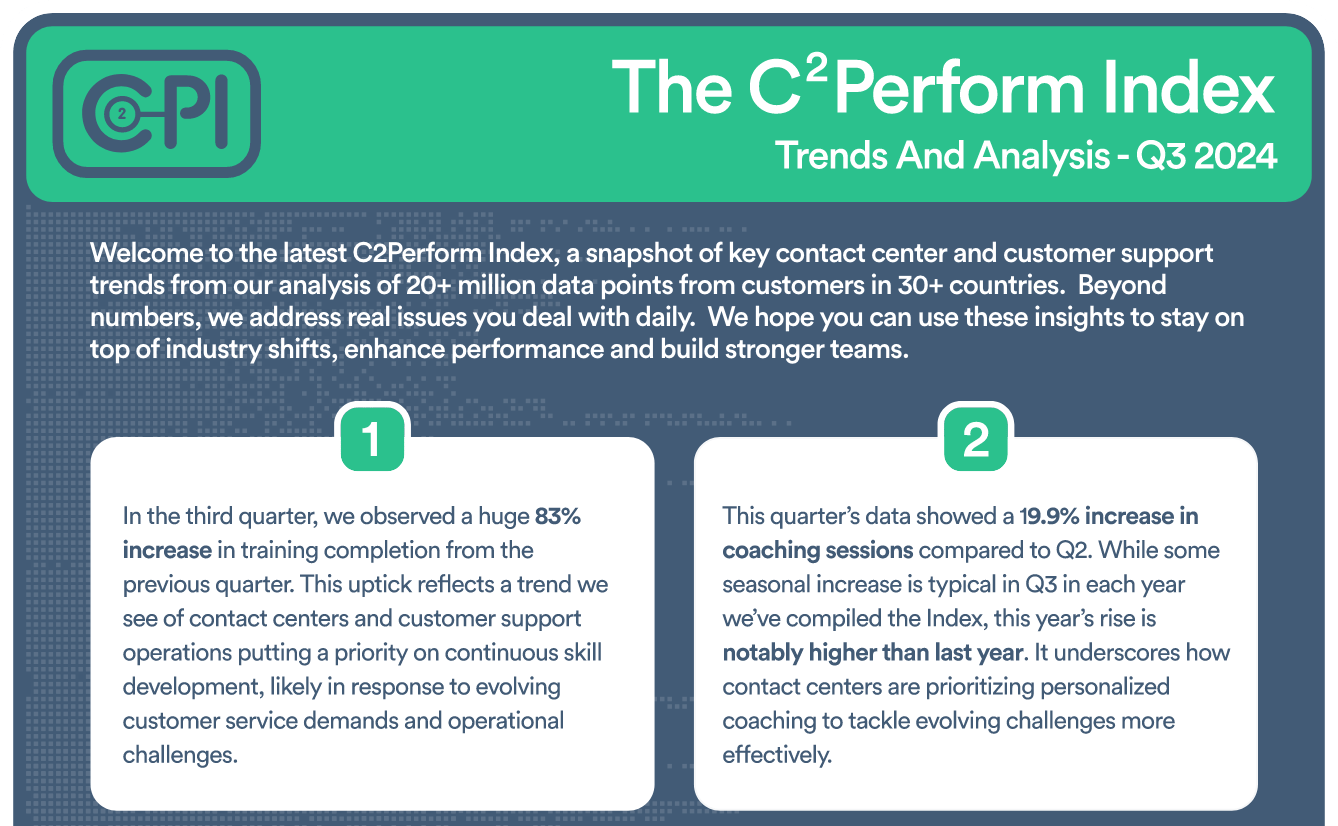
Insightful Analysis on Contact Center and Customer Support Trends

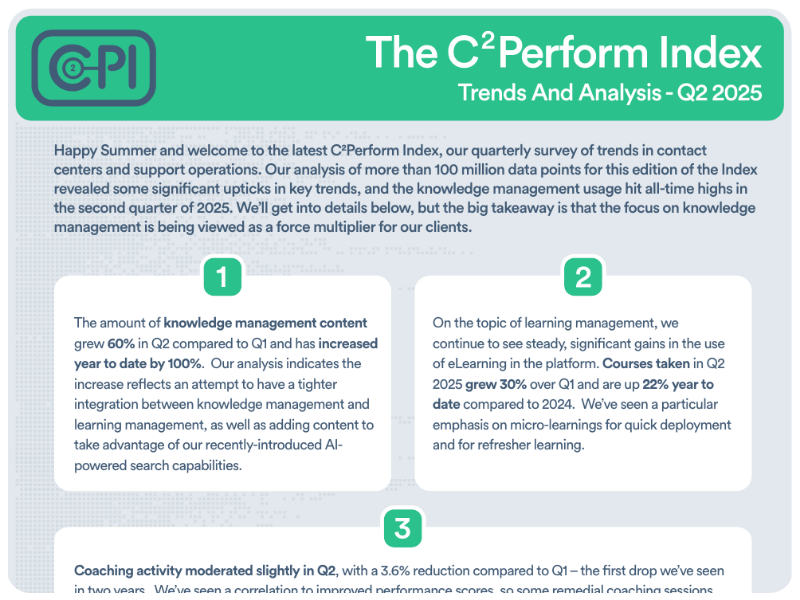
Check out our eBook, New Thinking About an Old Problem


Join contact center and customer support professionals around the world who can’t wait to see the C2PI every quarter.


300 Colonial Center Drive, Suite 100
Roswell, GA 30076
Copyright © 2026 C2Perform. All Rights Reserved. Privacy Policy Acceptable Use Policy