
 English
 Español
Claims Processing Systems: A Rollout Plan
A claims processing systems rollout guide covering workflow readiness, knowledge migration, role-based learning, QA governance, and adoption.
Read More
Find the best affordable contact center performance software for your team. Compare features, pricing, and benefits to choose the right fit for your business.

Your agents are your most valuable asset, but high turnover can make it feel like you’re constantly starting from scratch. The right software can be a powerful tool for retention, but only if it’s designed to support your team’s growth, not just monitor their metrics. Effective coaching, fair evaluations, and clear development paths are key to building an engaged and confident team. This article will explore how the right tools can transform your approach to performance management. We’ll focus on finding affordable contact center performance software that invests in your people, helping you reduce attrition and build a stronger, more skilled team from the ground up.
When you’re looking for contact center software, the word “affordable” gets thrown around a lot. But what does it actually mean? It’s easy to think it just means “cheap,” but settling for the lowest price tag can end up costing you more in the long run through lost productivity, frustrated agents, and a clunky customer experience. True affordability is about finding the right balance between cost and value—getting the essential features you need without paying for extras you don’t.
The real cost of software goes beyond the monthly subscription. You need to consider the total cost of ownership. Most platforms use a per-agent, per-month pricing model, which can range anywhere from $65 to over $250. The key is to find a provider with clear pricing so you know exactly what you’re paying for, without worrying about hidden setup fees or surprise charges down the line. An affordable solution is one that fits your budget today and won’t create financial headaches tomorrow.
Ultimately, the most affordable software is the one that effectively solves your team’s specific challenges. A low-cost solution that lacks critical features for quality assurance or agent coaching isn’t a bargain; it’s a roadblock. The right choice depends entirely on your operational goals and how you engage with customers. An affordable platform should provide robust tools that help your team perform better, not a stripped-down version that barely gets the job done. It’s about investing in a system that delivers a real return by improving efficiency and agent performance.
When you're looking for affordable contact center software, it's easy to assume you'll have to sacrifice key features. But "affordable" shouldn't mean "bare-bones." The right software, even on a budget, can provide the essential tools you need to manage your team effectively and keep customers happy. It’s all about finding a platform that focuses on the core functionalities that truly drive performance.
Think of it this way: you need a solid foundation before you can add the fancy extras. A great affordable solution will deliver powerful tools for monitoring quality, coaching agents, and understanding performance through clear data. Let's walk through the non-negotiable features you should look for in any contact center software, regardless of its price tag.
You can't fix what you can't see. Real-time analytics and performance dashboards give you an immediate, at-a-glance view of what’s happening in your contact center. This isn't about micromanaging; it's about being proactive. With live data on call volumes, wait times, and agent availability, you can make quick adjustments to improve efficiency and prevent small issues from becoming big problems. A good dashboard provides the valuable insights you need to support your team and make smart, strategic decisions on the fly.
Call recording is a must-have for any team focused on quality and consistency. It’s the foundation of effective training and fair performance evaluations. By reviewing actual customer interactions, you can identify coaching opportunities, pinpoint process gaps, and recognize top performers. A platform with Connected Quality Assurance allows you to systematically monitor interactions, ensuring that every agent provides the best possible customer experience. This feature is crucial for maintaining high standards and providing targeted feedback that helps your team grow.
Your agents are your most valuable asset, and investing in their development pays off. Look for software that includes built-in coaching tools. Features like call scoring, live monitoring, and personalized feedback sessions help you transform performance data into actionable improvement plans. Instead of just pointing out mistakes, Dynamic Coaching helps you guide agents toward success. These tools make it easier to provide consistent, constructive feedback that builds confidence and skills, ultimately leading to better customer conversations and lower agent turnover.
While real-time dashboards are for in-the-moment decisions, comprehensive reports are for long-term strategy. You need the ability to dig deeper into performance metrics over time. These reports help you identify trends, measure the impact of training initiatives, and demonstrate your team's value to the wider organization. Having access to comprehensive reporting is essential for making data-driven decisions that guide your operational strategy. Look for software that makes it easy to generate, customize, and share reports on the KPIs that matter most to your business.
Customers expect to connect with you on their preferred channels, whether it's by phone, email, or chat. Your software should be able to manage these interactions in one unified place. Omnichannel support ensures a seamless customer experience and gives your agents the full context of a customer's journey. Furthermore, the software should integrate smoothly with your existing tools, like your CRM. A central Communications Hub that connects your systems prevents data silos and empowers your team with the information they need to resolve issues efficiently.
Finding the right software often feels like searching for a needle in a haystack, but it doesn't have to be. We've looked at some of the best affordable options out there to help you find a platform that fits your team's needs and budget. Each of these tools brings something different to the table, whether you're a small business just starting out or a growing team looking for an all-in-one performance solution. Let's break down our top picks.
C2Perform is designed to streamline performance management processes, offering a comprehensive suite of tools that cater to various business needs. It’s an ideal choice for organizations looking to connect all their performance activities in one place. Instead of juggling separate systems, you get a single platform that handles everything from a Knowledge Management base and learning modules to Dynamic Coaching and quality assurance. Its user-friendly interface and robust analytics make it easy to track progress and identify areas for improvement. This integrated approach helps create consistency across your operations, making it simpler to support your team and deliver a better customer experience without breaking the bank.
If you're looking for a straightforward and cost-effective solution, AVOXI is a strong contender. It offers simple, flexible, and affordable call center software that’s designed to get you up and running quickly, often within a day or two. This makes it a great option for teams that don't need a lot of complex features but still want reliable performance tools. AVOXI focuses on the essentials, providing a low-cost platform without sacrificing core functionality. It’s a practical choice for businesses that prioritize ease of use and a fast setup, allowing you to improve your customer service without a significant upfront investment or a steep learning curve for your agents.
Xima Software carves out its niche by focusing specifically on the needs of smaller teams. It offers a powerful and affordable solution designed to help small businesses deliver great customer service without overspending. If you're running a small contact center, you know that every dollar counts, and Xima is built with that in mind. It provides the essential performance tools you need to monitor calls, track agent activity, and generate reports, all in a package that’s accessible for a small business budget. This makes it a fantastic starting point for teams that want to professionalize their operations and gain valuable insights into their customer interactions.
Nextiva stands out for its user-friendly design and its ability to manage customer conversations across multiple channels. It’s a great fit for teams that interact with customers on social media and other digital platforms in addition to phone calls. According to GetVoIP, Nextiva offers many unique channels, flexible call routing, and a built-in customer relationship management (CRM) tool even on cheaper plans. The built-in CRM is a huge plus, as it helps you keep all your customer information organized in one place. This platform is a solid choice if you’re looking for an intuitive system that can handle omnichannel support and provide a holistic view of the customer journey.
For teams interested in leveraging more advanced technology, Five9 is a leading cloud-based solution that incorporates artificial intelligence to streamline workflows. It uses AI to manage employees, provide advanced call summaries, and offer smart self-service options. According to GetVoIP, its platform also includes good tools for supervisors and detailed conversation analysis. This focus on AI can help automate routine tasks, provide deeper insights from customer calls, and empower supervisors with powerful monitoring tools. As a cloud platform, it offers flexibility for remote and hybrid teams. If you're looking to invest in a more tech-forward solution that can help you work smarter, Five9 provides the advanced features to make it happen.
Let's talk numbers. When you're looking for contact center software, the price tag is often the first thing you check. The good news is that "affordable" doesn't have to mean "basic." Many powerful platforms are designed to fit within a reasonable budget, but the pricing models can be a little confusing at first glance.
Most software in this space is sold as a subscription service, typically with a monthly fee based on the number of agents using it. However, the final cost depends on several factors, including the specific features you need, the level of support you require, and whether there are any one-time setup fees. Understanding these components is the key to finding a solution that gives you the best value without any surprise charges down the line. Let’s break down what you can expect to see as you compare your options.
The most common pricing structure you'll encounter is a per-agent, per-month fee. This model is straightforward: you pay a flat rate for each team member who needs access to the software. Based on industry research, you can generally expect this cost to fall somewhere between $65 and $250 per agent per month.
Why such a wide range? It all comes down to the capabilities included. A lower-priced plan might cover essential quality assurance tools, while a higher-tier plan could include advanced features like AI-driven analytics, comprehensive learning management, and in-depth coaching modules. Your goal is to find the sweet spot that provides the tools your team needs to excel without paying for features you won't use.
To make things more flexible, many providers offer tiered pricing plans. You might see entry-level plans starting as low as $19.99 to $50 per user per month. These tiers are designed to serve businesses of different sizes and needs. A startup or small business might begin with a basic package focused on call monitoring and reporting, while a larger enterprise can opt for a premium plan that includes a full suite of performance tools.
This tiered approach allows you to scale your investment as your team grows. Many companies also offer a free trial, which is a fantastic way to test out the features and see if the platform is a good fit for your workflow before you commit.
The monthly per-agent fee isn't always the full story. When you're evaluating software, it's crucial to ask about any additional costs that might not be advertised upfront. Some providers charge one-time setup or implementation fees, which can add a significant amount to your initial investment. Others might require a long-term contract that locks you in for a year or more.
Look for providers who offer transparent, all-inclusive pricing. Many modern solutions have no setup fees or minimum contracts, giving you more flexibility and control over your budget. Before signing anything, be sure to request a detailed quote that outlines every potential charge, from initial training to ongoing support, so you know exactly what you're paying for.
When you're looking at contact center software, it’s easy to get overwhelmed by dashboards filled with charts and graphs. More data doesn't always mean more clarity. The key is to focus on the analytics and reporting features that provide actionable insights, not just a sea of numbers. The right software turns complex data into a clear story about your team's performance and your customers' experience. It should help you spot trends, identify coaching opportunities, and make strategic decisions without needing a data science degree.
Instead of getting distracted by flashy but ultimately useless features, let's focus on the reporting capabilities that will actually help you improve performance, support your agents, and keep customers happy. These are the features that provide real value, especially when you're working with a budget.
Your software’s dashboard should give you a clear, at-a-glance view of the metrics that define success for your team. Don't get bogged down tracking dozens of vanity metrics. Instead, focus on the core Key Performance Indicators (KPIs) that directly impact efficiency and service quality. These typically include First Call Resolution (FCR), Average Handle Time (AHT), and Customer Satisfaction (CSAT). A great platform won't just show you these numbers; it will help you understand the "why" behind them. With the right quality assurance tools, you can connect these high-level KPIs directly to individual agent performance and specific customer interactions.
You need both a real-time and a long-term view of your operations. Real-time monitoring gives your frontline leaders the immediate data they need to manage call queues, adjust staffing on the fly, and provide in-the-moment support to agents. It’s about making quick, tactical decisions to handle the day's challenges.
Historical reporting, on the other hand, is for strategic planning. It allows you to analyze trends over weeks or months, identify recurring issues, and measure the impact of training initiatives. This data is crucial for building effective coaching plans and making informed decisions about process improvements. Your software should offer both capabilities, allowing you to react instantly while also planning for the future.
Manually pulling reports is a time-consuming task that keeps your leaders from focusing on what they do best: coaching and supporting their teams. Look for software that automates reporting, sending key insights directly to your inbox on a schedule you set. This not only saves time but also ensures consistency in how performance is measured. Furthermore, the ability to easily export data is critical. You may need to share reports with stakeholders outside the contact center or combine performance data with information from other business systems. Flexible export options give you control over your data and allow for deeper, more customized analysis when you need it.
Effective coaching is the cornerstone of a high-performing contact center. It’s about more than just correcting mistakes; it’s about building confident, skilled agents who feel supported in their roles. The right software transforms coaching from a subjective conversation into a data-driven development process. When you’re looking at affordable options, you don’t have to sacrifice the features that make a real difference. Strong coaching tools help you pinpoint specific areas for improvement, provide timely feedback, and track progress over time. This creates a consistent and fair environment where every agent has a clear path to success. Let’s look at the specific features that help you provide coaching that sticks.
Moving beyond vague feedback is the first step to better performance. Call scoring and quality assessment tools provide a structured framework for evaluating interactions. Instead of telling an agent to "be more empathetic," you can point to specific criteria on a scorecard that weren't met. This objectivity makes feedback easier to understand and act on. With a Connected Quality Assurance system, you can create standardized evaluation forms for calls, emails, and chats, ensuring every agent is measured against the same benchmarks. This consistency is key to identifying skill gaps across the team and providing targeted training where it’s needed most.
Some of the most powerful learning moments happen live. Real-time coaching features allow managers to listen in on calls and provide immediate, private guidance without the customer ever knowing. This could mean sending a quick message to an agent who is struggling to find information or using a "whisper" function to suggest a better way to phrase a question. This in-the-moment support helps agents handle difficult situations more effectively and learn on the job. Providing Dynamic Coaching helps agents build confidence faster, reduces escalation rates, and ensures customers get the right answers on the first try.
Great coaching connects today’s feedback with tomorrow’s goals. Performance tracking uses data from call scores and other KPIs to reveal trends over time. You can see if an agent is consistently struggling with a particular issue or excelling in a specific area. These insights allow you to create personalized development plans that focus on meaningful skill-building. Instead of one-size-fits-all training, you can assign targeted learning modules or coaching sessions. This approach shows agents you’re invested in their long-term growth and helps you manage your Talent effectively. It turns performance management into a continuous cycle of improvement, not just a series of disconnected evaluations.
As a small or medium-sized business, you’re likely competing with larger companies that have deeper pockets. But a bigger budget doesn’t always mean better results, especially when it comes to contact center performance. Affordable software levels the playing field, giving you access to powerful tools that can streamline your operations, support your agents, and create happier customers.
The key is finding a solution that delivers real value without the enterprise-level price tag. It’s not about settling for fewer features; it’s about investing in a smart, integrated platform that provides everything you need to succeed. The right software acts as a strategic partner, helping you manage your resources effectively while driving measurable improvements in quality and efficiency. By choosing wisely, you can build a high-performing team and a loyal customer base, all while keeping your budget in check.
Let’s be honest: budget is always a top concern. Many small businesses need powerful contact center tools but worry about the high cost. The good news is that you don’t have to choose between performance and affordability. Modern software offers transparent, per-agent pricing models that make it easy to predict your expenses and avoid surprise fees. Instead of paying for a dozen different tools, you can find an all-in-one platform that combines knowledge management, quality assurance, and coaching into a single, cost-effective solution. This approach not only simplifies your budget but also streamlines your tech stack, saving you time and administrative headaches.
Your business isn’t standing still, and your software shouldn’t hold you back. Small and medium-sized businesses need tools that can grow with them without demanding huge extra costs. The best affordable platforms are built for scalability. Whether you have a team of 10 agents today or 100 next year, a flexible, cloud-based system can adapt to your needs seamlessly. This means you can add new users, expand to new channels, and access more advanced features as your company evolves. Investing in a scalable solution ensures your talent management strategy is supported for the long haul, so you won’t have to go through a painful and expensive migration process down the road.
Ultimately, the goal of any contact center is to provide outstanding customer service. Affordable software makes this possible by giving your team the tools they need to perform at their best. You can give great customer service without spending a fortune. Features that were once reserved for massive corporations, like call recording and scoring, are now accessible to businesses of any size. By implementing a Connected Quality Assurance program, you can monitor interactions, identify coaching opportunities, and ensure every customer receives the same high level of care. This direct investment in quality pays off through increased customer satisfaction and loyalty.
The modern workplace is flexible, and your management tools should be, too. With cloud-based software, you aren’t tied to a physical office. Because the platform is managed online by the provider, it’s a perfect fit for remote and hybrid teams. You can log in from anywhere to review performance dashboards, listen to call recordings, and provide real-time feedback to your agents. This flexibility allows you to hire the best talent, regardless of location, and maintain consistent quality standards across your entire team. With tools for Dynamic Coaching, you can support your agents’ development and keep them engaged, no matter where they’re working.
Picking the right software feels like a huge decision, because it is. It’s not just about finding a tool with the longest list of features; it’s about finding a partner that fits your team’s workflow, budget, and future goals. The right platform can streamline everything from coaching to quality assurance, creating a more consistent and supportive environment for your agents and ultimately, a better experience for your customers. The wrong one, however, can create more headaches than it solves, leading to frustrated employees and disjointed operations. Before you get lost in product demos and pricing pages, it’s helpful to take a step back and get clear on what you truly need. By focusing on your team’s specific challenges and growth path, you can confidently select a platform that solves today’s problems and supports you tomorrow. This process doesn’t have to be complicated. It starts with asking the right questions about your current operations, where you see your team heading, and what a true all-in cost looks like for your business.
First, take a close look at your team's daily operations. What are the biggest friction points? Are your agents struggling to find information quickly? A solid Knowledge Management system could be the answer. Is your quality assurance process manual and time-consuming? Maybe it’s time to look into a Connected Quality Assurance tool. The right software directly addresses your most pressing operational goals. Make a list of must-haves versus nice-to-haves. This simple exercise will help you cut through the noise and focus on solutions that will make an immediate impact on your team’s performance and your customers’ satisfaction.
The software that works for you today needs to work for you a year from now, and even further down the road. Many small businesses choose a simple tool to save money, only to find they outgrow it quickly and have to start their search all over again. Think about your company’s growth trajectory. Do you plan to expand your team, add new communication channels, or introduce more complex coaching programs? You need software that can grow with you without requiring a massive price jump or a complicated migration. An all-in-one platform gives you the flexibility to activate new features as you need them, ensuring your tools scale alongside your business.
The advertised price is rarely the final price. To understand the true investment, you need to look at the total cost of ownership. This includes the monthly per-agent fee, which can range widely depending on the provider, as well as any setup fees, training costs, and charges for ongoing support. Ask vendors for a clear breakdown of all potential expenses. Also, consider the hidden costs of not having the right tools, like lower agent productivity or higher turnover. Sometimes, a slightly higher initial investment in a comprehensive platform can save you a significant amount of money in the long run by improving efficiency and retention.
When you’re comparing software, it’s easy to get lost in feature lists and pricing tables. But the true value of a platform often lies in the support system behind it and its ability to connect with the tools you already use. A low-cost solution can quickly become expensive if it creates data silos or leaves your team stranded during a critical issue. Think of it this way: the software you choose becomes a partner in your operations. You need a partner that’s reliable, helpful, and works well with others.
Prioritizing support and integrations isn't just about convenience; it's about creating a stable, efficient environment where your team can perform at its best. A platform that seamlessly integrates with your CRM, for example, eliminates frustrating extra steps for your agents and provides them with the context they need to handle customer interactions effectively. Likewise, knowing you have a responsive support team on standby provides peace of mind and protects your business from prolonged downtime. Before you sign a contract, make sure you have a clear understanding of the implementation process, available training, and how the provider will support you long-term. This foresight prevents future headaches and ensures the software actually improves your operations instead of complicating them.
When your performance management software goes down or you hit a technical snag, your entire operation can grind to a halt. That’s why you can’t afford to overlook the quality of customer support. Look for providers that offer accessible, responsive help when you need it most. Some companies offer 24/7 live support, ensuring you can get assistance no matter your business hours. Before committing, ask about typical response times and what support channels are available—whether it's phone, email, or live chat. A strong support system is a key part of any truly affordable solution because it prevents minor issues from becoming costly problems.
Your contact center doesn't operate in a vacuum. It relies on a whole ecosystem of tools, with your Customer Relationship Management (CRM) software often at the center. A performance platform that integrates with your existing systems creates a single source of truth and streamlines workflows for everyone. When your Connected Quality Assurance tools can pull data directly from your CRM, agents get a complete picture of customer history without having to switch between screens. This not only makes their job easier but also leads to more personalized and effective customer interactions. Always check a platform’s integration capabilities to ensure it fits neatly into your current tech stack.
Even the most intuitive software comes with a learning curve. A smooth implementation process, backed by solid training resources, is essential for getting your team on board and seeing a return on your investment quickly. The best providers offer more than just a user manual; they provide structured onboarding, implementation assistance, and ongoing training materials. Look for a partner that makes setup straightforward, especially if you have limited IT resources. A platform designed for easy adoption ensures your agents and managers can start using its learning management features to their full potential right away, without a long and complicated rollout.
Switching to a new performance management system is a big step, and even the most affordable software can present a few hurdles. But with a little foresight, you can make the transition smooth for your team and your budget. Thinking through potential challenges ahead of time helps you get the most value from your investment, right from day one. Let’s walk through how to prepare for a few common implementation speed bumps: budget constraints, staff training, and employee turnover.
Finding a platform that fits your budget is the first win, but it’s also important to plan for the resources needed to get it up and running. Implementation isn't just about the software license; it involves your team's time for training and IT's time for setup. To stay on track, map out these "soft" costs from the beginning. Look for a partner that offers a straightforward, cost-effective solution without a lot of hidden fees. A good provider understands that small and medium businesses need powerful tools without a giant enterprise price tag. By choosing a comprehensive platform, you can often consolidate costs and get everything you need in one practical system.
For any new software to be successful, your team has to actually use it. That’s why a solid training and adoption plan is non-negotiable. Start by creating clear, easy-to-follow guides and schedule dedicated training sessions. It’s also helpful to identify a few "champions" on your team who can help their peers. The best software will integrate smoothly with the tools your team already uses, like your CRM, which makes adoption much easier. Your software provider should also offer great support and a robust learning management system to help your staff feel confident as they learn the new platform. This ongoing support ensures the tool becomes a helpful part of their daily workflow.
Contact centers often struggle with high agent turnover, and the stress of learning a new system can add to the problem if it’s not handled well. You can flip this challenge on its head by framing the new software as a tool for agent success. When agents see that the platform provides fair evaluations, clear feedback, and pathways for growth, they become more engaged. Involve your agents in the implementation process by asking for their feedback. Using a system with built-in engagement tools, like recognition and gamification, can also help reduce attrition by making work more rewarding and supportive. This approach turns a simple software rollout into a culture-building opportunity.
"Affordable" sounds like a nice way of saying "cheap." What's the real difference? That's a fair point, but they're worlds apart. "Cheap" software often cuts corners on essential features, support, and reliability, which can cost you more in the long run through frustrated agents and lost customers. True affordability is about value. It means you get all the core tools you need to effectively manage quality, coach your team, and track performance without paying for enterprise-level extras you won't use. It’s an investment in a system that solves your problems and delivers a real return.
I'm running a small team. Do I really need a platform with all those features like coaching and quality assurance? Absolutely. In fact, establishing strong quality and coaching habits early on is what helps a small team grow successfully. You don't need an overly complex system, but you do need a solid foundation. An affordable platform gives you the tools to provide consistent feedback and ensure every customer gets a great experience. Think of it as building the right operational muscles from the start, which is far easier than trying to fix bad habits later.
Is it better to get an all-in-one platform or piece together different tools for things like coaching and reporting? While using separate, specialized tools can seem appealing, an all-in-one platform almost always wins for efficiency and clarity. When your quality assurance, coaching, and performance data are all connected, you get a complete picture of what's happening. This allows you to tie coaching directly to specific interactions and track progress seamlessly. It also simplifies your budget and saves your team the headache of switching between multiple systems.
How can I be sure I won't outgrow an "affordable" solution in a year or two? This is a crucial question, and the answer lies in scalability. The best affordable platforms are designed to grow with you. Look for a provider that offers flexible plans or the ability to add more advanced features as your team expands. The goal is to find a long-term partner, not a temporary fix. This foresight prevents you from having to go through a painful and expensive migration process just as your business is gaining momentum.
What's the biggest mistake teams make when implementing new software? The most common mistake is focusing entirely on the technology and forgetting about the people. You can have the best software in the world, but it won't make a difference if your team doesn't understand how to use it or why it matters. A successful implementation requires a clear training and adoption plan. Involve your agents in the process, show them how the new tools will help them succeed, and provide ongoing support as they learn.
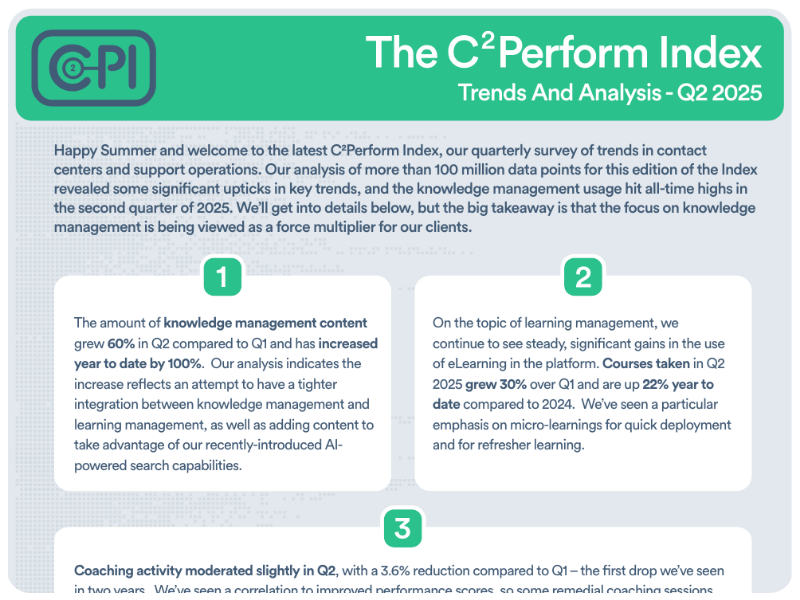
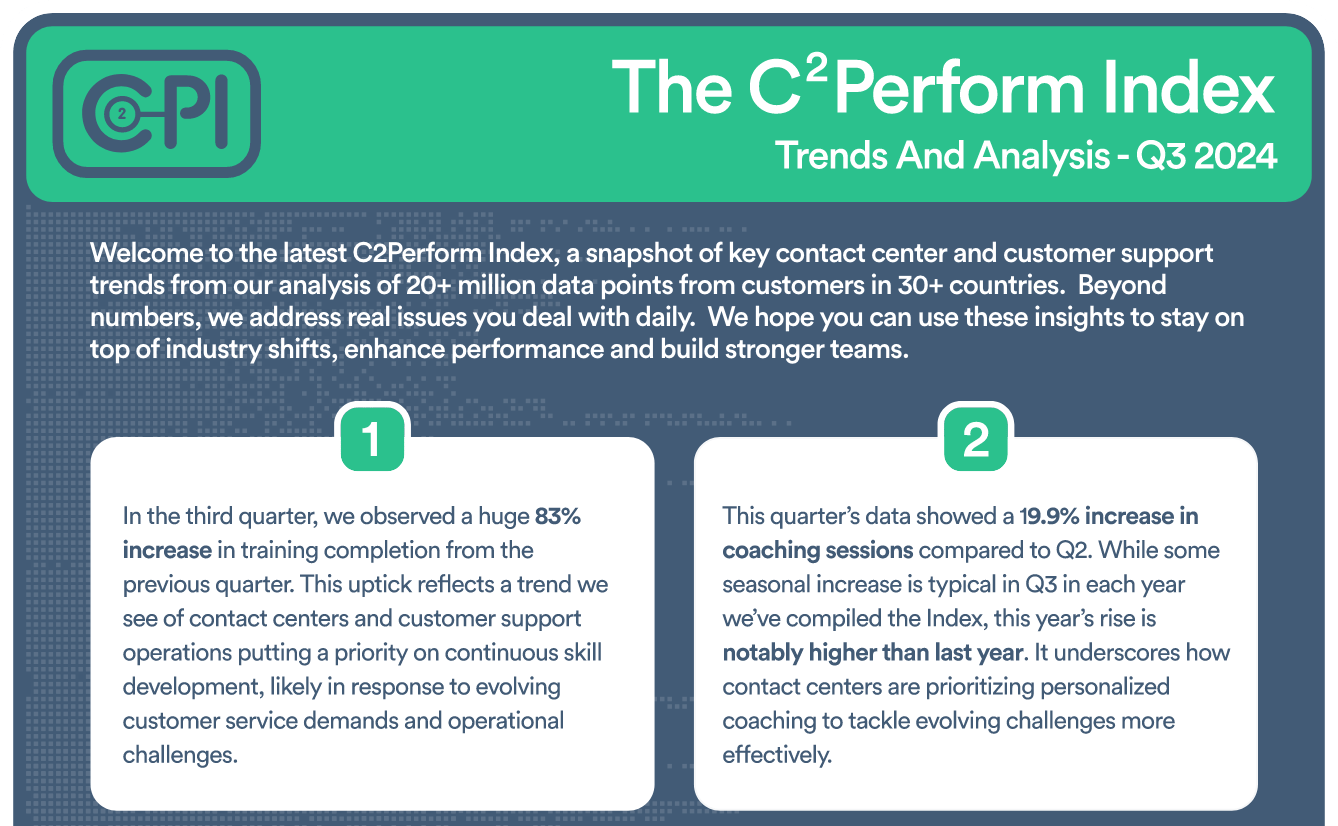
Insightful Analysis on Contact Center and Customer Support Trends

Check out our eBook, New Thinking About an Old Problem


Join contact center and customer support professionals around the world who can’t wait to see the C2PI every quarter.


300 Colonial Center Drive, Suite 100
Roswell, GA 30076
Copyright © 2026 C2Perform. All Rights Reserved. Privacy Policy Acceptable Use Policy