
 English
 Español
Claims Processing Systems: A Rollout Plan
A claims processing systems rollout guide covering workflow readiness, knowledge migration, role-based learning, QA governance, and adoption.
Read More
Multi channel contact center software helps your team manage calls, emails, chat, and social messages in one place for a smoother customer experience.

Your contact center generates a massive amount of data from every call, chat, and email. But collecting this information is only the first step. The real challenge is turning those numbers into meaningful performance improvements for your team. This is where the right multi channel contact center software becomes more than just a communication tool; it becomes an engine for growth. By consolidating interaction data from every touchpoint, you can identify specific coaching opportunities, build targeted training programs, and measure success consistently across your entire operation. This guide explains how to choose a system that helps you transform raw data into a cycle of continuous improvement.
Your customers connect with you in more ways than one. They might call for an urgent issue, send an email for a detailed query, or use live chat for a quick question. Multi-channel contact center software is the technology that brings these different streams of communication under one roof, allowing your team to manage interactions across various platforms. Instead of having separate systems for phone calls, emails, and social media messages, a multi-channel approach provides a more centralized way to handle customer service. This setup is designed to meet customers on their preferred channels, making it easier for them to get the help they need and for your team to provide it efficiently.
At its core, multi-channel software is a central hub where your business can handle all customer talks across different platforms. This typically includes traditional phone calls, emails, website live chats, social media messages, and SMS texts. The main purpose is to be available wherever your customers are, giving them the flexibility to choose how they want to interact with you. By consolidating these channels, you can streamline workflows for your agents, making it easier to track incoming requests and respond promptly. This approach helps organize the chaos of modern communication and ensures no customer query gets lost in the shuffle, which is a foundational step in building a better service experience.
Think of a multi-channel system as a house with several rooms. Each room represents a different communication channel, like phone, email, or chat. While all these rooms are part of the same house, the doors between them aren't always open. This means the channels often operate in separate silos. For example, if a customer calls one day and then sends an email the next, the agent handling the email might not have easy access to the details of the previous phone conversation. Each interaction is treated as a distinct event within its specific channel, which can sometimes create a disconnected experience for the customer and the agent.
When you start looking at different multi-channel platforms, the lists of features can feel endless. To cut through the noise, it helps to focus on the capabilities that will truly impact your team's performance and your customers' experience. The right software doesn't just add more channels; it integrates them intelligently to make your agents' jobs easier and your operations smoother. Think of these features as the foundation of a system that supports your team, streamlines workflows, and provides the data you need to make smart decisions. Here are the essential features to look for.
A unified agent dashboard is the command center for your team. It brings all your customer communication channels, like voice, email, web chat, and social media, into a single, manageable interface. This means your agents aren't constantly switching between different windows and applications to handle inquiries. Instead, they have a complete view of the customer's history and current issue right in front of them. This setup reduces confusion, speeds up response times, and allows agents to focus their energy on providing great service instead of fighting with their tools. It’s a simple concept that makes a huge difference in an agent's day-to-day workflow.
Getting customers to the right person on the first try is a game-changer for satisfaction and efficiency. Smart routing and queue management tools make this possible. This feature automatically directs incoming interactions from any channel to the agent best suited to handle them based on skills, experience, or availability. For example, a complex technical question can go straight to a tier-2 specialist, while a billing inquiry is sent to the finance team. This intelligent distribution prevents customers from being bounced around and ensures your team’s expertise is used effectively, which is a huge step toward improving first call resolution.
AI is now an essential part of modern contact centers, transforming how teams handle customer service. In a multi-channel platform, this often looks like AI-powered chatbots handling routine questions, freeing up agents for more complex issues. It can also mean real-time assistance, where AI suggests answers or next steps to an agent during a live chat or call. While many platforms use AI to analyze what happened during an interaction, the real value comes from using those insights to drive improvement. This data can pinpoint specific opportunities for targeted Dynamic Coaching and development, turning a simple analysis into a tool for growth.
You can't improve what you don't measure. Real-time analytics give you a live view of your contact center's performance, from call volumes and wait times to agent productivity across different channels. Many platforms even offer live interaction analytics with automatic agent evaluation. But gathering this data is only half the battle. The most important step is turning those numbers into action. A strong performance management system uses this data to fuel a Connected Quality Assurance program, helping you identify trends, address issues as they happen, and provide your team with timely, relevant feedback that actually improves performance.
Even the best agents can't memorize everything. That's why seamless integration with a robust knowledge base is non-negotiable. When your multi-channel software connects directly to your Knowledge Management system, agents can find accurate, up-to-date information without ever leaving their dashboard. They can pull up product specs, policy details, or troubleshooting guides in seconds. This immediate access to information is critical for providing correct answers on the first contact and maintaining consistency across all channels. It equips your team with the confidence and resources they need to resolve customer issues quickly and effectively.
Adopting a multi-channel strategy is about meeting your customers where they are and equipping your team with the tools they need to succeed. When you manage all your communication channels from a single, unified platform, you create a more cohesive experience for everyone involved. This approach doesn't just make things tidier; it directly affects your key performance metrics, from agent efficiency to customer satisfaction. By breaking down the silos between phone, email, chat, and social media, you give your team a complete picture of the customer journey. This context is the foundation for providing smarter, faster, and more personal support, which is what sets great contact centers apart.
First Call Resolution (FCR) is a critical metric for any contact center because it measures your ability to solve a customer's issue the first time they reach out. When agents have to work within disconnected systems, they lack the full story. A customer might have to repeat information they already shared in a chat or email, which is frustrating for them and inefficient for your team. A multi-channel system gives agents a complete history of every customer interaction, regardless of the channel. This allows them to make more intelligent suggestions and resolve issues faster. With the right context and access to a centralized Knowledge Management system, your team can provide accurate answers on the first try.
Juggling multiple platforms for different communication channels is a major drain on productivity. Agents waste valuable time switching between screens, logging in and out of different tools, and manually piecing together customer information. A multi-channel contact center brings all communications into a single, unified dashboard. This streamlined approach allows you to manage communication across every channel, from phone calls to social media messages, without the extra steps. This not only saves time but also reduces the chance of human error. When your operations are more efficient, your agents can handle more interactions and focus on what really matters: helping customers.
A better agent experience almost always leads to a better customer experience. When your team feels confident and supported, it shows in their interactions. Multi-channel systems reduce agent frustration by providing them with the information and tools they need in one place. This empowerment, combined with effective multi-channel support training, allows them to deliver consistently great service. When customers feel heard and their issues are resolved quickly, their satisfaction and loyalty grow. Investing in the right tools and Dynamic Coaching for your team is a direct investment in your customer relationships.
As your business expands, so will the volume and variety of your customer inquiries. A scalable, multi-channel solution allows you to adapt without disrupting your operations. Modern cloud-based contact centre solutions make it simple to add new channels or increase the number of agents as your needs change. This flexibility ensures you can maintain a high level of service, even during periods of rapid growth. By building your support infrastructure on a platform designed for growth, you can future-proof your contact center and continue to meet evolving customer expectations without missing a beat.
You’ve probably heard the terms “multi-channel” and “omnichannel” used to describe contact centers, and it’s easy to assume they mean the same thing. While both approaches involve offering customers more than one way to get in touch, the way they connect those channels creates two very different experiences for your customers and your team.
Understanding this distinction is key. It affects everything from customer frustration levels to your ability to track agent performance effectively. A multi-channel setup gives customers options, but an omnichannel approach creates a single, seamless conversation that can follow the customer wherever they go. Let's break down what that really means in practice.
Think of a multi-channel system as a building with many doors. Customers can enter through the phone door, the email door, or the live chat door. The problem is that these doors lead to different, unconnected rooms. If a customer starts a conversation in the chat room and then decides to call, the agent who answers the phone has no idea what happened in the chat. The customer is forced to start over from the beginning.
An omnichannel system, on the other hand, connects all those rooms with hallways. Every channel is integrated. That same customer can move from chat to a phone call, and the agent will have the full history of their previous interactions right in front of them. This creates a single, continuous conversation instead of a series of separate ones.
With a multi-channel approach, the goal is to be available where your customers are. You offer support via phone, email, and social media to give them choices. This is a great first step, but the experience can feel disjointed. The service a customer receives on Twitter might feel completely different from the help they get over the phone because the agents are working with different information and context.
Omnichannel focuses on making the customer experience consistent and seamless, no matter how they contact you. It recognizes the customer as one person having an ongoing conversation with your brand, not as a series of isolated tickets. This consistency builds trust and shows customers you value their time by not making them repeat their story every time they switch channels.
The core issue with many multi-channel setups is that they create data silos. The chat system doesn’t talk to the email system, and neither talks to the phone system. This separation is what forces customers to repeat themselves and what prevents your agents from getting a full picture of the customer’s journey.
An omnichannel strategy breaks down these silos by design. It pools all interaction data into a unified customer profile, preserving the context of the conversation across every touchpoint. This unified view not only helps resolve issues faster but also provides a richer dataset for performance management. When you can see how an agent handles a single issue across multiple channels, you can provide more effective and targeted Dynamic Coaching to help them grow.
Switching to a multi-channel system is a big step, and like any major project, it comes with a few hurdles. Being aware of them ahead of time can make the transition much smoother for you and your team. Let’s walk through some of the most common challenges you might face and how to think about them.
Your contact center software doesn’t operate in a vacuum. It needs to communicate with your CRM, helpdesk, and other business-critical tools. A common challenge is ensuring your new multi-channel platform integrates smoothly with your existing tech stack. Without proper integration, agents are forced to toggle between different applications to find customer information, which slows them down and creates a disjointed experience. The goal is to create a single, unified view of the customer journey. This requires a platform that can not only handle multiple channels but also connect the data between them, which is essential for things like Connected Quality Assurance and performance tracking.
Rolling out new software is about more than just technology; it’s about people. A successful implementation depends on your team feeling confident and capable with the new tools. Training shouldn't just be a quick tutorial on new features. It needs to cover the specific skills required for each channel, from the professional tone needed for email to the quick, conversational style of web chat. Effective training aligns agent actions with your broader contact center goals. You can support this ongoing development by using a Learning Management system to assign targeted modules and track progress, ensuring everyone is prepared to deliver consistent, high-quality service across all channels.
When you open up more communication channels, you also open up more streams of customer data. While this data is incredibly valuable for personalizing the customer experience, it also comes with a major responsibility to keep it secure. You need to ensure that your multi-channel software provides agents with the context they need to resolve issues without exposing sensitive information. This means managing access controls, complying with data privacy regulations like GDPR or CCPA, and ensuring all data is encrypted and stored securely. A solid data management and security strategy is fundamental to building and maintaining customer trust.
A few common myths can trip teams up during implementation. First is the confusion between multi-channel and omnichannel. While related, they aren’t the same. A multi-channel system supports multiple, separate channels, but it often lacks the synchronization to carry context between them. Another misconception is that more technology, especially AI, will automatically lead to a better customer experience. While AI can automate simple tasks and provide helpful insights, it can’t replace the empathy and critical thinking of a human agent. The most effective approach uses technology to empower your team with better information and targeted coaching, not to replace them.
Picking the right multi-channel software feels like a huge decision, because it is. This system will become the backbone of your customer interactions and a core part of your team's daily workflow. The goal isn't just to find a platform with the longest feature list; it's about finding the one that aligns with your specific business needs, integrates smoothly with your existing tools, and can grow alongside you.
Think of this process as building a foundation. A solid multi-channel platform makes everything else easier, from training your team to analyzing performance. When your software works for you, your agents can focus on what they do best: helping customers. A system that clashes with your processes or operates in a silo will only create friction and frustration. As you explore your options, keep your long-term vision in mind. The right choice will not only handle today's customer conversations but will also set you up to meet their needs for years to come.
Before you even look at a demo, the first step is to understand where your customers are. A multi-channel contact center brings all your customer conversations, from phone calls and emails to live chat and social media messages, into one central hub. But you don't need to be on every single channel. The key is to be on the channels your customers actually use.
Take a look at your current data. Where are most inquiries coming from? If you're not sure, consider sending out a customer survey. Focusing on the right channels from the start ensures your team's efforts are directed where they'll have the most impact. This targeted approach helps you serve customers better and makes your support operations much more efficient.
Your multi-channel software shouldn't be an island. To be truly effective, it needs to connect with the other business systems you rely on every day. The most critical connection is usually with your Customer Relationship Management (CRM) platform. This integration gives your agents a complete view of the customer's history, allowing for more personalized and effective conversations.
Look for a platform that offers robust integration capabilities, especially with cloud-based applications. A well-connected system ensures that data flows seamlessly between your tools. For example, interaction data from your contact center can feed directly into your quality assurance tools, providing a richer context for evaluating agent performance and identifying coaching opportunities. This creates a unified ecosystem where every piece of technology works together.
The platform that fits your needs today might not be the right one a few years from now. As your business expands and customer preferences change, you'll need a system that can adapt. Scalability is one of the most important factors to consider when choosing your software. You should be able to easily add or remove communication channels as your strategy evolves.
Think about your business goals for the next three to five years. Do you plan to expand your team? Enter new markets? Launch new products? Your multi-channel software should support that growth, not hinder it. Choosing a flexible, scalable solution saves you from the significant disruption of having to switch platforms down the road, ensuring continuity for both your team and your customers.
As you compare different platforms, a few key features should be on your checklist. First, look for a unified agent dashboard. This gives your team a single screen where they can see and manage every customer conversation, regardless of the channel. It reduces the need to switch between multiple windows, which simplifies workflows and reduces the chance of errors.
Next, consider smart routing capabilities. A system that automatically sends inquiries to the right agent or department based on skill, availability, or other criteria is a game-changer. It gets customers the help they need faster. Finally, explore self-service tools like chatbots or automated phone menus. These options empower customers to find answers on their own for simple questions, freeing up your agents to handle more complex issues that require a human touch.
A multi-channel contact center platform doesn't operate in a vacuum. Its true power comes alive when it connects seamlessly with the other systems you rely on every day. Think of the platform as your central hub for communication, but the integrations are the spokes that connect it to the rest of your operational wheel. When these systems talk to each other, you move beyond simply managing conversations and start driving real performance improvements.
The goal is to create a single, unified ecosystem where data flows freely between tools. This gives your agents the context they need to help customers effectively and provides your leaders with the complete picture required to coach and develop their teams. Without these connections, you’re left with isolated data points that are difficult to turn into meaningful action. Let's look at the most critical integrations that make this possible.
Your Customer Relationship Management (CRM) system is the heart of your customer data. Integrating it with your contact center software is non-negotiable. This connection gives your agents a 360-degree view of the customer they’re interacting with, including past purchases, previous support tickets, and contact history across all channels.
When an agent can see this information instantly, they don't have to ask repetitive questions or place customers on hold to look up details. This not only speeds up resolution times but also makes the customer feel known and valued. Breaking down these data silos helps your team activate customer data in real-time, leading to more personalized and effective service with every interaction.
Once you start handling conversations across multiple channels, you need a way to monitor quality and consistency. Integrating with quality assurance tools allows you to score interactions, identify trends, and pinpoint areas for improvement. But collecting QA data is only half the battle. The real value comes when you use those insights to inform your coaching.
A strong integration feeds quality scores directly into a coaching platform, turning feedback into a structured development plan. Instead of just telling an agent they missed a step, you can show them the exact moment in a call or chat and assign a targeted micro-learning module. This transforms QA from a simple evaluation process into a powerful engine for dynamic coaching and continuous agent growth.
Workforce Management (WFM) software helps you with scheduling, forecasting, and ensuring you have the right number of agents available at the right times. Integrating your WFM platform with your contact center software provides a more complete view of agent performance and adherence.
This connection allows you to see how an agent's schedule adherence or attendance record correlates with their QA scores and customer satisfaction ratings. This holistic view is essential for fair and effective management. It helps you understand the full context of an agent's performance, recognizing that factors outside of a single customer interaction can play a significant role. This data helps you improve efficiency and support your team more effectively.
Your multi-channel platform will generate a massive amount of data, from call handle times and chat response rates to first contact resolution metrics. Integrating with analytics and reporting systems helps you make sense of it all. These tools consolidate data from different channels and present it in easy-to-understand dashboards.
This allows leaders to spot high-level trends, measure team performance against KPIs, and make data-driven decisions. When connected to your performance management system, these analytics do more than just report on what happened. They can trigger specific actions, like automatically assigning refresher content from your knowledge management system when an agent struggles with a specific topic, ensuring insights lead directly to improvement.
Switching to a new multi-channel system is a big move, but it doesn't have to be a painful one. A thoughtful implementation plan is your best friend here. It helps you get ahead of potential roadblocks and ensures your team feels confident from day one. By focusing on a clear strategy, proper training, and solid performance goals, you can make the transition feel less like a disruption and more like a natural step forward for your contact center.
Before you get caught up in software demos, take a step back and map out your path. The best place to start is by understanding what your customers actually want. Ask them how they prefer to get in touch, whether it's by phone, email, chat, or something else. Once you know which channels are most important, you can choose a system that connects them seamlessly. Your migration plan should outline the technical steps, a realistic timeline, and who on your team is responsible for each part of the process. A clear plan prevents last-minute scrambles and keeps everyone on the same page.
A new platform is only as good as the people using it. That’s why comprehensive training is non-negotiable. This isn't just about showing agents which buttons to click. Effective contact center training should cover the new technology, refine soft skills for each channel, and establish new workflows. For example, the tone for a chat conversation is very different from a phone call. Use a dedicated Learning Management system to deliver targeted modules and track progress. This ensures every agent has the skills and confidence to handle interactions on any channel you support.
How will you know if your new multi-channel strategy is working? You need to define success before you launch. Work with your team leaders to establish clear key performance indicators (KPIs) for each channel. While goals like First Call Resolution are universal, others might be channel-specific, like response time for chat or email. Creating these goals gives agents a clear reference point for success in their daily work. Integrating these metrics directly into your Quality Assurance and coaching programs helps turn performance data into meaningful improvement from the very beginning.
Implementing new software is also a cultural shift. To get everyone on board, you need to manage the change proactively. Start by communicating the "why" behind the move. Explain how the new system will make agents' jobs easier and improve the customer experience. Providing multi-channel support training shows you're invested in their success. Keep the lines of communication open for feedback and questions, and use a central Communications Hub to share updates and celebrate early wins. When your team understands the vision and feels supported, they're more likely to embrace the new way of working.
Implementing multi-channel software gives you access to an incredible amount of performance data. You can see how long agents spend on calls, their response times on chat, and customer satisfaction scores from email surveys. But collecting this data is only the first step. The real value comes from turning those numbers and reports into meaningful, measurable improvements for your team and your customers. Without a clear plan to act on these insights, data is just noise.
The key is to build a system where information flows directly into action. When you spot a trend in your quality scores, what happens next? When an agent excels on one channel but struggles on another, how do you support them? A strong performance management strategy connects the dots between what the data says and what your team does. This means using insights to inform targeted coaching, create relevant training programs, and consistently measure what matters across every single channel. By doing this, you create a cycle of continuous improvement that helps your team grow and your customers succeed.
Raw data from quality scores doesn't automatically lead to better performance. The magic happens when you translate those insights into specific, supportive coaching conversations. Instead of just telling an agent their First Call Resolution rate was low, you can use interaction analytics to pinpoint exactly where calls went off track. Were they struggling to find information in the knowledge base? Did they miss a chance to show empathy?
Using this specific feedback, you can create dynamic coaching sessions that focus on tangible skills. Creating clear goals and metrics gives agents a reference point to look back to after every customer interaction, helping them constantly align their actions with contact center goals. This approach transforms coaching from a review of past mistakes into a forward-looking plan for success.
Multi-channel data is a goldmine for identifying team-wide skill gaps and training opportunities. You might discover that while your team is excellent at resolving issues over the phone, they struggle to convey the right tone in chat messages. These kinds of insights allow you to move beyond one-off coaching and build a more strategic learning management plan.
Effective contact center training improves agent skills, customer satisfaction, and long-term loyalty. By analyzing performance data, you can assign targeted eLearning modules on specific topics, like writing for the web or de-escalation techniques for email. The right blend of structured onboarding, soft skills development, technology mastery, and ongoing learning helps agents succeed and stay engaged, turning data into genuine professional growth.
To truly understand performance, you need to measure it consistently everywhere your customers interact with you. The definition of a "good" interaction can vary by channel, so it's important to establish clear benchmarks for each one. For example, speed might be the top priority for live chat, while thoroughness and clarity are more critical for email support.
A connected quality assurance program allows you to evaluate performance against these unique standards. Training your customer service team to excel in multi-channel support isn’t just an exercise in skill-building; it delivers tangible benefits for your organization, your employees, and your customers. By tracking KPIs across the board, you get a complete picture of the customer experience and can make smarter decisions to improve it.
What’s the real difference between multi-channel and omnichannel? Think of it this way: a multi-channel approach gives your customers several different doors to knock on, like phone, email, and chat. The problem is that what happens behind one door isn't always known behind another. An omnichannel approach connects all those doors with hallways, creating a single, seamless conversation. If a customer sends a chat and then calls later, the agent has the full context, so the customer never has to repeat their story.
Will adding more channels just overwhelm my team? It’s a valid concern, but the right software actually prevents this. A unified dashboard brings every conversation from every channel into one manageable screen, so agents aren't constantly switching between applications. When combined with smart routing that sends inquiries to the best-suited agent, it streamlines their workflow. Instead of creating more chaos, it brings order to it, allowing your team to focus on helping customers, not fighting with their tools.
We already have a lot of performance data. How do we turn it into real improvement? Data is just the starting point; the goal is to connect it to action. Instead of just reviewing quality scores, a strong performance management system uses that information to trigger specific next steps. For example, if an agent consistently struggles with a certain type of question, the system can automatically assign a targeted training module from your learning management system. This transforms raw data into a personalized development plan that helps your team grow.
How do I know which communication channels my business should offer? You don't need to be everywhere at once. The best strategy is to be on the channels your customers actually use. Start by looking at your current data to see where most of your inquiries come from. If you're unsure, a simple customer survey can provide a lot of clarity. It's far more effective to provide excellent service on a few key channels than to spread your team too thin trying to cover them all.
What’s the most important thing to consider when choosing a new platform? While features like a unified dashboard and smart routing are essential, the most critical factor is integration. Your contact center software needs to connect smoothly with your other core systems, especially your CRM and quality assurance tools. Without strong integrations, you end up with disconnected data and inefficient workflows. A platform that creates a truly connected ecosystem is the foundation for everything else you want to achieve.
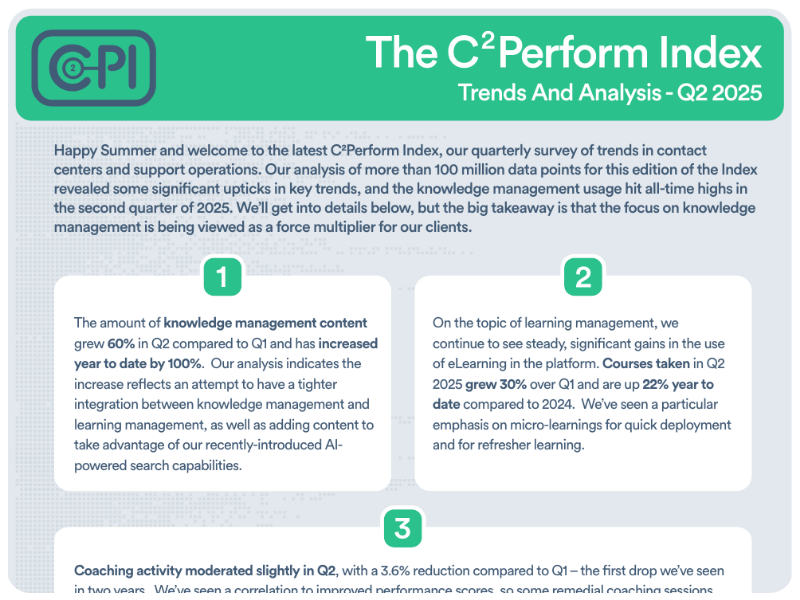
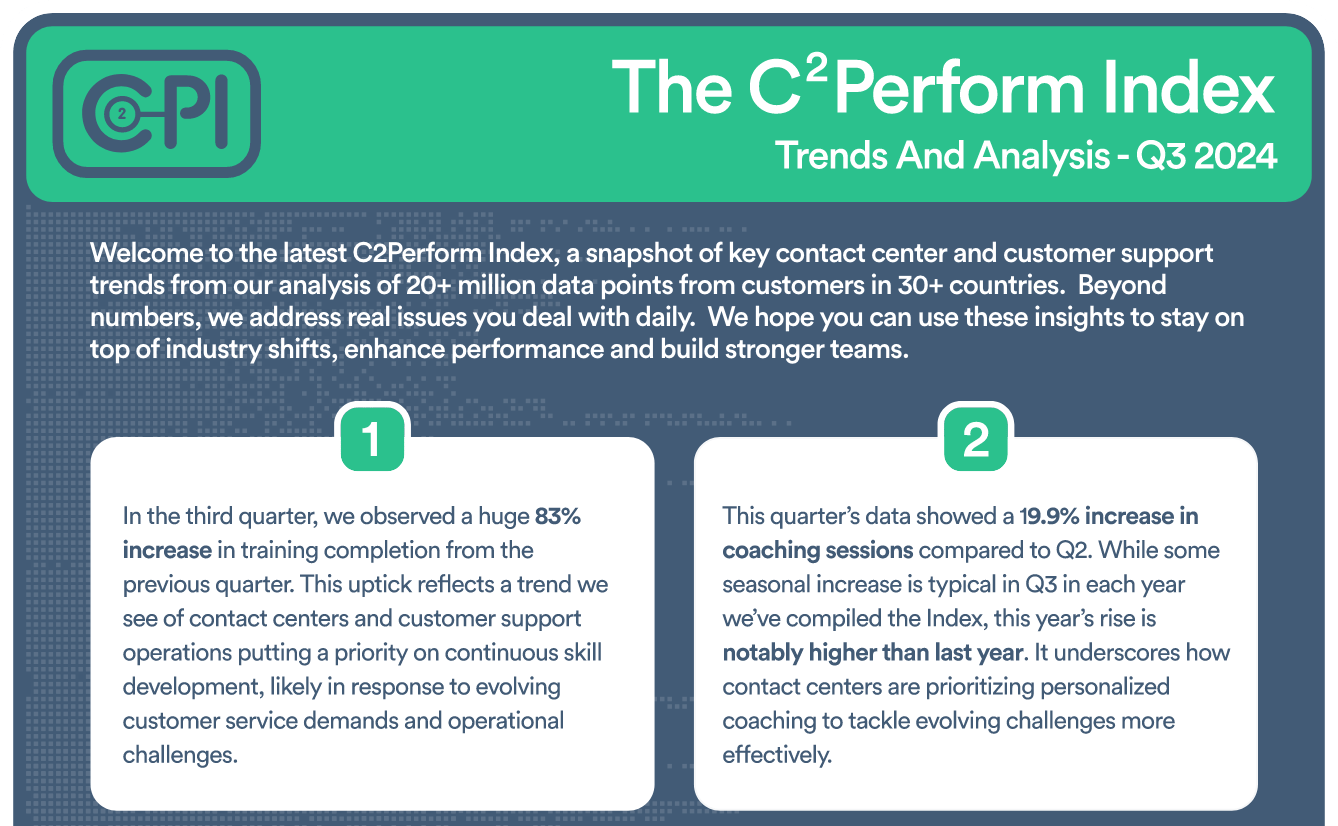
Insightful Analysis on Contact Center and Customer Support Trends

Check out our eBook, New Thinking About an Old Problem


Join contact center and customer support professionals around the world who can’t wait to see the C2PI every quarter.


300 Colonial Center Drive, Suite 100
Roswell, GA 30076
Copyright © 2026 C2Perform. All Rights Reserved. Privacy Policy Acceptable Use Policy