Compliance training for insurance agents needs to do more than record that a course was opened. Learning, compliance, and operations leaders need a repeatable way to prepare people for the work, keep guidance current, and see whether agents can apply it in real situations. That means connecting formal learning with knowledge resources, quality observations, and coaching instead of treating each as a separate task.
Schedule Demo
What should compliance training for insurance agents accomplish?
Effective training helps agents understand applicable requirements, find approved guidance, follow the right workflow, and ask for help when a situation falls outside their authority.
Insurance work combines customer conversations, documentation, internal procedures, and requirements that may vary by product, jurisdiction, and role. A useful learning program makes the expected behavior clear without pretending one generic course can answer every operational question. It should support both new agents and experienced staff who need to respond to a confirmed change.
Start by defining the work the training is meant to support. For example, a team handling policy servicing may need to explain approved information, document the interaction, and route exceptions. A claims or underwriting team may need distinct role-based guidance. Do not assume that employees in different functions share the same authority, steps, or escalation path.
For each learning objective, describe observable actions. “Understand the procedure” is hard to assess. “Open the current approved procedure, confirm the required information, and route an exception to the designated reviewer” is easier to teach and observe. Use the language of actual workflows, but have the appropriate compliance and operational owners validate it before delivery.
A well-designed program should help leaders answer practical questions:
- Can the agent explain which guidance applies to the work in front of them?
- Can the agent locate the approved source instead of relying on an old note or memory?
- Does the agent know what to document and when to escalate?
- Can a supervisor identify a learning need and assign a relevant follow-up?
- Can the organization see who completed an assigned learning activity and what remains open?
These outcomes connect learning to day-to-day performance. They also make it easier to distinguish a knowledge gap from an unclear process, an access problem, or a coaching need. For a broader view of how insurance quality work and employee development can connect, see C2Perform’s insurance performance management overview.
How can onboarding prepare agents for real insurance workflows?
Onboarding works best when it follows the agent’s real work sequence, introduces approved resources early, and includes practice before independent handling.
A course library alone does not create a reliable onboarding path. Map the work first, then decide which learning activities, job aids, demonstrations, and supervised practice help an employee perform each part safely and consistently. Include role boundaries and escalation steps as deliberately as product or process knowledge.
One workable sequence is to introduce the organization’s service expectations and role responsibilities, then teach the systems and knowledge resources agents use. Follow with guided examples, practice scenarios, and supervised application. As the employee gains familiarity, revisit the most consequential decisions and exceptions. The exact sequence should reflect the role and the organization’s validated procedures.
Build scenarios from ordinary work as well as edge cases. A customer may ask for an explanation the agent is authorized to provide; another may ask something that requires a qualified colleague or a different process. Practice should help the agent recognize both. Keep scenarios realistic, remove unnecessary personal information, and have subject-matter owners check that examples remain accurate.
Use a simple onboarding map to make expectations visible:
- Introduce the role. Explain responsibilities, authority, required records, and how to seek help.
- Show the approved source. Demonstrate where current procedures and reference materials live, how to identify the current version, and how to report a discrepancy.
- Teach the workflow. Break the task into decisions and actions, including documentation and escalation.
- Practice with feedback. Use examples, simulations, or supervised work appropriate to the job.
- Confirm readiness. Use an appropriate observation or knowledge check and address gaps before expanding responsibility.
Keep the learning path connected to the tools agents will use after training. C2Perform’s learning management capabilities are described for organizing and delivering team learning, while its knowledge management tools support access to operational information. The important design question is how the organization will maintain the relationship between course content and the approved work instruction.
How should refresher learning and knowledge updates work?
Refresher learning should respond to a defined need, use the confirmed current guidance, and reach the roles whose work is affected.
Repeating a full course on a fixed cycle may be appropriate for some internal programs, but it is not a substitute for a reliable change process. When a procedure, product, system, or approved interpretation changes, the organization should identify the affected roles, update the source material, determine whether a learning action is needed, and communicate what changed.
Keep knowledge content under clear ownership. Each important item should have an accountable owner, an approval path, a current version, and a review approach suited to its subject. In regulated or otherwise controlled work, visibility into who created, changed, and approved an item helps teams understand its status and investigate questions. Avoid copying guidance into multiple untracked documents where changes can drift apart.
A practical change workflow can include these actions:
- Record the confirmed change and the person or function responsible for validating it.
- Identify affected roles, workflows, knowledge items, and learning activities.
- Revise the approved source and record the review and approval trail.
- Choose a proportionate response: communicate, assign a focused refresher, provide guided practice, or combine these approaches.
- Set a completion expectation where an assigned activity is required, and make the route for questions clear.
- Check whether the updated guidance is accessible and whether later observations show it is being applied.
Make refreshers specific. A short explanation of what changed, why it matters to a particular task, and where to find the current procedure can be more actionable than asking staff to repeat unrelated material. If a change affects judgment or an important handoff, provide a scenario and an opportunity to practice rather than relying only on an announcement.
Do not use completion as proof that every employee understood a change. Completion indicates participation in an assigned activity; a knowledge check or observed application can provide different evidence. These signals answer different questions and should not be collapsed into a single score. For teams that need a structured way to share operational updates, review C2Perform’s employee communications hub alongside the organization’s controlled knowledge process.
How can quality observations and coaching reinforce learning?
Quality observations can point to a learning need, while coaching helps an agent interpret feedback, practice a next step, and receive follow-up.
Training is more likely to translate into consistent behavior when it is connected to what supervisors and quality teams observe. The connection should be thoughtful: a quality result is evidence to review, not automatic proof that an agent needs the same course as everyone else. A missed step may come from unclear guidance, a difficult system, a workload issue, a misunderstanding, or an individual skill gap.
Use a closed loop. A quality professional identifies a pattern or specific opportunity and shares relevant evidence. The supervisor discusses the situation with the agent, asks what happened, and agrees on a practical action. That action might be a focused knowledge review, a practice exercise, a refresher module, a process clarification, or another appropriate intervention. A later observation can help the team assess whether the action addressed the issue.
Effective coaching considers the whole employee and the surrounding context. It should not be reduced to reading a quality score aloud. Supervisors can discuss strengths, confidence, obstacles, development goals, attendance or performance expectations where appropriate, and the support needed to meet them. Keep sensitive or disciplinary matters within the organization’s established processes and authorized access.
To make a coaching conversation useful:
- Describe the observed behavior and the relevant work context without labeling the person.
- Ask the agent to explain their understanding and the resources they used.
- Confirm whether the guidance and tools were current and available.
- Agree on one clear practice or learning action that fits the actual gap.
- Record the owner and follow-up expectation in the approved system.
- Revisit the behavior later and recognize progress or determine what additional support is needed.
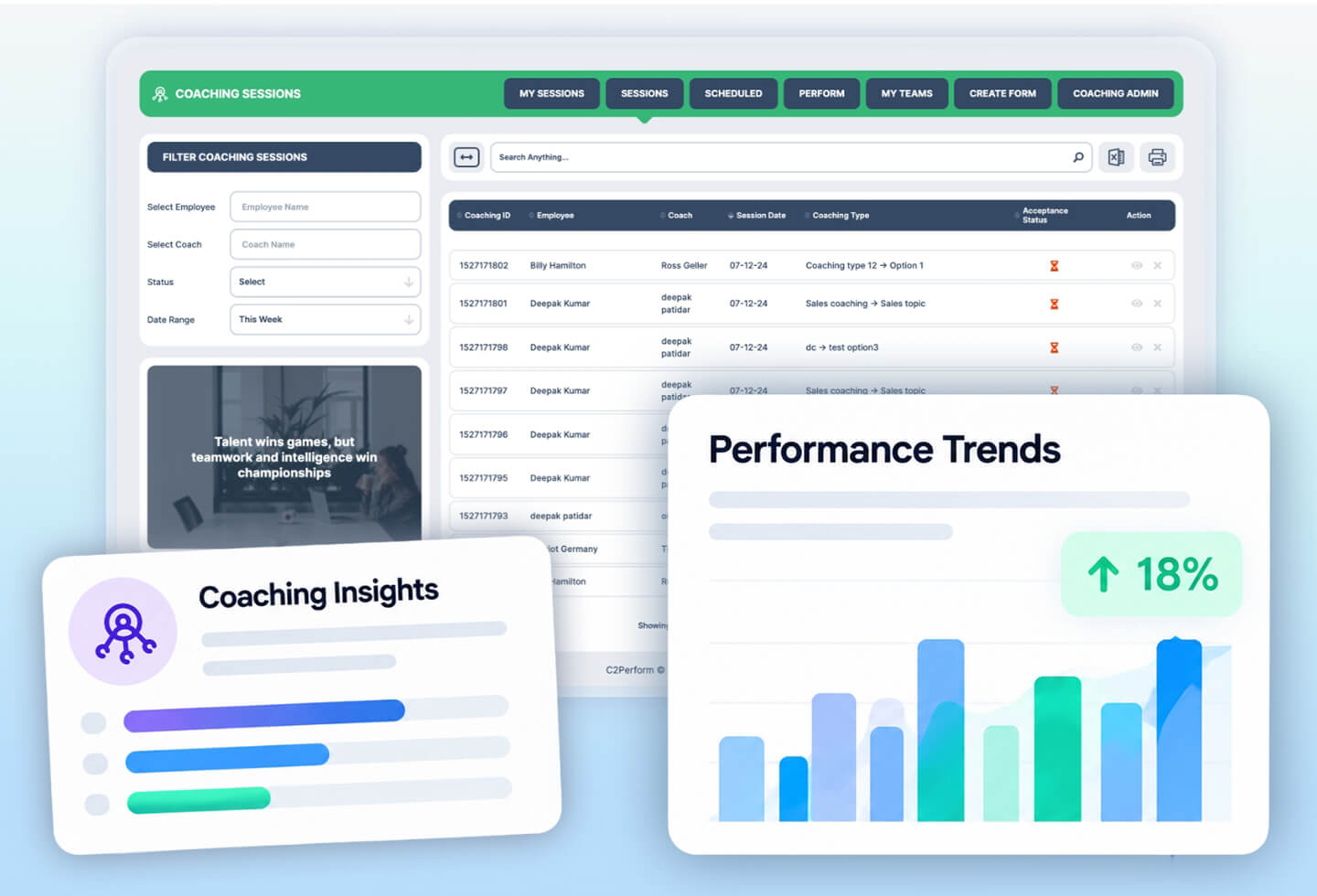
Quality programs do not have to evaluate every interaction to provide useful direction. A statistically valid sampling approach can help teams draw meaningful insights when the method is appropriate to the question. The value comes from using findings responsibly: confirm patterns, investigate context, and turn relevant information into coaching, assigned learning, or clearer knowledge content. C2Perform’s quality assurance tools and coaching capabilities describe parts of that operational connection.

Use the visual as a process map, not as a claim that one system or learning intervention guarantees compliance. The organization still needs qualified owners to determine what guidance applies, approve content, and decide how to respond to an observed issue.
What should completion visibility show to leaders?
Useful visibility shows assignment, participation, due status, relevant follow-up, and the evidence leaders need to investigate readiness without confusing completion with competence.
Leaders need enough information to act, but not every audience needs the same detail. Learning administrators may need to see who has an assigned activity and whether it is complete. Supervisors may need relevant status for their teams and an appropriate way to follow up. Compliance owners may need records that support oversight under the organization’s own policies. Define permissions and retention practices with the appropriate internal owners.
A simple dashboard or report should make the meaning of each status clear. Distinguish assigned, started, completed, overdue, and exempt where those states are used. Explain how exceptions are approved and how corrections are handled. If the system records a course completion, do not describe that record as evidence that the person can perform every related task without support.
Pair completion data with other useful signals when they are relevant and responsibly gathered. Examples include a knowledge check, a supervisor observation, questions raised through an approved channel, or a later quality review. These measures should be interpreted in context and shared only with people who have a legitimate operational need.
| Signal | What it can show | What it cannot show by itself | Practical follow-up |
|---|
| Assignment status | Whether required learning was assigned and its recorded completion state | Whether the employee can apply the guidance in a live workflow | Resolve missing assignments, access problems, or overdue activity |
| Knowledge check | Whether the learner can respond to the questions included in the check | Whether every scenario or exception is understood | Review missed concepts and offer targeted explanation or practice |
| Supervisor observation | How an employee applied a behavior in the observed situation | How the employee performs in every other situation | Discuss context, reinforce strengths, and agree on a next action |
| Quality review | Evidence about selected work under the organization’s review method | That a course alone caused a result or that every interaction was reviewed | Validate patterns and connect relevant findings to coaching or process review |
| Knowledge content history | Who maintained and approved a controlled item and which version is current | That every agent has read or applied the item | Confirm affected roles have access and decide whether communication or learning is needed |
Before choosing a reporting design, decide which decisions the information should support. A team leader may need a prompt to follow up with an agent; an administrator may need to fix an assignment; an owner may need to review an approval trail. Reports work best when status definitions, access rules, and escalation routes are understood by the people using them.
Where platforms are already in place, clarify how the learning process fits with them rather than assuming they must be replaced. C2Perform positions its platform as complementary to existing CCaaS, CRM, and WFM systems. Teams can review the available integration information while mapping which system remains the authoritative source for each record.
How can leaders build a sustainable training routine?
A sustainable routine assigns owners, keeps approved content current, connects learning to observed work, and reviews follow-up as part of normal operations.
Set up the routine around responsibilities rather than a single annual training event. Compliance or subject-matter owners validate requirements and content. Knowledge owners maintain the approved source. Learning teams organize delivery and completion records. Supervisors support application and coaching. Quality teams share relevant findings and help identify patterns. Operations and IT clarify workflow, access, and system dependencies.
Write down who can approve content, who can assign or close a learning action, where questions go, and how urgent changes are communicated. A small, clear ownership map can prevent teams from assuming another group has reviewed a change. It also helps agents know which source to trust when different documents appear to conflict.
Choose learning methods to match the work. A concise explanation can introduce a definition or a change. A searchable job aid can support an employee who needs to confirm a step while working. A scenario can help someone practice judgment, and a supervisor demonstration can make a difficult interaction easier to discuss. Use a knowledge check to surface concepts that need another explanation, not as a substitute for realistic practice when the task involves decisions or handoffs.
For example, an agent may be unsure whether a customer request can be handled in the current workflow or needs review. Training can show the approved decision path, give the agent a scenario to work through, and point to the current procedure. A coach can then ask the agent to explain which information mattered, what action they took, and where they would look if the situation differed. The exercise should reflect guidance approved by the organization, rather than creating a new rule in the training material.
Consider how people will access the learning. Employees may work across shifts, locations, or channels, and some may need additional support with language or accessibility. Make required resources easy to locate from the tools people already use, and provide a clear route for questions when instructions are confusing. If an employee cannot access the assigned material, treat that as an operational problem to resolve, not simply a failure to complete training.
Gather feedback from agents and supervisors after a learning activity. Ask which parts were clear, which workflow steps remained uncertain, and whether the referenced knowledge item was easy to find. Route corrections through the approved content process. Feedback is not authorization to change a regulated procedure informally; it is a signal for the responsible owner to review whether clarification or a formal revision is needed.
Review the routine at a cadence suited to the organization’s work and change environment. During a review, ask whether the right people received the right learning, whether employees could access the current source, whether questions revealed confusing material, and whether coaching actions received follow-up. When a signal points to a process issue, fix the process rather than repeatedly assigning the same course.
Leaders can use a practical review checklist:
- Are responsibilities for approval, publishing, assignment, and follow-up clear?
- Can agents tell which knowledge item is current and where to ask for clarification?
- Are learning activities matched to job roles and actual workflows?
- Can managers distinguish course completion from observed application?
- Do quality and coaching findings lead to a documented, proportionate response?
- Are access, language, and delivery needs considered for the people expected to complete training?
- Can the team identify outdated or duplicated guidance and route it for review?
For help aligning these responsibilities across frontline teams, operations leaders can also review C2Perform’s frontline leader resources and operations leader information. These links provide context on the platform’s intended audiences; internal owners remain responsible for validating the organization’s requirements and procedures.
Schedule Demo
Frequently Asked Questions
How often should insurance agents receive refresher training?
Set the schedule according to applicable requirements, internal policy, role responsibilities, and the pace of relevant changes. Use focused refreshers when a confirmed change or observed learning need calls for them, and confirm the schedule with the organization’s compliance owners.
Does course completion prove an agent is ready?
No. Completion records participation in an assigned activity. Readiness may also require a knowledge check, supervised practice, or an observation appropriate to the role. Define what evidence is needed before employees handle work independently.
How should a supervisor respond to a quality issue?
Review the evidence and context, then determine whether the issue reflects unclear guidance, a workflow or access problem, a knowledge gap, or a coaching need. Agree on a focused action with the agent and follow up using an appropriate observation or review.
What should teams do when guidance changes?
Have the authorized owner confirm the change, update and approve the authoritative source, identify affected roles, and decide whether communication, a refresher, practice, or another response is needed. Keep the approval and version history visible to the appropriate users.
How can teams keep training records useful?
Use clear status definitions, role-appropriate access, and consistent follow-up ownership. Keep completion records distinct from evidence of skill, and connect records to the actions leaders actually need to take.
What is the next step for your training program?
Begin with one role and one important workflow, then map its approved guidance, learning activity, observation, and follow-up owner.
Compliance training for insurance agents becomes more useful when learning, knowledge management, quality, and coaching work as a connected operating routine. Choose a workflow that matters to your team, confirm the current approved guidance, and identify how you will support practice and follow-up. Then use what agents and supervisors learn to improve the materials and processes over time.
Regulatory requirements can vary by jurisdiction and line of work, so confirm applicable obligations with qualified internal compliance owners and the relevant regulator. The National Association of Insurance Commissioners provides a starting point for insurance regulatory information and state insurance department resources.
A clear ownership map and a practical feedback loop give agents a better chance to find current guidance and apply it consistently in their work.

 English
 Español