
 English
 Español
Contact Center QA Trend Analysis
Learn how to validate contact center QA trends, investigate what is changing, and turn quality findings into focused coaching, learning, and knowledge updates.
Read More
Schedule a demo to see how a contact center talent management strategy reduces turnover, boosts performance, and helps your agents grow.

A contact center talent management strategy is a unified plan that connects hiring, onboarding, quality assurance, coaching, and employee retention. Instead of using separate tools for each task, this approach links every part of the employee lifecycle into one system. This connection helps leaders use quality data to drive better training and clear career paths for their teams. According to research from Gartner, connected strategies help companies improve output and keep their best workers longer than broken methods. By removing data silos, you can see how hiring choices affect results and where agents need more support. This strategy ensures that every team member has the knowledge and coaching they need to succeed from their first day. Using a connected plan helps your center build a high-performing workforce that stays.
Running a contact center often feels like trying to fill a bucket with a large hole in the bottom. High agent churn is a constant pain that drains your time and funds. Many teams face loss rates between 30% and 45% every year. In the US, the Bureau of Labor Statistics reports that many service roles face high churn. When you lose an agent, it does more than just leave a seat empty. The total cost to find, hire, and train a new person can range from $10,000 to $20,000. These costs quickly add up and pull focus away from your main goals.
High churn also hurts the agents who stay. When your team is always short on staff, the stress on your current workers grows. This stress leads to even more people leaving the company. A solid contact center talent management strategy helps you break this cycle. It moves the focus from just hiring new faces to keeping the great team you already have.
Most contact centers try to manage their teams using many split tools. You might have one system for hiring, another for training, and a third for quality checks. This broken approach creates data silos and heavy work for your leaders. When your tools do not talk to each other, it is hard to see the full picture of how your team is doing. You lose the chance to see how training affects the way agents talk to customers.
This lack of clear data makes it hard to build strong call center agent retention strategies. Without these plans, it is tough to keep your best people on the phones. Managers often feel like they are flying blind. They know agents are struggling but lack the data to show why. This leads to guess-work instead of real coaching that helps people grow.
Data silos also slow down how fast you can help agents. If a manager sees a low score, they might have to log into a different tool to find training for that agent. This extra step makes it easy for key steps to fall through the cracks. Without a joined-up plan, your leaders spend more time moving data than they do helping their teams succeed.
Moving to an integrated talent management strategy can change how your center works. Research from Gartner shows that joined-up plans beat split ones. These plans help boost retention and help your team do better work. By connecting the agent life cycle, you can spot problems early. This lets you give your team the support they need to stay and thrive.
A joined-up plan means that hiring data helps your training, and quality scores trigger new learning. This loop ensures that your agents always have the right skills for the job. When agents feel supported and see a clear path for their future, they are more likely to stay. If you want to see how a unified tool can help your center, you can Schedule a Demo with our team today.
Finding the right people is the first step in a good contact center talent management strategy. You need a system that finds top talent and helps them grow from their first day. A strong start leads to better work and happier agents. When you build a solid base, your team can handle more tasks with less stress.
Your team should use pre-hire tests to see how well a person fits the job. Skills matching helps you find people who will stay for a long time. These pre-hire tests reduce the chance of new hires leaving early. By checking for the right traits first, you ensure that every new agent has the skills they need to succeed in your shop.
Once you hire someone, you must give them a clear plan. A good onboarding program can make a big difference for your team. Structured programs can boost how much work new hires do by 70%. These same plans can also improve new hire retention by 82%. Using a call center learning management system is a great way to manage this growth.
To help your agents succeed, you should focus on sharing clear facts. Here are four steps to build a knowledge-first onboarding program:
For teams in regulated fields, clear facts are even more key. A good knowledge management system gives agents the right data every time. This is key because it ensures agents follow the latest rules. When agents have version-controlled facts, they make fewer errors and stay in line with laws.
A strong contact center talent management strategy does more than just audit agent calls. It uses data to help people grow. Many teams see quality assurance (QA) as a way to find mistakes, but top teams use it as a tool for change. By linking QA scores to coaching, you can turn a simple check into a plan for better work.
You can help your team by moving from a basic audit to a model of constant progress. When you connect QA data to training, you create a path for agents to build their skills. This closed-loop quality assurance method helps you find gaps and fix them fast. It ensures that every score leads to a helpful action instead of just sitting in a file.
Good coaching helps agents stay happy and do a better job over time. Research shows that agents who get regular, helpful coaching are two times more likely to enjoy their work. Even better, they are three times more likely to stay with the company for a long time. This is a key part of keeping your best people on the team.
True coaching goes beyond looking at one or two phone calls. While looking at single tasks is good, building a better quality assurance program means looking at the whole person. This includes their attendance, career goals, and growth plans. Good leaders look at the big picture to find out what an agent needs to do well.
You should also use full reviews to learn more about each agent. These reviews and skills tests help you find where someone needs help or where they shine. Using this full view lets you build training that fits the person, not just the role. This focus is a vital part of a modern contact center development plan.
The best way to help agents is to give them the right tools at the right time. When a QA score shows a weak spot, you should assign a quick lesson or a new guide right away. This turns a low score into a chance to learn something new. It takes the fear out of QA and makes it a helpful part of the daily routine.
A joined system can make this happen without extra work for leaders. By linking your QA, learning system, and knowledge base, you can automate these steps. This ensures that every team member gets the support they need to give great service on every call. Using data in this way makes your talent strategy both fair and strong.
Main points:
A clear view of the future is the best way to keep your team. Many people leave call centers because they do not see a way to grow. When you give them a clear map, they are more likely to stay. A good contact center talent management strategy must show people how to move up. Industry data from sources like the Bureau of Labor Statistics shows that high churn often comes from a lack of growth.
Lack of growth is a top reason why agents quit. In fact, it is a top-three reason for leaving a contact center. If agents feel stuck in one place, they often look for other jobs. But when you show them how to move forward, their spirit goes up. Clear plans for growth can boost how happy agents are by more than 20 percent. This is a huge part of your call center agent retention strategies.
To make this work, you need a set plan. You should list just what skills an agent needs to reach the next level. This makes things fair for all and helps agents know what to work on each day. When people know their hard work will lead to a new role, they put in more effort. This helps the whole team do better work for your clients.
Not every agent wants to lead a team. Some people love to solve complex problems. Others like to share what they know with new hires. You can keep more people by giving them three diverse tracks. A leading track is for those who want to manage others. An expert track helps those who want to master a certain tool. A facts track is for those who want to manage data and help files.
Each path needs its own training. You should use a mix of lessons and tests to help agents grow. This keeps many types of people happy and in their roles. It also makes sure you have experts in every part of your shop. When agents can pick a path that fits their skills, they feel more valued. This leads to less churn and a more skilled team over time.
Agents stay when they see a long-term path at your firm. You must offer training that never stops to keep them keen. When you help people move up from within, you show the whole team that their work counts. This builds trust and keeps your top talent from looking elsewhere.
Good talent management means giving your team the tools to reach the next level. This includes clear guidance and steady feedback. You want your agents to feel like they are moving toward a goal. When they see a peer get a new role, it proves that the system works. This makes your center a place where people want to build a career.
A strong contact center talent management strategy needs the right tools. Many teams use separate apps for training, quality checks, and coaching. This splits up your data and hides the big picture of how agents work. A connected platform for knowledge, training, and quality unifies the talent lifecycle. This approach gives you clear facts to make better business choices.
| Capability | Fragmented Point Solutions | Integrated Platform |
|---|---|---|
| Data visibility | Scores in one system, training in another, no link between them | QA scores trigger targeted coaching and training automatically |
| Agent experience | Multiple logins, data entry, screen switching | Single interface with knowledge, learning, and feedback |
| Manager workflow | Manual data export, spreadsheet tracking, delayed follow-up | Real-time dashboards, one-click coaching assignments |
| Career development | Ad-hoc training requests, no skills tracking | Structured learning paths, skills gap analysis |
Linked systems give you the base you need for smart choices. When your tools talk to each other, you can see how training changes your quality scores. Research shows that stress in contact centers often comes from poor tool design and high task loads. Choices based on data work better than ones based on a hunch. They use real facts about how agents do their jobs. You can find out which coaching types help the most and where agents need more help.
By using a unified platform, you can track the full path of a staff member. You can see how a new hire moves from their first day to their first live call. You can also watch how fast they learn their new roles. This data helps you improve your hiring and training over time. It turns a guess into a clear plan for your team.
Modern tools help reduce the friction that leads to agent burnout. Many agents must flip between five or more screens to find one simple answer. This multi-screen work is a major cause of stress and slow service. When you use unified tools, agents can find what they need in one spot. This makes their jobs easier and helps them stay focused on the person on the line.
A unified learning management platform makes it easy for agents to grow. They can see their own path and take training when they have free time. This gives them a sense of control over their work lives. It also ensures they always have the right facts for their calls. When agents feel their tools help them, they are more likely to stay with your team for a long time.
You do not need to swap your current systems to improve your plan. The best talent tools work with the software you already have. They add to your CRM and other core tools rather than taking their place. This means you can keep the systems your team knows while adding the power of unified quality checks and coaching.
Linking your quality assurance tools to your coaching workflows saves time for lead staff. They no longer have to move data to a sheet to see who needs help. Instead, they can see trends and give out training in one click. This keeps your talent plan moving without adding more work for your leaders. It builds a smooth path from finding a gap to fixing it with the right training.
To build a strong contact center talent management strategy, you must track the right data. Many teams focus only on how many people leave. High turnover is a common challenge, as noted by the Bureau of Labor Statistics. While keeping staff is key, other metrics show the full picture of your team's health. You should track how long it takes a new hire to reach full skill. This is known as time-to-competency. You also need to watch trends in quality scores and staff engagement.
Strong teams also look at inside promotion rates. When agents see a clear path to move up, they are more likely to stay. You can find more tips on this in our guide to call center agent retention strategies. By tracking these points, you can see where your team is strong and where they need more help.
Leading groups do not rely on just one number. Research from Gartner shows that the best teams use a mix of data points to judge success. They combine retention rates with work and engagement scores. This gives a clearer view of how well your talent plan is working. For example, a high retention rate is good, but it matters less if results are low.
Using a mix of metrics helps you find the root cause of problems. If quality scores drop while engagement is high, you might need better training. If both are low, you may have a larger culture issue. A joined platform can help you see these links by bringing all your data into one place.
The goal of measuring data is to make better choices for the future. When you have clear data, you can stop guessing what your team needs. You can set clear goals for each part of the agent life cycle. This helps you build a more steady team over time. It also makes it easier to show the value of your plan to other leaders.
Regular reviews of these metrics keep your strategy on track. You should check your data often to spot new trends early. This allows you to fix small issues before they become big problems. With the right tools and data, you can turn your contact center into a place where top talent wants to stay and grow.
A strong plan covers the full worker lifecycle. This includes hiring the right people and giving them good training. It also means using data from quality reviews to help agents grow through coaching. High-quality plans use one connected tool to manage these steps instead of many separate systems. This helps teams work better together and keeps workers happy.
Keeping agents starts with clear paths for growth and better tools to do their jobs. According to Remote.com, a structured start can improve worker retention by 82 percent. Teams should also focus on whole-person coaching that looks at more than just one call. When agents see a future and feel supported, they stay longer.
Quality checks provide the data needed to help agents get better at their work. Instead of just finding mistakes, good teams turn these scores into lessons and coaching. This makes quality work a key part of how agents learn new skills and move up in their jobs. It changes simple checks into a way to build a stronger team.
To build a path, you must show agents how they can grow into new roles. This could be moving into a team lead job or a specialist role like training. Each path needs clear steps and training to reach the next level. Using a system to track skills and performance makes it easy for agents to see their own progress.
Waiting to fix your talent strategy costs your business every single day through high turnover, slow training times, and poor results for your customers. If you start right now, you can stop the loss of your best workers and help your new hires reach their full skills much faster. A connected plan puts all your tools in one place so your leaders can focus on helping people grow instead of chasing lost data or notes.
Ready to build a better team? Schedule a Demo to see how our platform can strengthen your contact center. It helps your staff and helps your team to reach its goals. You can see how easy it is to link your training and coaching in one system.
Check out our eBook, New Thinking About an Old Problem


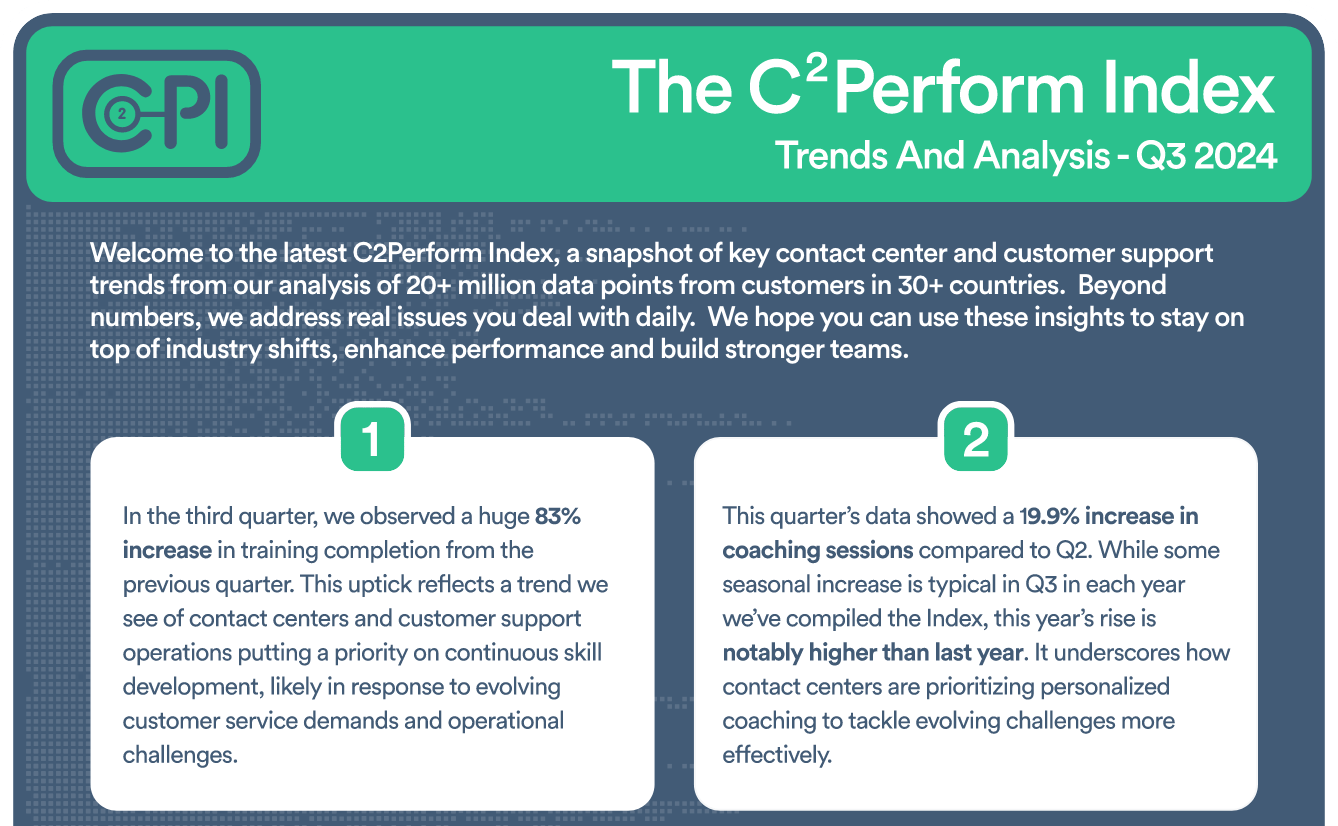
Join contact center and customer support professionals around the world who can’t wait to see the C2PI every quarter.


300 Colonial Center Drive, Suite 100
Roswell, GA 30076
Copyright © 2026 C2Perform. All Rights Reserved. Privacy Policy Acceptable Use Policy