
 English
 Español
Contact Center QA Trend Analysis
Learn how to validate contact center QA trends, investigate what is changing, and turn quality findings into focused coaching, learning, and knowledge updates.
Read More
Find the best assurance in call center example for every situation. Use these 40+ phrases to build trust and improve customer satisfaction on every call.

The psychology of a customer service call is fascinating. A customer with a problem often feels powerless and anxious. An assurance statement works because it directly addresses these feelings, helping the customer feel heard, valued, and in control. When an agent says, “You’ve come to the right person; I can definitely help with this,” it creates a psychological shift from anxiety to relief. This isn't just about being nice; it's a strategic communication technique that builds immediate rapport. Understanding the "why" behind a successful assurance in call center example is key to training agents to use them effectively. Let's explore the psychology and practical application of these powerful phrases.
At its core, an assurance statement is a phrase your customer service agents use to make customers feel calm and confident. These statements show the customer that the agent is present, focused, and actively working to solve their problem. Think of them as verbal cues that say, “I’m on your side, and we’ll figure this out together.”
When a customer calls, they are often frustrated or confused. An assurance statement is the first step in shifting that negative energy. It’s a simple yet powerful tool for building immediate rapport and trust. By using the right words, an agent can de-escalate a tense situation and set a collaborative tone for the rest of the conversation. This isn't just about being polite; it's a strategic approach to communication that can completely change the direction of a customer interaction.
While standard pleasantries are nice, assurance statements go a step further. True reassurance is not just about solving a problem; it’s about caring for the person who has the problem. It’s the difference between a robotic, scripted response and a genuine human connection. These phrases signal to the customer that they are in capable hands, which can immediately turn a bad experience into a manageable, and even positive, one.
Instead of just processing a request, the agent is actively managing the customer’s emotional state. When someone feels heard and valued, they are more likely to be patient and cooperative. This approach transforms the agent from a simple problem-solver into a trusted advocate for the customer.
Assurance statements work because they address a fundamental human need: the need to feel in control. When a customer calls with an issue, they often feel powerless. An effective assurance statement helps them feel more in control, even when their situation feels messy. The agent’s positive and friendly tone is crucial here, as a good attitude helps remove the worry and anxiety that can lead to anger.
This is why these statements should be a core part of your agent training and integrated into your quality assurance scorecards. When an agent confidently says, “I can definitely help you with that,” it creates a psychological shift. The customer’s brain registers this as a sign of competence and reliability. They can relax, knowing that the person on the other end of the line is taking ownership and has a clear path forward.
Assurance statements are more than just nice words; they are powerful tools that directly influence key performance indicators (KPIs) in the contact center. When agents use them effectively, they don't just improve the customer's mood, they create tangible business results. By building trust and conveying competence, these simple phrases can streamline interactions, prevent escalations, and solve problems faster. This shift from a transactional conversation to a relational one has a ripple effect, improving everything from agent confidence to customer loyalty. It’s about showing the customer they are in capable hands, which is the foundation of a great service experience. When an agent feels empowered to give these assurances, and management supports them with the right training and knowledge, the entire operation runs more smoothly. It transforms a potentially tense interaction into a collaborative problem-solving session, which benefits everyone involved. Ultimately, mastering assurance is a core skill that separates an average contact center from a truly customer-centric one, driving performance improvements that show up clearly in your data. Let's look at the specific ways assurance statements can move the needle on your team's performance.
When a customer calls, they are often stressed or frustrated. An assurance statement is the first step in de-escalating that emotion. Phrases like, "I understand how frustrating that must be, and I'm here to help you," immediately shift the dynamic. According to SQM Group, reassurance helps build trust and can turn a negative experience into a positive one. This simple act of validation makes customers feel heard and respected. A customer who feels valued is far more likely to leave a high customer satisfaction (CSAT) score, even if the issue was complex. It shows them they’re dealing with a person who cares, not just a faceless company.
Nothing stalls a resolution faster than a customer who has lost confidence in the agent. Demands to "speak to a manager" are often a symptom of this. As Call Centre Helper notes, assurance statements calm customer worries and reduce escalation requests by building confidence. When an agent says, "I'm taking ownership of this issue for you," it stops the customer from feeling like they need to fight their way up the ladder. This not only frees up your team leaders but can also lower Average Handle Time (AHT). Instead of spending precious minutes calming a customer and defending their own competence, the agent can focus on efficiently resolving the actual problem.
First Call Resolution is the holy grail of contact center metrics, and assurance statements are a key ingredient for success. When an agent projects confidence, it encourages the customer to trust the process. This creates a more collaborative, less adversarial conversation, which is essential for getting to the root of the problem on the first try. A well-timed, "I'm confident we can get this sorted out for you today," keeps the call on a productive path. By using Connected Quality Assurance to monitor interactions, you can identify where agents are successfully using these statements to prevent repeat calls and where they might need more coaching to improve their FCR rates.
Knowing the right thing to say can completely change the direction of a customer conversation. Having a few go-to assurance statements in your back pocket helps you stay calm and in control, no matter what the situation is. Think of these less as a script and more as a collection of tools. The key is to find the phrases that feel authentic to you and adapt them to the specific needs of your customer.
Here are some powerful assurance statements, organized by common call center scenarios, to help you build trust and resolve issues effectively.
When a customer is upset, the first thing they want is to feel heard. Acknowledging their frustration shows empathy and validates their feelings, which is the first step toward de-escalating a tense situation. Before you jump into problem-solving, take a moment to connect with them on a human level. This simple act can transform an angry customer into a collaborative partner.
Customers often feel like they’re being passed around without anyone taking responsibility. When you take ownership, you tell the customer, "The buck stops here." You become their single point of contact and their champion within the company. This builds immense confidence and reassures them that their problem is finally in the right hands. It’s a powerful way to show your personal commitment to finding a solution.
Uncertainty creates anxiety. One of the best ways to reassure a customer is to tell them exactly what you are going to do next. A clear plan removes ambiguity and helps the customer feel like they are part of the resolution process. Even if the fix takes time, explaining the steps you'll take provides a roadmap that keeps everyone on the same page. A great knowledge management system can give you the confidence to lay out these steps accurately.
Silence can be stressful for a customer on hold. They might wonder if they've been disconnected or forgotten. Breaking the silence with a quick update or a word of thanks can make all the difference. It shows you’re still actively working on their issue and that you respect their time. These small check-ins maintain the connection and prevent frustration from building up while you work behind the scenes.
No agent enjoys telling a customer "no," but sometimes it's unavoidable. When you have to deliver news the customer doesn't want to hear, leading with empathy is critical. The goal is to show that you understand their disappointment and have explored every possible option. While you may not be able to give them the outcome they want, you can still leave them feeling respected and understood.
When a customer presents a complicated, multi-layered problem, they are often already exhausted. Your confidence can be a huge source of comfort. By positioning yourself as a capable partner, you can reassure them that they are no longer alone in trying to solve it. This collaborative approach turns a daunting task into a manageable one and shows the customer that you’re ready to tackle the challenge together.
The last few moments of a call can solidify the customer's entire perception of the interaction. Whether the call was simple or challenging, ending on a positive and proactive note is essential. Reiterate your commitment, confirm the next steps, and thank the customer for their time. A strong closing reinforces their value and leaves them with a lasting impression of helpfulness and care, which is a skill that can be sharpened with dynamic coaching.
Knowing what to say is only half the battle; knowing when to say it makes all the difference. The timing of your assurance statement can transform a customer interaction from standard to exceptional. Think of these phrases as tools to use at critical moments throughout a call. By strategically placing them at the beginning, during problem-solving, in tense moments, and at the end of a conversation, your agents can guide the customer experience with confidence and care. This approach not only resolves issues but also builds a foundation of trust that turns a one-time customer into a loyal advocate. It’s about being proactive, not just reactive. Instead of waiting for a customer to get frustrated, a well-timed assurance statement can prevent frustration from ever taking root. It shows the customer that the agent is in control, empathetic, and fully committed to helping them. This level of service doesn't happen by accident; it's a skill that can be taught and refined. Let's look at how to apply these statements at each stage of the customer journey to create consistently positive outcomes.
Starting a call on the right foot is crucial. The customer is often anxious, wondering if they’ve reached the right person who can actually solve their problem. An assurance statement at the beginning of the call immediately puts them at ease. Instead of a generic greeting, training your agents to open with confidence sets a positive tone. For example, an agent could say, “Hi, you’re through to Jane. I’m an experienced advisor, and I can definitely help you with that today.” This simple opening reassures the customer that they are in capable hands from the very first moment, reducing their need to repeat information and building instant rapport.
Once the call is underway, the problem-solving phase is where an agent’s expertise truly shines. As they work through an issue, customers can become impatient or uncertain. Assurance statements act as verbal signposts, letting the customer know they are on the right path. An agent who says, “I’ve come across this issue before. What I did to resolve it was…” demonstrates competence and experience. If the customer is emotional, a phrase like, “I understand that you feel frustrated. I’m sure I’d feel the same. Let’s get to the bottom of this together,” shows empathy and a commitment to finding a solution. This is where a strong Knowledge Management system becomes invaluable, giving agents the confidence and information to back up their assurances.
Difficult conversations are an inevitable part of customer service. When a customer is upset, the agent's first job is to de-escalate the situation. This is where assurance statements are most powerful. Phrases that validate the customer's feelings are essential. An agent might say, “You are absolutely right. Your experience has been unacceptable. Let’s see how we can move forwards.” This acknowledges the customer's frustration without placing blame. Another effective approach is, “I realize this is a very difficult situation. But don’t worry, you’re through to the right person to get this sorted for you today.” These statements shift the focus from the problem to the solution and empower the agent to take control of the call’s direction, which is a skill honed through effective Dynamic Coaching.
How you end a call leaves a lasting impression. Even if the issue is resolved, a strong closing reinforces the positive experience and builds long-term loyalty. If a resolution requires more time, a statement like, “I’ll follow up with you personally by the end of the day to ensure everything is taken care of,” shows a personal commitment to the customer’s outcome. For complex issues, providing a direct point of contact can make a customer feel exceptionally valued. An agent could offer, “Here is my direct extension. If you have any more problems, please give me a call.” These final assurance statements demonstrate accountability and a dedication to seeing the issue through to its complete resolution.
Knowing what to say is only half the battle. The real magic happens in the delivery. An assurance statement can fall flat or even sound dismissive if it’s not delivered with the right intention. Customers can easily tell the difference between an agent who is reading a line from a script and one who genuinely wants to help. To build real trust, your agents need to master the art of conveying confidence and empathy through more than just words.
This is where soft skills become critical. The tone of voice, the timing of the statement, and the ability to personalize the message all contribute to its effectiveness. When an agent successfully combines these elements, they transform a standard interaction into a memorable, positive experience. They show the customer they are not just a case number but a person whose problem matters. Investing in your team's ability to deliver these statements effectively is a direct investment in customer loyalty and satisfaction. It all comes down to focusing on a few key principles that turn good agents into great ones.
The most well-crafted assurance statement will fail if it’s delivered in a monotone or at the wrong moment. A positive and friendly tone is essential; it tells the customer you’re on their side and happy to help. Timing is just as important. An assurance statement offered too early can seem premature, while one offered too late can feel like an afterthought. Agents need to listen for the right cues to step in and offer reassurance. Above all, the delivery must be authentic. Customers can spot a fake apology from a mile away. True authenticity comes from a place of genuine empathy, a skill that can be sharpened with consistent, supportive Dynamic Coaching.
While it’s helpful to provide agents with examples of assurance statements, they should never sound like they’re reading from a script. A robotic delivery immediately creates a barrier between the agent and the customer, undermining any attempt to build trust. Encourage your team to internalize the purpose behind the statements and adapt them to their own natural speaking style. When agents feel confident and have easy access to information through a solid Knowledge Management system, they are less likely to rely on rigid scripts. This freedom allows them to be present in the conversation and respond in a way that feels genuine and human, which is exactly what a frustrated customer needs to hear.
Personalization shows the customer they are being heard as an individual. One of the simplest yet most powerful ways to do this is by encouraging agents to use "I" instead of "we." A phrase like, "I can definitely look into that for you," takes personal ownership and feels much more reassuring than a corporate-sounding, "We will investigate the issue." Using the customer's name and referencing specific details they’ve shared also demonstrates active listening. These small adjustments make the interaction feel like a one-on-one conversation rather than a transaction. Fostering this kind of connection is key to building lasting customer relationships and can be supported with the right Engagement Tools.
A customer’s experience with your brand should feel seamless, whether they’re on the phone, in a live chat, or sending an email. The reassuring, confident, and empathetic tone you cultivate in your voice agents must extend to all other communication channels. Inconsistency can erode trust and leave customers feeling confused. This is where a unified approach to performance becomes invaluable. By using a Connected Quality Assurance program, you can monitor interactions across all touchpoints to ensure agents are consistently meeting your brand’s communication standards. Regular QA helps reinforce best practices, leading to better agent performance and happier, more loyal customers.
Even the most carefully crafted assurance statement can fall flat if it isn’t delivered well. Agents face real-time pressures that can make it difficult to sound authentic and stay in control of the conversation. Building these skills requires more than just a list of phrases; it requires practice, coaching, and a supportive environment. Let's look at how to handle some of the most common hurdles agents face when trying to build trust with customers.
Let’s be honest, some customers call in with their guards up. They might be skeptical that you can actually help, especially if they’ve had a poor experience in the past. Your first job is to disarm that skepticism and build a foundation of trust. This is where assurance statements become so powerful. They are phrases agents use to make customers feel calm and confident, showing that you are focused on solving their problem.
When you say something like, “I can definitely help you with that,” you’re not just being polite; you’re actively managing the customer’s emotions. Reassurance helps build trust, calm upset feelings, and improve how customers feel about their experience. Using the right words can turn a potentially negative interaction into a positive one, proving to the customer that they’ve come to the right place.
It’s tough to stay calm when a customer is upset, but an agent’s composure is the anchor of a difficult call. A positive attitude helps diffuse tension and prevents the agent from taking a customer’s frustration personally. This isn't an innate skill for everyone, which is why agents should be coached to manage their own emotions and stay positive, even when a call gets heated.
Simple phrases can make a world of difference. For example, saying, “Take as long as you need. I am here to assist you,” gives an anxious or frustrated customer room to breathe. It shows you’re there to listen without rushing them, which can instantly de-escalate a high-stress situation and help you regain control of the conversation.
Communication barriers aren't just about language; they're about making a customer feel truly heard and understood. When a customer feels like you "get it," their frustration often melts away. That’s why assurance statements should be a core part of training for customer service agents and integrated into their conversation flows.
A powerful example is: “I realize that this is a very difficult situation. But don’t worry, I understand the problem and you’re through to the right person to get this sorted for you today.” This statement does three things beautifully: it validates the customer's feelings, confirms you grasp the issue, and confidently states you are the one who can fix it. This single sentence builds a bridge over any communication gap and sets the stage for a successful resolution.
While assurance statements are a soft skill, their impact on your contact center’s performance is anything but. You can and should measure their effect to understand the real return on training your team to use them effectively. When agents learn to build trust and show empathy, you’ll see tangible improvements in the key performance indicators that matter most to your operation. The key is to connect the dots between what agents are saying and how your customers are responding.
A structured quality assurance program is the perfect framework for this. By evaluating interactions for the use and effectiveness of assurance statements, you can directly correlate agent behavior with business outcomes. Instead of just hoping for better calls, you can start tracking the specific changes that lead to happier customers and a more efficient team. This data-driven approach turns a simple communication technique into a powerful performance improvement tool.
Customer Satisfaction (CSAT) and Net Promoter Score (NPS) are direct reflections of your customers' experiences. When an agent uses an assurance statement, they’re telling the customer, "I hear you, and I'm here to help." This simple act of validation can completely change the tone of an interaction from confrontational to collaborative. As one industry report notes, better agent performance leads to happier customers and improved satisfaction scores. After you train your team on using assurance statements, watch your CSAT and NPS trends. You’ll likely see a positive shift as more customers report feeling understood and valued.
First Call Resolution (FCR) is a critical metric for any contact center, and assurance statements play a huge role in improving it. When a customer trusts that the agent is committed to solving their problem, they are more willing to stay on the line and work through the solution. This prevents repeat calls about the same issue. A great assurance statement buys the agent the time they need to use resources like a knowledge base to find the right answer. This also lowers the Customer Effort Score (CES), because when an issue is resolved on the first try, the customer has to do less work.
Frustrated customers hang up or ask for a manager. Assurance statements are one of your best tools for de-escalation. By taking ownership and reassuring the customer, an agent can calm tensions and regain control of the conversation. Keep an eye on your call abandonment and escalation rates. As your team gets better at using assurance statements, you should see both of these numbers go down. This not only improves the customer experience but also empowers your agents, giving them the confidence to handle tough situations without needing backup. This is a skill that can be honed with consistent, targeted coaching.
Metrics tell part of the story, but qualitative feedback gives you the full picture. Go beyond the numbers and listen to call recordings or read through open-ended survey responses. Look for comments where customers mention the agent being patient, understanding, or helpful. As experts from SafetyCulture explain, this process helps you track improvements over time. You can even add a question to your post-call surveys like, "Did you feel the agent was on your side?" The answers will give you invaluable insight into how well your assurance training is working and provide excellent examples to use in future coaching sessions.
Handing your team a list of assurance statements is a good start, but it won’t create lasting change on its own. For agents to use these phrases effectively, they need to become a natural part of their communication style, not just lines from a script. This is where a consistent coaching and quality assurance process comes in. It’s the framework that turns a list of phrases into a genuine skill.
By integrating assurance statements into your performance management cycle, you create a feedback loop that helps agents understand their impact and refine their approach. It moves the focus from simply resolving a call to building a real connection with the customer. This system of continuous improvement doesn't just improve call outcomes; it builds more confident, capable, and engaged agents. When you connect QA insights to targeted coaching and training, you give your team the tools they need to handle any customer interaction with poise and professionalism.
Your quality assurance process is the best place to start. It’s your lens into real customer interactions, helping you see where agents excel and where they need support. Go beyond checking for compliance and listen specifically for how assurance statements are used. Are agents using them at the right moments? Does their tone sound authentic or robotic? A strong quality assurance program helps you identify common customer issues and pinpoint gaps in communication. By systematically reviewing calls, chats, and emails, you can gather concrete examples to use in coaching, making feedback specific, objective, and much more effective.
Once QA has shown you what to focus on, you can use that information to build targeted coaching sessions. Instead of just telling an agent to "be more reassuring," you can play a call recording and say, "Here’s a great spot where an assurance statement could have helped the customer feel heard." Role-playing is also an incredibly powerful tool. It gives agents a safe space to practice their delivery, experiment with different phrases, and get comfortable with the language. This hands-on coaching helps refine tone and timing, ensuring that when an agent uses an assurance statement on a live call, it sounds genuine and confident.
A great coaching session can be a major lightbulb moment for an agent, but that new skill needs to be reinforced to stick. This is where targeted learning content makes a huge difference. If you notice through QA that several agents struggle to set clear expectations, you can assign a short microlearning module or a quick-reference guide on that specific skill. A learning management system allows you to automatically assign relevant content based on QA scores or coaching feedback. This approach respects your agents' time by giving them exactly the information they need, right when they need it, helping to solidify new habits and skills.
The ultimate goal is to create a seamless cycle where QA data directly fuels agent development. The insights you gather from call evaluations shouldn't live in a spreadsheet; they should be the starting point for action. Use recorded calls to highlight best practices and identify coaching opportunities. When you find a trend, you can create new training materials to address it. This transforms QA from a process of inspection into a powerful engine for performance improvement. By connecting quality scores to coaching plans and learning paths, you show your agents that you are invested in their growth and success.
What's the real difference between an assurance statement and a standard customer service phrase like "Thank you for calling"? Think of it as the difference between being polite and being a partner. Standard phrases are important for courtesy, but an assurance statement does a specific job. It actively manages the customer's emotional state by showing empathy and taking ownership. It’s a strategic tool that tells a worried customer, “I am personally taking control of this for you,” which builds confidence in a way a simple pleasantry can’t.
I'm worried my agents will sound scripted or robotic if I ask them to use these. How can I avoid that? That’s a valid concern, and it’s why delivery is everything. The key is to treat the list of statements as a collection of tools, not a script to be memorized. The goal is for agents to internalize the purpose of the statements so they can choose words that feel natural to them. This is where coaching is so important. Through role-playing and feedback, agents can practice their tone and timing, which helps them deliver these phrases with genuine confidence and empathy.
What's the best way to start introducing assurance statements to my team? A great way to begin is by using your existing quality assurance process. Listen to call recordings and find specific moments where an assurance statement could have calmed a customer or prevented an escalation. Also, find examples of agents who are already doing this well. You can then use these real-world clips in a team meeting to introduce the concept, making the training immediately relevant and practical.
What if an agent uses a perfect assurance statement and the customer is still skeptical or angry? That will definitely happen sometimes, especially if a customer has had a bad experience before. An assurance statement isn't a magic wand; it's an opener. It's the agent's promise to help. The next step is to follow through on that promise with competent action. When an agent remains calm, stays focused on the solution, and does what they said they would do, they prove the assurance was genuine. Consistency is what eventually wins over a skeptical customer.
How can I tell if this is actually making a difference and not just making calls longer? You can measure the impact by looking at your key performance metrics. You should see a decrease in escalation requests because confident customers don't feel the need to speak to a manager. You should also see an improvement in your First Call Resolution rate. While a single call might feel a bit longer, resolving the issue correctly the first time is far more efficient than handling two or three repeat calls from the same frustrated customer.
Check out our eBook, New Thinking About an Old Problem


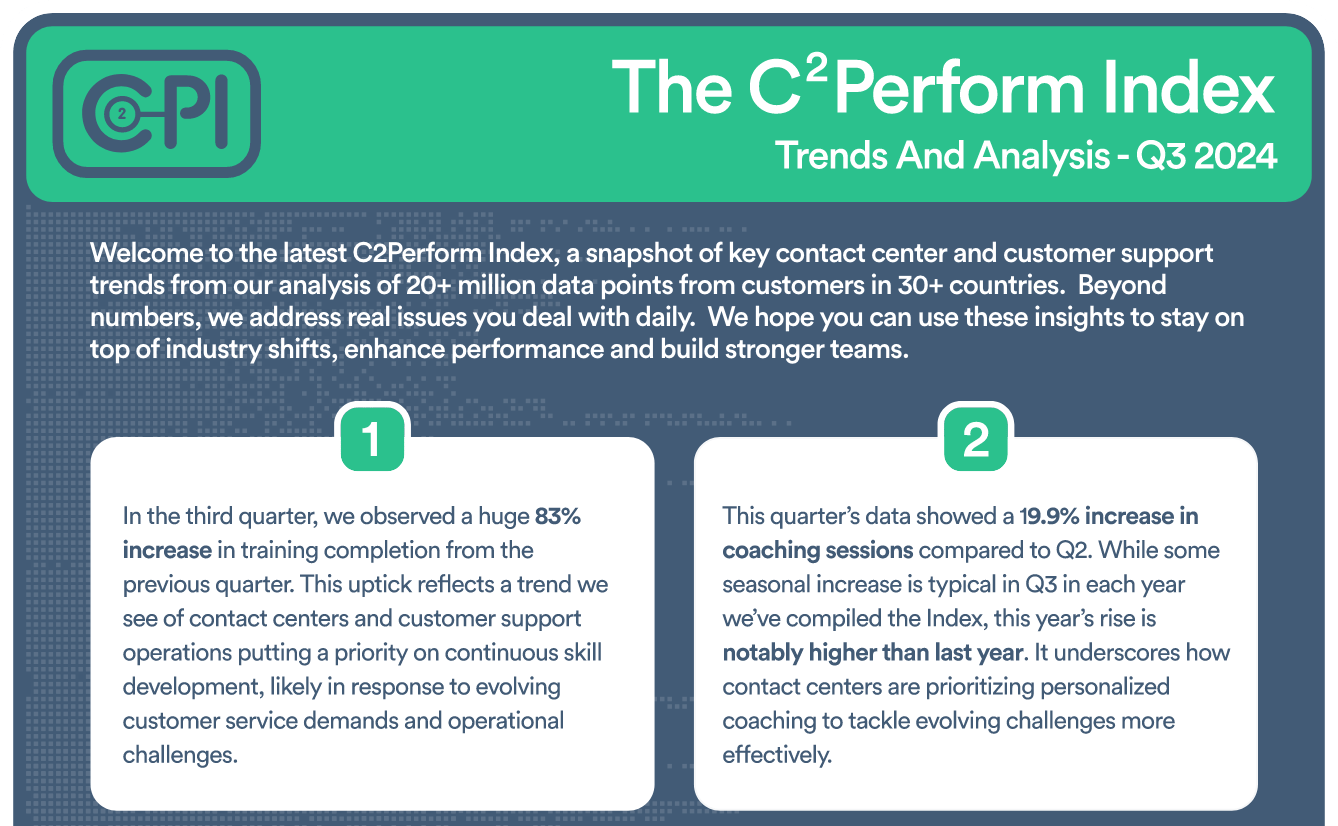
Join contact center and customer support professionals around the world who can’t wait to see the C2PI every quarter.


300 Colonial Center Drive, Suite 100
Roswell, GA 30076
Copyright © 2026 C2Perform. All Rights Reserved. Privacy Policy Acceptable Use Policy