Schedule a demo to see how a standardized call center training curriculum can cut agent ramp time from months to weeks using an integrated LMS.
High agent turnover often traces back to a broken call center training curriculum. Without a structured learning path, new hires arrive on the floor confused and unprepared. Inconsistent training creates friction across teams and drags down every metric that matters.
A call center training curriculum is a structured framework that guides agents through product knowledge, soft skills, tool proficiency, and compliance. Standardizing this path across every new hire cuts ramp time, improves first call resolution, and reduces turnover by ensuring every agent receives the same high quality instruction.
Ready to build a training curriculum that gets results?Schedule a demo to see how C2Perform unifies learning, coaching, and quality assurance in one platform.
Why a Standardized Call Center Training Curriculum Reduces Ramp Time
Consistency is the foundation of an efficient contact center. When every new hire follows the same call center training curriculum, they reach proficiency faster and deliver a uniform customer experience. Without standardization, ramp time stretches unpredictably and quality varies wildly between agents.
Closing Knowledge Gaps Through Shared Standards
Many centers face a hidden risk: the "telephone game." When training varies by trainer or location, the message shifts. One trainer emphasizes empathy. Another focuses on tools. These differences create gaps that show up on live calls.
A unified curriculum eliminates this drift. Every trainer follows the same playbook. Every agent receives the same instruction. The result is a team where everyone operates from the same playbook. Read our guide on the agent onboarding training platform for more on building these paths.
Driving Key Metrics: FCR, AHT, and CSAT
A structured curriculum does more than teach skills. It directly improves performance metrics. Agents who understand their role from day one resolve more calls on the first attempt. Average handle time drops because they know their tools. Customer satisfaction scores rise because they deliver consistent, accurate service.
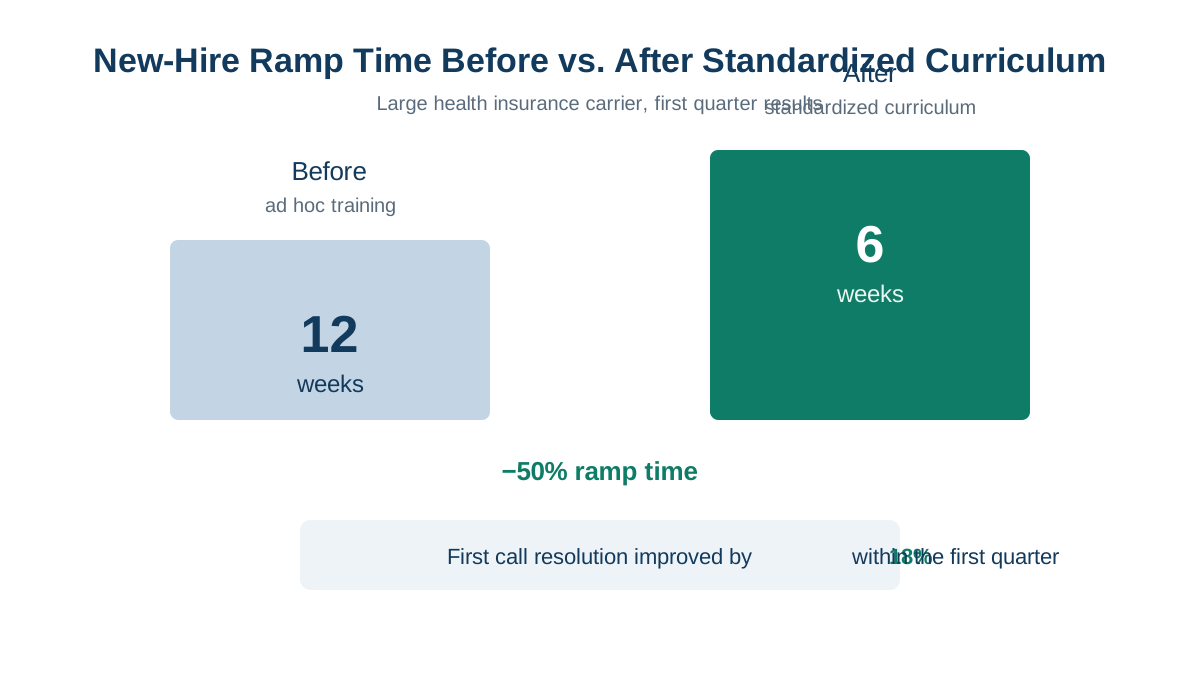
Consider the experience of a large health insurance carrier that restructured its agent training around a standardized curriculum. The carrier reduced new-hire ramp time from 12 weeks to 6 and saw first call resolution improve by 18% within the first quarter. Results like these come from replacing ad hoc training with a deliberate, measurable learning path.
Standardizing a call center training curriculum cut new-hire ramp time in half for a large health insurance carrier.
Standardized curricula also improve agent retention. When agents feel prepared for their role, they stay longer. A contact center that invests in onboarding structure can reduce first-year turnover by 20% or more.
Supporting Continuous Growth
Training does not end after onboarding. A standardized curriculum supports ongoing development through microlearning and just-in-time interventions. When a quality assurance review identifies a skill gap, the system assigns a targeted lesson immediately.
This closed-loop approach connects QA data directly to training. It moves the organization away from one-time classroom sessions and toward a culture of continuous improvement. Short, focused lessons keep agents sharp without pulling them off the phones for extended periods.
What Are the Core Components of a Call Center Training Curriculum?
Building a comprehensive call center training curriculum requires more than a checklist. It demands a deliberate structure that covers every dimension of the agent role. These four components form the foundation of an effective program.
Product and Process Knowledge
Agents must understand your products and services to help customers efficiently. In regulated industries like insurance and healthcare, accuracy is non-negotiable. Using knowledge management tools with version control ensures every agent accesses current, approved information. This prevents the spread of outdated or incorrect answers that erode customer trust.
Soft Skills and Emotional Intelligence
Product knowledge alone does not create great agents. Emotional intelligence training helps agents de-escalate tense situations, show empathy, and maintain composure. These skills reduce escalations and turn potentially negative interactions into positive outcomes.
For example, a major telecom provider added empathy training to its onboarding curriculum and saw a 12% reduction in call escalations within two months. Agents reported feeling more confident handling difficult conversations.
Tool Proficiency
New agents often juggle five or more systems simultaneously. A good curriculum teaches agents to navigate these tools efficiently, reducing the cognitive load of switching between screens. Simulated practice environments let agents build muscle memory before taking live calls, which reduces errors and shortens handle time.
Compliance and Regulatory Training
In many industries, compliance training is a legal requirement. Standardized compliance modules ensure every agent completes the same mandatory training. Version control provides an audit trail showing who completed which modules and when. This protects the organization during regulatory reviews and reduces liability.
Structuring Your Call Center Training Curriculum for Maximum Impact
A well structured curriculum follows a proven progression: classroom learning, guided practice, and independent work. Each phase builds on the last, creating a smooth transition from trainee to productive agent.
The Three Training Phases
Phase one: classroom training. Agents spend one to three weeks learning your brand, tools, policies, and products in a structured setting. Phase two: nesting. For one to two weeks, agents take live calls with direct supervision and coaching. Phase three: early production. Agents work independently with daily feedback for the first eight weeks.
Defining Success with KPI Gates
Agents should not advance to the next phase until they demonstrate readiness. KPI gates protect quality. For example, require an 80% test score before leaving the classroom. Require a 70% QA score before moving from nesting to independent work. These gates ensure that only prepared agents interact with customers.
C2Perform helps you define and track these gates automatically. When an agent meets the threshold, the system moves them forward. When they fall short, it assigns targeted coaching automatically.
Follow these steps to structure a curriculum that produces ready agents:
Preboarding. Send new hires a welcome packet and company overview before day one to reduce first-day anxiety.
Classroom instruction. Deliver core content on products, systems, and soft skills using short, focused modules.
Hands-on practice. Let agents use your tools in a sandbox environment where mistakes carry no consequences.
Nesting with support. Have agents take live calls with a trainer monitoring and providing real-time feedback.
KPI gate review. Evaluate test scores, QA scores, and handle time before allowing advancement.
Ongoing coaching. Provide daily feedback for the first 60 days, using data to target specific skill gaps.
How Does an Integrated LMS Standardize Learning Paths?
A unified learning management system creates a single source of truth for training content, delivery, and tracking. Rather than managing training across spreadsheets, documents, and isolated tools, leaders oversee everything from one dashboard.
Faster Speed to Efficiency
C2Perform uses Employee Journeys to automate the path from trainee to productive agent. These automated workflows sequence training content, assessments, and coaching interventions based on each agent's progress. Organizations using this approach report up to a 60% improvement in time-to-productivity.
The Closed-Loop Advantage
An integrated platform links quality assurance tools directly to training content. When QA identifies a weakness, the system assigns a targeted lesson automatically. This creates a continuous feedback cycle where training improves based on real performance data.
For instance, if an agent's QA score drops on call control, the platform assigns a de-escalation micro-lesson and schedules follow-up coaching. The intervention is specific, timely, and documented within the agent's learning record.
Compliance and Version Control
In regulated industries, proving that agents completed the latest training is essential. An integrated LMS maintains version control for all content. Leaders can see who created a module, who updated it, and who completed it. This level of traceability satisfies audit requirements and reduces compliance risk.
Measuring the Success of Your Call Center Training Curriculum
Data determines whether your training program works. Track these metrics from day one to evaluate curriculum effectiveness and identify areas for improvement.
Metric
Target by End of Nesting
Target by Week 8
First Call Resolution (FCR)
65%+
70%+
Average Handle Time (AHT)
Within 150% of target
Within 110% of target
Quality Assurance Score
70%+
80%+
Net Promoter Score (NPS)
Baseline
+10 points
First call resolution measures whether agents solve problems on the first attempt. Low FCR often signals gaps in product training or knowledge access. Average handle time tracks efficiency. New agents start slower, but they should approach the center target by week eight. QA scores indicate whether agents follow correct procedures and use appropriate tone. Low scores point to coaching needs.
Track attrition rates by cohort. If agents hired in the same month leave within 90 days at higher rates, examine that cohort's training experience. Curriculum gaps that surface early in employment often drive premature turnover.
Creating a Continuous Feedback Loop
A great training curriculum evolves with your data. Use QA results, handle time trends, and coaching outcomes to refine your curriculum over time. When multiple agents struggle with the same skill, update the lesson. When a new product launches, add a module.
C2Perform makes this loop practical by keeping learning, QA, and coaching in one platform. Leaders can see exactly where agents get stuck and adjust the curriculum in real time.
Common Call Center Training Curriculum Pitfalls and How to Avoid Them
Even well intentioned training programs can miss the mark. Here are the most common mistakes and how to avoid them.
Too Much Classroom Time
Agents who spend weeks in passive classroom training often freeze during their first live call. They lack the muscle memory needed to navigate tools while talking to customers. Fix this by introducing hands-on practice early. Use role-play and simulation in the first week so agents build confidence before they face real callers.
Rushing the Ramp
Pressure to shorten training often backfires. Agents sent to the floor before they are ready generate more escalations, lower CSAT, and higher early turnover. Resist the urge to compress ramp time below 4 weeks. The cost of rehiring far exceeds the cost of thorough training.
One-Size-Fits-All Content
Agents arrive with different backgrounds and skill levels. A single curriculum path ignores these differences. Use QA data and coaching notes to identify individual gaps. Assign targeted microlearning modules that address each agent's specific weaknesses rather than rerunning the same content for everyone.
Ignoring Ongoing Training
Training is not a one-time event. Product updates, policy changes, and new regulations all require refresher training. A standardized curriculum should include a schedule for ongoing updates, not just initial onboarding.
Frequently Asked Questions
How long does a call center training curriculum take to complete?
Agent ramp time typically ranges from 4 to 12 weeks depending on role complexity. Simple roles may require 4 to 5 weeks. Highly regulated roles in insurance or healthcare may need the full 12 weeks. The curriculum should include structured milestones at each phase.
How often should call center agents receive ongoing training?
Training continues after onboarding. Agents benefit from weekly microlearning, monthly coaching sessions, and just-in-time modules triggered by QA results. An ongoing learning plan keeps skills sharp and adapts to new products or regulations.
What role does AI play in call center training?
AI powered practice simulations let agents rehearse difficult scenarios in a safe environment. These tools provide immediate feedback on tone, accuracy, and handling. Using AI driven practice helps agents build confidence before handling live calls.
What are the benefits of using a single platform for training and performance management?
A unified platform eliminates the friction of switching between separate tools for learning, QA, and coaching. Leaders see a complete view of agent development in one place. This integration connects training outcomes to performance metrics, making it easier to identify what works and what needs adjustment.
How do you measure whether a training curriculum is effective?
Track ramp time, FCR, AHT, QA scores, and retention rates by training cohort. Compare metrics before and after curriculum changes. A measurable improvement in any of these indicators validates the curriculum. C2Perform provides dashboards that surface these comparisons automatically.
Ready to standardize your call center training?
Every day your training curriculum remains unstructured, new hires struggle to learn the tools and processes they need to succeed. This puts pressure on frontline leaders, slows team performance, and drives up turnover.
Standardizing your training curriculum is the highest leverage investment you can make in your contact center. It reduces ramp time, improves quality, and builds a team that stays.
Ready to schedule? Schedule a demo to see how the C2Perform integrated learning management and performance platform can transform your agent training.
The C2Perform Index
Insightful Analysis on Contact Center and Customer Support Trends
Struggling with Attrition?
Check out our eBook, New Thinking About an Old Problem
Find the best call center coaching software to support agent growth, improve performance, and enhance customer satisfaction with actionable, data-driven tools.

 English
 Español