
 English
 Español
Contact Center QA Trend Analysis
Learn how to validate contact center QA trends, investigate what is changing, and turn quality findings into focused coaching, learning, and knowledge updates.
Read More
Stay ahead with these 9 cloud contact center trends. Learn how AI, analytics, and omnichannel tools are shaping the future of customer service.

The promise of AI and automation in the contact center is huge, but the reality can be overwhelming. With platforms capable of scoring every single interaction, leaders are often left drowning in data without a clear way to use it. The conversation needs to shift from data collection to data activation. How do you transform a quality score into a meaningful coaching moment? How do you use analytics to proactively update your training materials? This guide focuses on the cloud contact center trends that bridge the gap between insight and action, helping you build a system that drives continuous performance improvement across your entire team.
Think of a cloud contact center as your customer service hub, but instead of being tied to a physical building with servers in a back room, it’s hosted entirely on the internet. This setup allows your business to manage all customer interactions, from phone calls and emails to live chat and social media messages, through a single, unified platform. Your team can access it from anywhere with an internet connection, which is a huge advantage for supporting remote or hybrid work models.
Because they are hosted online, cloud contact centers give businesses the agility to adapt to whatever comes their way. If you experience a sudden surge in customer inquiries, you can scale your operations up without needing to install new hardware. This flexibility means you can respond to changing customer demands and workforce dynamics quickly and efficiently. It’s about moving from a rigid, hardware-dependent system to a nimble, software-based solution that grows with you.
The best cloud contact centers are built on a few core components that work together to improve both the customer and agent experience. These often include AI-driven automation for routing inquiries to the right person, omnichannel communication so customers can switch channels without starting over, and real-time analytics. These tools provide immediate insights into performance and customer satisfaction. By integrating these features, you can create a more responsive and efficient operation that adapts to your customers' needs and supports your team's success.
The biggest distinction between cloud and on-premise contact centers lies in infrastructure and flexibility. On-premise solutions require you to purchase and maintain your own physical servers and hardware, which can be a significant upfront investment. Cloud contact centers, on the other hand, operate on a subscription model, allowing you to scale your services as needed. Cloud platforms also make it much easier to link together different systems, like your CRM and knowledge base. This integration helps your agents access the information they need instantly, leading to faster resolutions and happier customers.
When people hear "AI in the contact center," they often picture chatbots handling every customer interaction. While automation is part of the story, the real transformation is how AI is making human agents smarter, faster, and more effective. Think of AI as a powerful assistant that can analyze thousands of conversations in minutes, spotting trends and identifying opportunities that would be impossible to find manually. It’s about turning massive amounts of data into clear, actionable insights.
The goal isn’t to replace your team; it’s to support them. AI can handle repetitive tasks, freeing up agents to focus on complex customer issues that require a human touch. It provides the foundation for more effective training, targeted coaching, and streamlined workflows. By integrating AI into your cloud contact center, you can create a more efficient operation and a more supportive environment for your agents, which ultimately leads to happier customers. The true power of AI is unlocked when you use its insights to drive meaningful performance improvement across your entire team.
Long gone are the days of routing customers to the next available agent in a queue. AI-powered routing is far more intelligent. It analyzes incoming calls or messages and instantly matches the customer with the agent best equipped to handle their specific need. This match can be based on an agent’s skill set, performance history, language proficiency, or even their success with similar issues in the past. This process ensures the customer gets the right help on the first try, which is a huge factor in improving First Call Resolution (FCR). AI handles simple tasks automatically, getting customers where they need to go faster and letting agents focus on what they do best.
Imagine giving every agent a personal coach who assists them on every call. That’s what real-time AI support does. During a live interaction, AI can listen for keywords, detect customer sentiment, and automatically provide agents with relevant information from your knowledge base. If a customer mentions a specific error code, the right troubleshooting guide can pop up on the agent’s screen. This on-the-spot assistance helps agents resolve issues more quickly and confidently. It’s not about scripting their conversations; it’s about providing the right tools at the right moment. This kind of Dynamic Coaching helps build consistency and turns every interaction into a learning opportunity.
One of the most significant shifts AI brings is the ability to be proactive rather than reactive. By analyzing past interactions and customer data, predictive analytics can identify patterns and anticipate future needs. For example, AI might flag a customer who is at high risk of churning based on their recent support history, allowing you to reach out with a solution before they decide to leave. It can also predict problems before they happen, giving you a chance to address system-wide issues proactively. This approach helps you solve for the customer, not just their immediate ticket.
Omnichannel engagement is about creating a single, unified conversation with your customers, no matter how they choose to contact you. Think of it as the difference between having separate, disconnected phone calls and a continuous text thread. Customers expect to switch from a social media message to a live chat and then to a phone call without having to repeat their story every single time. When you connect these channels, you create a fluid experience for the customer and a more informed one for your agents.
This approach moves beyond simply being available on multiple platforms. It integrates them, so the context of the customer's issue travels with them. For agents, this means having the full picture right from the start, which allows them to solve problems faster and more effectively. A central Communications Hub can help keep agents aligned with key business updates, ensuring they deliver consistent information across every channel. Ultimately, a strong omnichannel strategy is the foundation for building better customer relationships and supporting your team's performance.
Customers want service that works smoothly, whether they start on social media, switch to chat, or end up on the phone. The last thing they want is to explain their problem from the beginning every time they switch channels. A truly seamless journey means connecting all the different ways customers can get help, from phone and email to chat and text, into one easy experience. When you get this right, you reduce customer frustration and make your team’s job much easier. Agents can pick up the conversation where it left off, showing the customer that you value their time and understand their history with your company.
To deliver a seamless journey, your agents need a complete view of the customer’s history. An integrated platform allows agents to see every previous interaction, regardless of the channel it happened on. This broad view helps your team develop a more holistic understanding of customer preferences and attitudes, allowing them to tailor their service accordingly. When an agent can see that a customer recently had a support ticket or left a product review, they have valuable context. This unified data is also a powerful resource for performance improvement, providing concrete examples to review in Dynamic Coaching sessions and helping agents develop their skills.
Your customer service should be excellent everywhere. A customer reaching out on X (formerly Twitter) should receive the same accurate information as someone who calls in. Consistency builds trust, but it’s difficult to achieve without the right systems in place. A centralized Knowledge Management system is essential, giving every agent access to the same approved answers and procedures. This ensures that no matter who the customer talks to or which channel they use, they get a consistent experience. With Connected Quality Assurance, you can also monitor interactions across all channels to confirm that your service standards are being met consistently.
The shift to remote and hybrid models is more than a temporary change; it's a fundamental evolution in how contact centers operate. This flexibility allows you to tap into a broader talent pool, offer your team a better work-life balance, and ensure business continuity. Making it work, however, requires a deliberate strategy and the right technology to keep your team connected, supported, and effective. Cloud-based contact centers are the backbone of this new reality, providing the agility you need to adapt to changing customer demands and workforce dynamics. By building a supportive remote environment, you can maintain high standards of service and keep your team engaged, whether they’re across the hall or across the country. The key is to focus on three core areas: supporting your distributed teams, providing great collaboration tools, and monitoring performance in a way that helps, not hinders.
Managing a team you don't see every day comes with its own set of challenges. How do you maintain a strong culture and ensure everyone feels like part of the team? The right technology is a great place to start. A centralized Communications Hub is essential for keeping everyone on the same page with important updates, policy changes, and team wins. This prevents information from getting lost in email chains or chat threads. Beyond just sharing information, it's important to foster a sense of connection. Using Engagement Tools that encourage peer-to-peer recognition and celebrate achievements helps build morale and makes remote agents feel valued and seen, strengthening their connection to the team and the company's mission.
When your team is spread out, information silos can form quickly, leaving agents struggling to find the answers they need. Cloud-based centers are great because they can link together the various disparate systems that agents use, making their jobs much easier. Instead of juggling multiple applications, they have a single source of truth. A robust Knowledge Management system is a perfect example. When an agent can quickly pull up the correct, version-controlled information while on a call, it directly improves first-call resolution and customer satisfaction. This streamlined access to information not only helps with daily tasks but also supports ongoing development by making training materials and updates easily accessible.
One of the biggest concerns for leaders managing remote teams is maintaining visibility into performance. Without it, performance blind spots can emerge and service quality can suffer. However, monitoring remote performance isn't about micromanagement; it's about understanding where your team members are excelling and where they need support. A Connected Quality Assurance program gives you a clear, objective view of every agent's interactions. The real value comes from what you do with that information. Instead of just pointing out errors, you can use these insights to create targeted Dynamic Coaching plans that address specific skill gaps, helping your agents grow and feel more confident in their roles.
Having access to advanced analytics is one of the biggest perks of a cloud contact center. You can track everything from call volume and handle time to customer sentiment. But collecting data is only the first step. The real challenge, and the greatest opportunity, lies in turning those analytics into meaningful actions that improve agent performance and the customer experience. Many leaders find themselves drowning in data without a clear path to use it effectively.
The key is to build a bridge between what the data tells you and what your team does every day. When you can connect performance metrics directly to targeted coaching, updated training materials, and clear communication, you create a powerful feedback loop. This approach moves your team from simply reacting to numbers to proactively shaping them. Instead of just knowing what happened, you can focus on improving how your team handles the next interaction. This transforms analytics from a passive reporting tool into an active engine for continuous improvement across your entire operation.
Modern cloud platforms give you a live look into your contact center's performance. Real-time dashboards allow you to monitor customer interactions as they happen, helping you spot patterns and trends in customer needs. This isn't just about watching queues; it's about gaining a deeper understanding of the customer journey. For example, a sudden spike in calls about a specific issue can be identified instantly, not at the end of the week.
This immediate awareness allows you to be proactive. You can use these insights to quickly send out an update through a communications hub, giving your agents the information they need to handle the emerging issue. This turns your dashboard from a simple monitoring tool into a strategic command center for making smart, in-the-moment decisions.
Many contact centers are now using AI to automate quality assurance, allowing them to evaluate 100% of customer interactions instead of a small sample. This generates a massive amount of valuable data on agent performance and compliance. While this level of insight is powerful, it can also be overwhelming. The critical next step is figuring out how to use this information effectively.
The goal is to connect these automated quality scores to tangible improvement plans. A connected quality assurance system helps you operationalize this data by linking it directly to coaching and training modules. Instead of just telling an agent they scored low on a specific metric, you can automatically assign them a relevant micro-learning lesson to help them improve.
Truly data-driven decisions come from looking at the complete picture of an employee's performance. While interaction analytics are important, they only tell part of the story. To be an effective leader, you need to consider everything from attendance and schedule adherence to progress on personal development goals. This holistic view helps you understand the "why" behind an agent's performance, not just the "what."
By integrating data from your CRM, workforce management system, and operational KPIs, you can create a comprehensive performance profile for each team member. This allows you to provide dynamic coaching that is tailored to the whole person, not just their last call. This approach ensures your decisions are fair, well-informed, and genuinely supportive of your team's growth.
Self-service and automation are often seen as ways to reduce headcount, but their real power lies in empowering your team. When you automate routine inquiries and simple tasks, you free up your agents to handle the complex, high-value interactions that truly define the customer experience. This shift not only helps customers get faster answers to common questions but also makes your agents' jobs more engaging and satisfying. By letting technology manage the repetitive work, your people can focus on problem-solving, building relationships, and providing the empathetic support that machines can't replicate.
A smart automation strategy creates a better environment for everyone. Customers appreciate the speed and convenience of self-service options available 24/7, while agents feel more valued handling work that requires their unique skills. This approach also provides a wealth of data you can use to understand customer needs better and continuously refine your processes. We'll look at three key ways you can expand your self-service and automation capabilities: implementing intelligent chatbots, integrating your knowledge base, and optimizing internal workflows. Each of these steps helps build a more efficient, responsive, and human-centric contact center.
Intelligent chatbots and voice bots are your first line of defense for handling common questions and tasks. These AI-powered tools can instantly assist customers with things like checking an order status, resetting a password, or finding store hours. This immediate support significantly reduces wait times and takes a huge load off your human agents. By filtering out these simple, high-volume inquiries, you allow your team to dedicate their full attention to more sensitive or complicated problems that require a human touch. This creates a more balanced workload and lets your agents apply their expertise where it matters most, leading to better resolutions and a more rewarding work experience for them.
A strong self-service strategy is built on the foundation of a well-organized and accessible knowledge base. This central repository of information powers everything from your customer-facing FAQ page to the answers your chatbot provides. When you integrate your Knowledge Management system across all channels, you ensure every customer receives consistent and accurate information, no matter how they contact you. It also becomes an indispensable tool for your agents, giving them a single source of truth to pull from during live interactions. By analyzing customer questions from all channels, you can identify knowledge gaps and continuously update your content to meet their evolving needs, making your self-service options even more effective over time.
Automation isn't just for customer-facing interactions; it can also streamline your internal processes and make your agents' lives easier. Think about the repetitive tasks that fill up their day, like manual data entry, after-call work, or scheduling follow-ups. Automating these workflows frees up valuable time and reduces the chance of human error. More importantly, you can use data-driven insights to trigger specific actions that support agent development. For example, a quality score might automatically assign a relevant eLearning module or schedule a session with a coach. This kind of Dynamic Coaching ensures that performance feedback is turned into immediate, actionable improvement steps, helping your team grow their skills in a targeted way.
Moving your contact center to the cloud is a significant project, and like any major operational shift, it comes with a few hurdles. Thinking through these potential challenges ahead of time is the best way to ensure a smooth transition for your team and your customers. A successful migration isn’t just about flipping a switch on new technology; it’s about carefully planning how that technology fits with your existing systems, security protocols, and most importantly, your people.
The main challenges usually fall into three categories: keeping your data secure, connecting new tools with your old ones, and getting your team comfortable with new ways of working. Each of these requires a thoughtful approach, but none of them are insurmountable. With the right strategy, you can manage these obstacles and set your team up for success. Let’s look at each of these challenges more closely and discuss how you can prepare for them.
When you move to the cloud, you’re entrusting your provider with sensitive customer data, which naturally brings up security questions. It’s helpful to think of cloud security as a shared responsibility between your business and your contact center partner. Before you make the move, you need a clear picture of how your data will be stored, protected, and managed. This involves assessing your current data structure and identifying any potential risks during the migration process.
Moving to the cloud doesn’t mean you can "set it and forget it." You need continuous visibility to make sure performance or security blind spots don't appear across your networks and systems. Work with your provider to establish strong data governance policies and understand their security protocols. This proactive approach ensures you can confidently protect your customer information while taking advantage of the cloud’s flexibility.
Your contact center doesn’t operate in a vacuum. It connects to CRMs, workforce management tools, and other essential business systems. One of the biggest technical hurdles is making sure your new cloud platform integrates smoothly with these legacy systems. A clunky integration can cause serious disruptions to your operations, leading to data inconsistencies and a lot of frustration for both agents and customers.
A successful integration requires a clear plan. Map out how data will flow between your new cloud solution and your existing tools. This is also an opportunity to break down data silos and create a more unified view of your operations. When your systems communicate effectively, you can turn performance data from multiple sources into targeted coaching and real improvements for your team.
New technology often means new workflows, and change can be unsettling for your team. Even the most powerful platform will fall flat if your agents don’t know how to use it or don’t see its value. Like most operational shifts, moving to the cloud is likely to cause some uncertainty among your agents and frontline leaders. That’s why a solid change management plan is just as important as your technical plan.
Start by communicating the "why" behind the move, focusing on how it will help agents serve customers better and make their jobs easier. Follow up with comprehensive training that goes beyond a one-time session. You can use tools like a centralized knowledge management system to provide ongoing support and assign targeted eLearning modules to help everyone get comfortable. By investing in your team’s adoption, you ensure the new technology actually improves performance.
Moving your contact center to the cloud is a significant project, but it doesn’t have to be a painful one. A successful transition is all about smart planning and putting your team first. When you focus on creating a clear path forward, you can minimize disruptions and start seeing the benefits of your new system much faster. The key is to approach the migration with a solid strategy that covers your technology, processes, and people. By thinking through each step, you can make the move feel less like a massive leap and more like a natural next step in your contact center’s growth.
Before you move a single piece of data, you need a roadmap. A clear migration strategy is your best tool for a smooth transition. This plan should go beyond technical details and outline your business goals. What do you want to achieve with this move? Better scalability? Access to new AI features? Define your objectives and the key performance indicators (KPIs) you’ll use to measure success.
Your strategy should also map out the timeline, identify potential risks, and address critical concerns like data security and compatibility with your existing tools. Getting this down on paper helps align your entire organization, from IT to operations, ensuring everyone understands their role and works toward the same goals.
New technology is only as good as the people using it. That’s why training is one of the most important investments you can make during a cloud migration. Training challenges can directly impact your team's performance, so it's essential to prepare them for the changes ahead. Your training plan should cover the new platform's features and any updated workflows or processes your agents will need to follow.
A dedicated Learning Management system can help you deliver targeted, bite-sized training modules that agents can complete at their own pace. You can also support them with an easy-to-search Knowledge Management system that provides instant answers. When your team feels confident and supported, they’ll adapt more quickly and maintain excellent service quality throughout the transition.
A full-scale migration isn't the only option. For many contact centers, a hybrid approach offers the perfect balance between on-premise and cloud systems. This model allows you to move certain functions to the cloud while keeping others, like those handling sensitive customer data, on your own servers. This can be a great way to ease into the cloud without going all-in at once.
Hybrid approaches can reduce risk, manage change more gradually, and give your team time to adapt. The key is to ensure you have tools that provide a unified view of performance across both environments. This way, you can maintain consistent quality assurance and coaching, no matter where your technology is hosted. It gives you the flexibility to innovate while maintaining stability where you need it most.
Customer feedback has always been a cornerstone of service, but in a cloud contact center, it transforms from a simple report card into a dynamic, real-time guide. It’s no longer just about the occasional post-call survey. Instead, it’s a constant stream of insights flowing in from every channel, including calls, emails, chats, and social media. This wealth of information gives you a direct line into your customers' experiences, showing you exactly what’s working and where you have opportunities to improve.
Harnessing this feedback is key to building a customer-centric operation. When you actively listen and respond to what your customers are telling you, you’re not just solving individual problems. You’re gathering the intelligence needed to refine your processes, enhance your products, and empower your agents. This approach allows you to move from being reactive to proactive, anticipating customer needs before they even have to ask. By integrating feedback into your daily operations, you create a powerful loop of continuous improvement that strengthens customer loyalty and sets your service apart.
Waiting for weekly reports to understand customer sentiment is a thing of the past. Cloud contact centers allow you to monitor interactions as they happen, giving you immediate insight into customer needs and frustrations. By tracking conversations across all channels, you can spot emerging trends and address potential issues before they escalate. This real-time awareness helps you make smarter, data-driven decisions on the fly. A modern quality assurance program, for example, can use this live feedback to identify coaching opportunities for agents at the moment it matters most, turning a challenging interaction into a positive one.
Today’s customers expect you to know them. They don’t want to repeat their story every time they switch channels or speak to a new agent. Customer feedback is the key to delivering that seamless, personalized experience. By analyzing a customer's history and previous feedback, your agents can understand their unique situation and tailor their approach accordingly. This moves the conversation beyond a simple transaction and builds a genuine connection. You can use these insights to inform dynamic coaching sessions, helping your team develop the empathy and problem-solving skills needed to handle every interaction with a personal touch.
Collecting feedback is just the first step; the real value comes from putting it into action. A steady stream of customer insights is an incredible resource for driving meaningful change across your organization. You can use this data to identify gaps in your processes, pinpoint confusing language in your scripts, or highlight areas where your team needs more training. For instance, if multiple customers are confused about a specific policy, it’s a clear signal to update your knowledge management system and provide agents with clearer information. This creates a virtuous cycle where feedback directly fuels operational excellence and better customer outcomes.
Building a strategy that lasts means looking beyond today’s challenges and preparing for tomorrow’s opportunities. A future-proof contact center is agile, data-informed, and focused on both customer and employee experiences. It’s not about having every new piece of technology, but about creating a flexible framework that can adapt to changing demands. This involves keeping an eye on new tools, planning for growth, and defining what success really looks like for your team. It's about creating an environment where your agents feel supported and your customers feel heard, regardless of the channel they use or the complexity of their issue. This proactive stance prevents you from constantly reacting to industry shifts and instead positions you to lead the way.
The key is to build an operational foundation that supports your people and processes, no matter how your technology or business goals evolve. By focusing on scalability, continuous improvement, and meaningful metrics, you can create a resilient contact center that consistently delivers excellent service. This approach ensures that as the industry changes, your team is ready to change with it, equipped with the right tools and insights to succeed. A solid strategy integrates your quality, learning, and coaching programs into a single, cohesive system, making it easier to manage performance and drive real improvement across the board.
Staying current with technology is crucial, but it’s easy to get distracted by shiny new objects. The future of contact centers will certainly be shaped by AI-driven automation and real-time analytics. However, the real advantage comes from how you use the data these tools generate. Instead of just collecting information, focus on turning it into actionable insights.
A forward-thinking strategy uses technology to understand performance gaps and opportunities. For example, data can show which agents need more support or which processes are causing friction for customers. The goal is to leverage these insights to refine agent training, streamline workflows, and create a better overall experience. Technology should serve your strategy, not the other way around.
Your contact center will inevitably face changes, from seasonal peaks in volume to shifts in your business model. A scalable strategy allows you to adapt without sacrificing service quality. The cloud offers the agility to adjust to new workforce dynamics and customer demands, giving you the ability to pivot quickly when needed.
True scalability, however, is about more than just technology infrastructure. It’s about having systems in place that support your team as it grows or changes. This includes consistent onboarding, ongoing training, and a unified approach to quality assurance. A centralized performance management platform ensures that every agent, whether new or veteran, remote or in-office, receives the same level of support and guidance, making it easier to maintain high standards as you expand.
How you measure success says a lot about your priorities. While metrics like call containment are common, they don’t always tell the whole story. A future-focused approach measures success by whether customer needs are truly met. This means looking at outcomes like First Call Resolution (FCR), customer satisfaction, and agent retention.
Many organizations are seeing measurable benefits from using AI, but the greatest value comes from connecting insights to action. It’s one thing to automatically score 100% of interactions; it’s another to use that data to drive meaningful improvement. By linking quality scores directly to targeted coaching and personalized learning, you create a clear path for agent development. This focus on holistic performance ensures your investments in technology translate into real, sustainable results.
Is AI meant to replace my agents or support them? Think of AI as a powerful assistant for your team, not a replacement. Its real value is in handling repetitive, simple tasks so your agents can focus their energy on complex customer problems that require a human touch. AI can also provide real-time support during calls by suggesting relevant information from your knowledge base, which helps agents resolve issues faster and more confidently. The goal is to use AI to make your team smarter and more effective.
We're collecting a lot of performance data, but what's the best way to turn it into actual improvement? This is a common challenge, as it's easy to get overwhelmed by data. The most effective approach is to build a direct bridge between the insights you gather and the actions you take. Instead of just reviewing scores, use that information to create targeted coaching plans for individual agents. A great system can even connect quality data directly to your learning platform, automatically assigning a short training module to address a specific skill gap.
How can I effectively coach and support my agents when they're working remotely? Coaching a remote team requires a focus on clear insights and consistent connection. A connected quality assurance program gives you an objective view of performance, helping you identify where agents are excelling and where they need support. You can then use this information to provide personalized coaching that addresses the whole person, not just their last interaction. It's also important to use a central communications hub to keep everyone aligned and feeling like part of a cohesive team.
What's the difference between offering multiple channels and having a true omnichannel strategy? Offering multiple channels simply means your customers can reach you by phone, email, and chat. A true omnichannel strategy integrates these channels into one seamless conversation. This means the customer's history and context travel with them, so they don't have to repeat their story every time they switch from a chat to a phone call. For your agents, this provides a complete view of the customer's journey, empowering them to solve problems more efficiently.
What's the most overlooked part of moving to a cloud contact center? While the technical details of a migration get a lot of attention, the most critical and often overlooked element is the people. A new platform is only successful if your team feels confident using it. A solid change management plan is essential. This involves communicating the benefits clearly, providing thorough and ongoing training, and making sure everyone has the support they need to adapt to new workflows. Investing in your team's adoption is just as important as the technology itself.
Check out our eBook, New Thinking About an Old Problem


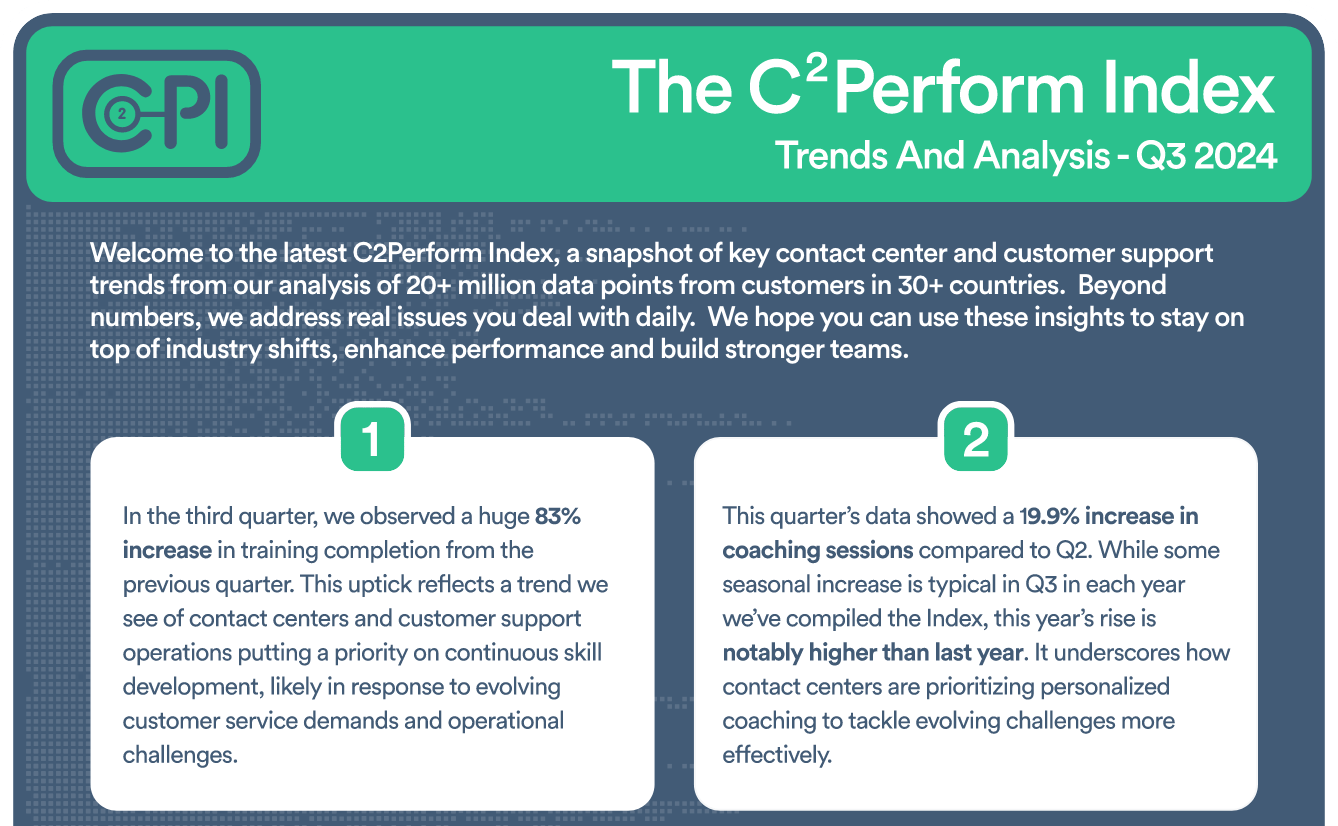
Join contact center and customer support professionals around the world who can’t wait to see the C2PI every quarter.


300 Colonial Center Drive, Suite 100
Roswell, GA 30076
Copyright © 2026 C2Perform. All Rights Reserved. Privacy Policy Acceptable Use Policy