Automated claims processing needs more than workflow automation. Learn the controls that preserve oversight, auditability, knowledge governance, and coaching.
Automated claims processing can remove repetitive handoffs, but automation alone does not create a dependable claims operation. Insurance leaders also need clear decision rights, exception paths, evidence of what happened, and a reliable way to turn quality findings into knowledge updates and coaching. The goal is not to remove people from claims. It is to make routine work consistent while keeping consequential judgment visible and accountable.
Automated claims processing should control the repeatable work around a claim while protecting human authority over exceptions, interpretation, and consequential outcomes. The control model should make each decision traceable, route uncertainty to the right person, and connect operational evidence to knowledge, learning, and coaching.
A workflow can capture information, validate required fields, route a case, and notify the next owner. Those mechanics are useful, but they are not the whole operating model. A claims leader still needs to know what the automation is allowed to do, when it must stop, who can approve an exception, and how the team will learn from a weak outcome.
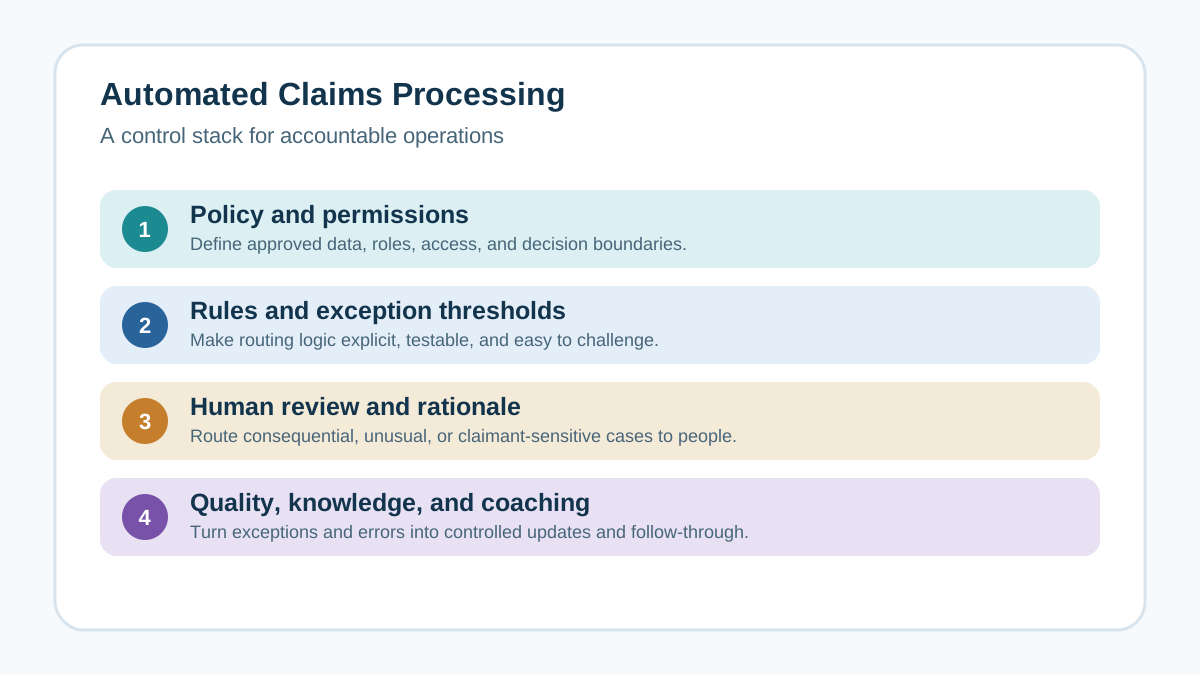
A practical control stack has four connected layers:
Policy and permissions: Define the data, actions, roles, and decisions that the automation may access or perform.
Rules and thresholds: State the conditions for straight-through handling, review, escalation, and pause states in language the business can challenge.
Human review and rationale: Preserve a visible owner for unusual, sensitive, or high-impact decisions, with a record of the reasoning.
Quality, knowledge, and coaching: Turn exceptions, errors, and policy changes into controlled content updates, assigned learning, and targeted follow-through.
A controls-first operating model connects automation rules to human accountability and performance improvement.
This is the distinction between automating a workflow and governing an automated operation. C2Perform's existing quality-first guide to automated insurance claims workflows covers the lifecycle and safe automation decisions. This article focuses on the operating controls that keep those decisions defensible over time.
How do claims leaders assign decision rights?
Claims leaders assign decision rights by separating routine execution from judgment, documenting who owns each exception, and requiring an accountable reviewer when a case falls outside approved conditions. The owner should be clear before a workflow goes live, not discovered after an adverse outcome.
Decision rights should be explicit at the level where work actually happens. A process map may show a handoff, but it does not necessarily explain who can override a rule, who can approve a change, or who must be consulted when evidence conflicts. Use a control register that connects each automated action to a business owner and an evidence requirement.
Control area
Leadership question
Evidence to retain
Routine routing
What may the workflow do without manual approval?
Rule version, inputs used, timestamp, and destination queue
Exception handling
Which conditions require a qualified reviewer?
Exception reason, assigned owner, review action, and rationale
Rule changes
Who can propose, test, approve, and release a change?
Change request, test evidence, approval, and effective version
Customer-sensitive outcomes
When must a person review context before action?
Human decision, supporting facts, communication record, and escalation path
For regulated operations, the register should also identify the applicable policy, jurisdictional requirement, or internal standard. The NAIC property and casualty claims settlement practices model regulation is a useful reference point for leaders evaluating claims-handling controls, although each organization must map its own obligations with qualified legal and compliance advisers.
Keep the register usable. If a frontline reviewer cannot tell whether a case belongs in automated handling, assisted review, or escalation, the control is not operational yet. C2Perform's insurance claims quality assurance framework can sit alongside this register, providing a structured way to evaluate whether the intended behavior is actually occurring.
Which cases belong in a human review path?
Human review belongs wherever context, uncertainty, vulnerability, conflicting evidence, or the consequence of an error exceeds the automation's approved boundary. A review path should be specific enough to trigger consistently and supported by the information a reviewer needs to make and document a decision.
Human in the loop is too vague to be a control. Claims leaders should define the signals that pause automated handling and the service standard for the person who takes over. Common triggers include:
Conflicting policy, claimant, provider, or document information.
Unusual circumstances that do not match the approved decision pattern.
Potential fraud, abuse, or a security concern requiring specialist judgment.
A vulnerable claimant or a situation where communication needs empathy and context.
An adverse, disputed, or otherwise consequential decision that needs an accountable explanation.
A system, data, or knowledge failure that could make the automated result unreliable.
Each trigger should create a complete handoff, not simply move a record to a different queue. The reviewer needs the inputs, the rule or knowledge version used, the reason for the escalation, and a clear place to record the decision. If the handoff strips away context, the organization has transferred the risk without improving the control.
The NIST guidance on human-AI interaction reinforces the need to design the relationship between people and automated systems deliberately. For claims operations, that means giving reviewers authority, context, and a practical way to challenge or correct an automated result.
How do knowledge governance and coaching complete the control loop?
Knowledge governance and coaching complete the control loop by turning a quality signal into an approved content change, an assigned learning action, and a verified behavior change. The loop is strongest when leaders can see which guidance was used, who approved an update, who learned it, and whether performance improved.
Automation is only as dependable as the guidance surrounding it. A policy change, coverage interpretation, or exception pattern can make yesterday's correct handling unreliable. Claims teams need a controlled knowledge process that records who created, changed, and approved guidance, while making the current version visible to the roles that use it.
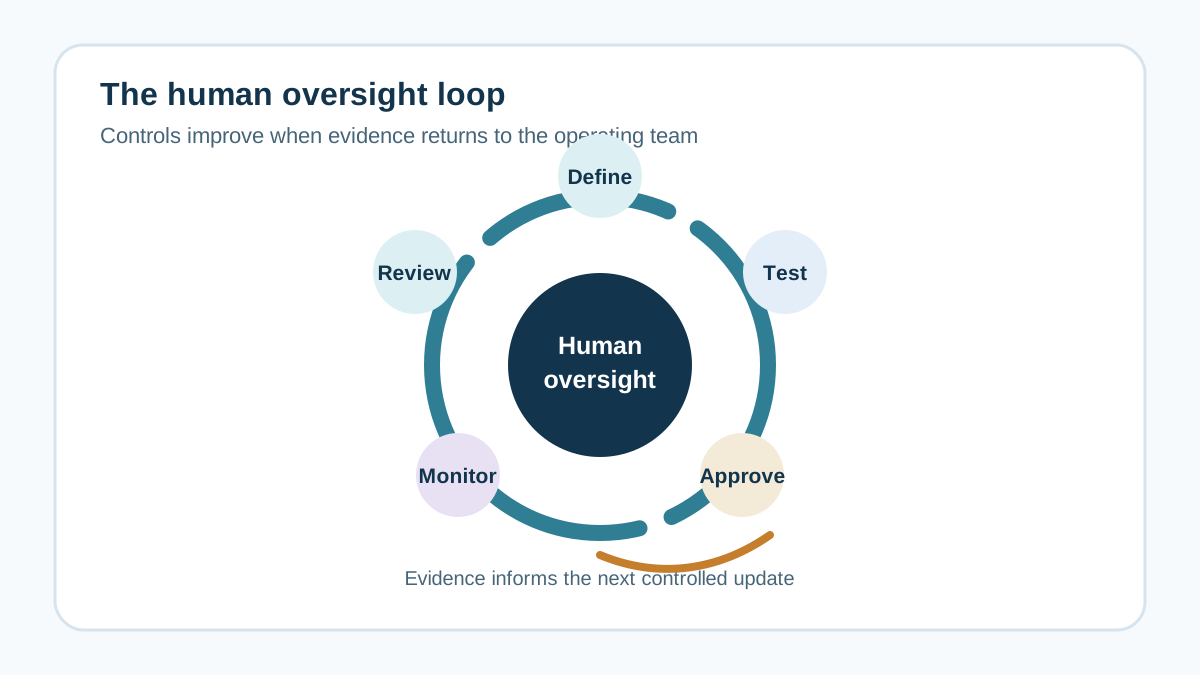
A closed loop connects four actions:
Identify: Use QA findings, reviewer disputes, exception patterns, and claimant feedback to identify a control or knowledge gap.
Approve: Review the proposed rule, guidance, or workflow change with the right operational and compliance owners.
Enable: Deliver the updated knowledge and assign targeted learning or a refresher to affected roles.
Coach: Discuss the behavior or decision with the employee, document the follow-through, and check whether the change holds in practice.
Evidence from claims handling should return to the team through approved knowledge, learning, and coaching actions.
This is broader than interaction analysis or an isolated quality score. Effective coaching considers the whole employee, including role readiness, development, attendance context, and any active performance plan. C2Perform's knowledge management, learning management, and dynamic coaching capabilities are designed to connect those actions instead of leaving quality data in a report.
How should leaders monitor automated claims processing after launch?
Leaders should monitor automated claims processing with a balanced view of flow, decision quality, exceptions, human review, knowledge freshness, and claimant impact. A faster queue is not a successful control if rework, disputes, unexplained overrides, or repeated coaching gaps are rising.
Monitoring should help leaders answer whether the operation is behaving as designed and whether the design still fits current claims work. Review a control dashboard at an agreed cadence, but avoid turning it into a list of disconnected measures. Each signal should have an owner, a threshold, and an action.
Flow: Are claims reaching the correct queue with the required information?
Exceptions: Are exception volumes changing, and are the reasons understood?
Decision quality: Are reviewers finding avoidable errors, inconsistent rationale, or repeat patterns?
Human review: Are escalated cases assigned, resolved, and documented within the operating standard?
Knowledge health: Are teams using approved, current guidance, and are changes reaching the affected roles?
Coaching follow-through: Are identified gaps receiving documented coaching, learning, or refresher content?
Claimant experience: Are communications clear, timely, and appropriate to the situation?
Set a rollback or pause condition before launch. If a new rule produces an unexpected pattern, leaders should be able to stop the affected automation, return work to a controlled review path, and investigate with a complete record. This is not an admission that automation failed. It is evidence that the organization designed a safe response to uncertainty.
What is a practical controls checklist for implementation?
A practical implementation checklist confirms that automation has an accountable owner, a documented boundary, an exception path, a version-controlled knowledge source, an evidence trail, and a post-launch review plan. It should be completed with claims, quality, compliance, learning, and technology stakeholders together.
Define the business outcome and the claim-handling decisions the automation will support.
Document permitted inputs, actions, roles, and data-access boundaries.
Write the routine, exception, pause, and escalation conditions in reviewable language.
Assign a named owner for every decision and every exception route.
Specify the evidence that must be retained for automated and human decisions.
Test normal, unusual, conflicting, and claimant-sensitive cases before release.
Connect approved knowledge changes to targeted learning and coaching actions.
Define monitoring thresholds, review cadence, rollback authority, and the change record.
Review early results with frontline claims staff and update the control model from evidence.
The checklist should live where the operating team can maintain it, not only in a project document. Version history, role-based access, assigned reading, and feedback mechanisms help keep the control model aligned with the work. For a broader operating-model perspective, see C2Perform's guide to claims management operating models.
Automated claims processing uses rules, workflow, data validation, and related technologies to organize repeatable claims work. A well-governed model still assigns people to exceptions, consequential decisions, and cases that require context, empathy, or accountable judgment.
How do you automate claims processing without losing human oversight?
Define what the automation may do, set clear thresholds for human review, preserve the inputs and rule version used, and give reviewers authority to challenge or correct the result. Monitor exceptions and feed the findings into approved knowledge, learning, and coaching actions.
What controls improve automated claims processing?
The most useful controls cover decision rights, access and permissions, exception routing, human rationale, version-controlled knowledge, audit evidence, monitoring, and rollback. Each control needs an owner, a threshold or trigger, and a documented response.
How can claims leaders connect automation quality to employee performance?
Connect QA findings and exception patterns to the guidance employees need, then assign targeted learning and document coaching follow-through. This turns a quality signal into an operational improvement rather than leaving it in a dashboard.
Automated claims processing needs more than workflow automation. Learn the controls that preserve oversight, auditability, knowledge governance, and coaching.
Evaluate claims processing software with practical criteria for workflows, controls, knowledge, learning, coaching, QA, integrations, and operational fit.
Find the best call center coaching software to support agent growth, improve performance, and enhance customer satisfaction with actionable, data-driven tools.

 English
 Español