
 English
 Español
Claims Processing Systems: A Rollout Plan
A claims processing systems rollout guide covering workflow readiness, knowledge migration, role-based learning, QA governance, and adoption.
Read More
employee engagement strategies
Get practical tips on how to improve employee experience, build a positive workplace culture, and support your team’s growth with this simple guide.

Your customer experience will never exceed your employee experience. When your agents are stressed, unsupported, and scrambling for information, your customers feel it on the other end of the line. A frustrated agent simply cannot deliver the empathetic, effective service you expect. The secret to improving metrics like First Call Resolution and customer satisfaction isn't a better script; it's a better environment for your team. When you invest in your people, they invest in your customers. This article breaks down exactly how to improve employee experience by focusing on the core elements that matter most: clear communication, consistent coaching, and meaningful opportunities for growth.
Think of employee experience as the entire story of a person's time with your company. It starts the moment they see your job posting and continues through their last day. It’s everything they see, hear, and feel along the way, from the software they use daily to their interactions with their team leader. In a contact center, this experience is shaped by the quality of their training, the clarity of their performance feedback, and the support they receive during challenging customer calls. It’s the difference between an agent feeling flustered while searching for an answer and feeling confident because they have the right information at their fingertips.
A positive employee experience isn't just about making people happy; it's a fundamental business strategy. When agents feel valued and equipped to succeed, they are more motivated, more resilient, and better at their jobs. This creates a ripple effect that reaches your customers and your bottom line. Investing in your team's journey means providing them with clear guidance through a knowledge management system, supporting their growth with consistent coaching, and recognizing their hard work. Ultimately, a great employee experience turns a high-pressure job into a rewarding career path, which is key to building a stable, high-performing team.
When you focus on improving the employee experience, you’re directly influencing key business outcomes. A positive experience leads to higher engagement, which means your team is more connected to their work and motivated to perform well. This makes it easier to attract and retain top talent, reducing the constant churn that plagues many contact centers. According to research from Culture Amp, companies with engaged employees can be up to 23% more profitable. A better experience translates into higher productivity, lower turnover, and a stronger, more effective team.
It’s easy to use "employee experience" and "employee engagement" interchangeably, but they represent different sides of the same coin. Think of employee experience as the cause and engagement as the effect. The experience is the sum of all the interactions an employee has with your organization, from their training to their one-on-ones. Engagement is the outcome of that experience; it’s how passionate and committed an employee feels about their work. As Gallup explains, you can’t have high engagement without first creating a positive experience.
So, what’s the secret sauce for a great employee experience? It’s not about a single grand gesture or a flashy perk. Instead, it’s the sum of many small, consistent actions that show your team they are valued, supported, and respected. Think of it as the foundation upon which everything else is built. When employees feel good about their work, their environment, and their future with the company, they bring their best selves to the job every day. This positive atmosphere doesn't just happen by accident; it’s intentionally created by focusing on a few key areas.
A truly great experience is holistic. It considers everything from the daily interactions an employee has with their manager to the long-term career path they see ahead of them. It’s about building a workplace where people feel psychologically safe, see opportunities to grow, and have the flexibility to balance their work with their personal lives. It also means creating systems for regular feedback and open communication, ensuring everyone feels heard and appreciated. Let’s look at the core components that make up an exceptional employee experience.
Culture is the personality of your organization, and it’s the bedrock of the employee experience. A positive culture is one where trust and transparency are the default. This means clearly communicating company goals so every agent understands how their work contributes to the bigger picture. When people feel included and informed, they’re more likely to be invested in the outcome. It also involves encouraging feedback from the ground up. Your frontline team has invaluable insights, and creating a safe space for them to share ideas without fear of judgment builds a stronger, more resilient organization. A central Communications Hub can help ensure these important messages are shared consistently.
Nobody wants to feel like they’re stuck in a dead-end job. One of the most powerful ways to improve the employee experience is to show your team they have a future with you. This goes beyond a simple promotion track. It’s about investing in their development through personalized career paths, mentorship, and ongoing training. Providing access to a robust Learning Management system with relevant courses shows you’re committed to their professional growth. When you help employees build new skills, you’re not just preparing them for their next role; you’re demonstrating that you value them as individuals and want to see them succeed long-term.
The idea that work and life are completely separate is outdated. Your employees are whole people with responsibilities and passions outside of the office. Acknowledging this with flexible work arrangements and wellness programs is key to preventing burnout, especially in high-pressure contact center roles. Flexibility doesn’t always have to mean a fully remote setup. It can be as simple as offering different shift patterns or providing resources that support mental and emotional well-being. When you give your team the space to manage their lives, you build a culture of mutual respect and trust, which pays dividends in loyalty and performance.
Waiting for an annual review to give feedback is a missed opportunity. To make a real impact, recognition needs to be timely, specific, and frequent. Acknowledging a job well done right after it happens reinforces positive behaviors and makes employees feel seen. This doesn't always have to come from a manager; peer-to-peer recognition programs can be incredibly powerful for team morale. Likewise, constructive feedback delivered through Dynamic Coaching helps employees improve in real-time. Regular check-ins and a culture of continuous feedback create an environment where everyone knows where they stand and how they can succeed.
Effective communication is a two-way street. While it’s important for leaders to share updates and be transparent about business decisions, it’s just as critical to listen to what employees have to say. Creating a culture where your team feels safe to voice concerns, share ideas, and give honest feedback is essential. This requires leaders to be approachable and genuinely open to different perspectives. When employees feel heard, they feel more connected to the organization and are more likely to be engaged. This open dialogue helps you spot potential issues early and builds a foundation of trust that strengthens the entire team.
A great company culture is more than just free coffee and casual Fridays. It’s the environment you intentionally create, one where your team feels supported, valued, and connected to a shared purpose. In a fast-paced contact center or back-office setting, a positive culture isn’t a nice-to-have; it’s the foundation of the entire employee experience. It’s what keeps your best people from walking out the door and what empowers them to deliver exceptional customer service. Building this kind of culture doesn’t happen by accident. It requires focusing on three key areas: creating psychological safety, fostering a sense of belonging, and setting clear expectations.
Psychological safety is the belief that you won’t be punished or humiliated for speaking up with ideas, questions, concerns, or mistakes. In a contact center, this is absolutely critical. You want agents to feel comfortable asking a supervisor for help with a tricky customer issue, not hide the problem for fear of getting in trouble. This starts with leadership. When managers are open about their own challenges and actively ask for feedback, it signals that it’s safe for everyone to do the same. Fostering this kind of open dialogue through a central Communications Hub can build the trust needed for your team to collaborate effectively and solve problems together.
People do their best work when they feel like they’re part of a community, not just a cog in a machine. Fostering a sense of belonging means making sure every single team member feels seen, respected, and valued for their unique contributions. This goes beyond team-building exercises. It’s about creating an inclusive environment where diversity is celebrated and everyone has a voice. You can use engagement tools to publicly recognize great work or create channels for peer-to-peer shoutouts. When employees feel a genuine connection to their colleagues and the company, they are more engaged, more motivated, and more likely to stick around for the long haul.
Few things are more frustrating for an employee than not knowing what’s expected of them or how their work contributes to the bigger picture. Clarity is kindness. When you establish clear company values and translate them into understandable expectations, you give your team a roadmap for success. For an agent, this means understanding not just their target for First Call Resolution, but why it matters to the customer experience. A strong talent management framework helps connect individual performance goals to the organization's mission, ensuring everyone is pulling in the same direction. This alignment gives work meaning and helps employees feel like a vital part of the company’s journey.
The right technology doesn't replace the human element of work; it enhances it. When your team is bogged down by clunky software, scattered information, and manual processes, their experience suffers. They spend more time fighting their tools than focusing on customers. By thoughtfully implementing technology, you can remove these frustrations and create a more supportive, efficient, and engaging environment for your employees.
Modern performance management platforms are designed to streamline workflows and provide clear, actionable insights. Instead of guessing what your team needs, you can use data to understand their challenges and successes. This allows you to move from reactive problem-solving to proactive support. Technology can help you centralize performance data, deliver timely feedback, and create personalized development plans that show your team you’re invested in their growth. It’s about using tools to foster connection and clarity, not just to monitor activity.
When employee information is scattered across different systems, it’s nearly impossible to get a clear picture of their performance. Coaching notes live in one document, quality scores in another, and training records in a third. This creates confusion for leaders and a disjointed experience for employees. A centralized performance platform brings all these elements together in one place.
Performance management tools allow you to track every aspect of performance and react in real time. With a single source of truth, you can see how an agent’s quality assurance scores connect to their recent training and coaching sessions. This holistic view makes conversations more meaningful and helps you identify trends you might have otherwise missed. It simplifies the process for everyone, giving your team a clear and consistent view of their progress.
The annual performance review is a thing of the past. Today’s employees thrive on consistent, timely feedback that helps them grow in the moment. Technology makes it easier than ever to move away from infrequent reviews and toward a culture of continuous improvement. With the right tools, you can provide immediate, constructive feedback that is directly linked to specific customer interactions.
Real-time coaching and feedback tools allow managers and employees to document and review progress together. Instead of waiting weeks to discuss a challenging call, a leader can provide targeted feedback right away and log it in the system. This creates a transparent record of conversations, tracks progress on goals, and ensures that coaching is an ongoing dialogue, not a once-a-year event. It helps your team feel supported and confident in their roles.
A one-size-fits-all approach to training rarely works. Every employee has unique strengths and areas for improvement. Technology allows you to use data-driven insights to set realistic goals and personalize the employee experience. By analyzing performance data from quality scores and operational KPIs, you can pinpoint specific skill gaps for each individual on your team.
This information allows you to offer tailored skills and development opportunities. For example, if data shows an agent is struggling with a particular process, the system can automatically assign a relevant micro-learning module from your learning management system. This personalized approach is far more effective than generic training. It shows your employees that you understand their specific needs and are committed to helping them succeed in their careers.
One of the most powerful ways to improve the employee experience is to show your team they have a future with you. When people see a clear path for growth, they feel more connected to their work and the company's mission. Meaningful career development isn't just about promotions and new titles. It's about building new skills, taking on interesting challenges, and feeling like the company is truly invested in your personal and professional success.
This investment pays off in countless ways, leading to higher engagement, better performance, and lower turnover. When your best people see opportunities to grow, they're motivated to build their careers right where they are instead of looking elsewhere. The key is to move beyond vague promises and create structured, transparent pathways for advancement. By focusing on skills-based learning, mentorship, and clear progression plans, you can build an environment where employees are genuinely excited to grow with you. It sends a powerful message that you value them not just for the job they do today, but for the potential they hold for tomorrow. This approach transforms the workplace from a temporary stop into a long-term career destination.
Investing in your team's skills is a direct investment in their growth and your company's future. When you give employees opportunities to learn and develop, you're sending a clear message: we believe in you and want you to succeed here. Work with your team members to identify their career goals and map out the skills they need to get there. This could involve formal training, certifications, or workshops that expand their capabilities.
A structured Learning Management system can help you deliver targeted training modules that align with both individual aspirations and business needs. By creating clear learning paths, you make it obvious that the company is committed to helping employees advance. This not only prepares them for future roles but also makes them feel more valued and engaged in their current one.
Employees thrive when they have consistent support and guidance. Mentorship and coaching programs provide exactly that, helping people align their personal efforts with the organization's goals. While a mentor can offer broad career advice and act as a sounding board, a coach typically focuses on developing specific skills to improve performance. Both are essential for growth.
Effective Dynamic Coaching turns everyday feedback into actionable learning opportunities, helping employees build confidence and competence. Pairing newer team members with experienced mentors also strengthens internal relationships and reinforces a supportive culture. These initiatives show you’re committed to helping your team grow, not just tracking their metrics. It’s about providing the continuous support people need to do their best work and build a lasting career.
No one wants to feel like they're in a dead-end job. To keep your team motivated, you need to show them what their future at the company could look like. This means creating transparent career paths with clear criteria for advancement. When employees understand exactly what they need to do to get to the next level, they are more likely to be engaged and proactive in their development.
Start by mapping out career ladders for different roles within your organization. Use regular one-on-ones and feedback sessions to discuss career aspirations and align them with company goals. A Talent management framework can help you track progress and identify internal candidates for new opportunities. When progression feels like an achievable goal instead of a mystery, employees are more likely to stick around for the long haul.
Effective communication is the foundation of a great employee experience. It’s not just about sending memos or company-wide emails; it’s about creating an environment where information flows freely, building trust and alignment across the board. When your team feels informed, heard, and connected to the company’s mission, they are more likely to feel valued and motivated. The right strategies can transform your workplace from a group of individuals into a cohesive, high-performing team that feels genuinely supported.
Move beyond the once-a-year performance review and build a culture where feedback is a daily practice. Consistent feedback loops show your team that their growth is a priority and that their contributions matter. You can establish this by using regular employee surveys, holding focus groups, or simply making space for feedback in one-on-one meetings. The goal is to make employees feel heard and valued. When feedback is timely and constructive, it helps people adjust their performance in the moment. A Dynamic Coaching platform can help structure these conversations, ensuring they are productive and documented for future growth.
Trust is built on transparency. When employees are kept in the dark about company performance, changes, or future plans, it can breed anxiety and disengagement. Make it a practice to share organizational updates openly and honestly. This creates a culture where people feel safe and respected enough to share their own ideas and concerns. Being transparent doesn’t mean sharing every single detail, but it does mean being upfront about the things that affect your team. Using a central Communications Hub ensures every employee receives the same important information at the same time, maintaining consistency and reducing misinformation.
Communication should never be a one-way street. To truly improve the employee experience, you need channels where your team can speak up and know they are being heard. This means actively encouraging dialogue between managers and their direct reports. Use tools and processes that allow for a regular exchange of feedback, like pulse surveys that capture employee sentiment or structured one-on-one meetings. When you foster a collaborative environment, employees feel more empowered to contribute to the organization’s goals. This dialogue is essential for identifying issues early and for making everyone feel like a true partner in the business.
A great employee experience is built on feeling seen and valued. That’s why a thoughtful recognition program is so much more than just a nice-to-have; it’s a fundamental part of making your team members feel appreciated for their hard work. When people know their contributions matter, they are more motivated, engaged, and connected to their roles. This directly translates to better customer interactions and lower turnover, which are goals every contact center leader shares.
Building an effective program isn't about grand gestures or expensive awards. It’s about creating a consistent culture of appreciation where acknowledging great work becomes a natural part of your daily operations. The key is to be intentional. Think of it less as a checklist item and more as a core communication strategy. By focusing on what truly resonates with your team, delivering praise in a timely manner, and empowering everyone to participate, you can create a system that genuinely makes people feel good about the work they do. Using dedicated engagement tools can help formalize this process, making it easy to track and ensuring recognition is shared widely and fairly across all teams and shifts.
Recognition is not one-size-fits-all. While one person might love a public shout-out in a team meeting, another might prefer a quiet, personal thank-you note from their manager. The most effective recognition is tailored to the individual. To figure out what matters most, you have to ask. You can gather this information during one-on-one meetings or through simple surveys. The goal is to understand how your team members want to be acknowledged for their efforts. When you align the recognition with their preferences, the gesture becomes far more meaningful and significantly enhances their sense of value and job satisfaction.
The impact of recognition fades with time. Acknowledging a job well done weeks or months after the fact doesn't have the same effect as immediate praise. To truly reinforce positive behaviors, make recognition a regular and timely practice. When an agent handles a difficult call with exceptional grace or a team member goes the extra mile on a project, acknowledge it as soon as possible. This creates a powerful link between their actions and positive feedback, motivating them to repeat that behavior. Integrating this into your dynamic coaching sessions can make feedback feel both supportive and immediate, strengthening performance across the board.
Recognition shouldn't only come from the top down. Your team members are in the trenches together every day, and they have a unique perspective on each other's contributions and successes. Creating a system for peer-to-peer recognition builds a stronger sense of community and teamwork. It empowers employees to celebrate one another, which fosters a more positive and collaborative environment. You can facilitate this through a dedicated channel in your communications hub, a standing agenda item in team meetings, or a simple kudos board. When everyone is empowered to give praise, appreciation becomes a core part of your culture.
To build a better employee experience, you first need to understand what your team is actually experiencing. Guesswork won’t cut it. Creating consistent channels for feedback is the only way to get a clear picture of what’s working and what isn’t. When you actively listen to your employees, you show them they are valued and gain the specific insights needed to make meaningful improvements. It’s about moving from assumptions to action, turning subjective feelings into objective data you can use.
A strong feedback strategy uses multiple methods to capture a full range of perspectives. Some tools, like surveys, give you a broad overview of team sentiment, while others, like one-on-one meetings, offer a deep dive into individual concerns and ideas. By combining different approaches, you can gather both quantitative data and the qualitative stories behind it. This information becomes the foundation for targeted coaching, process improvements, and a culture where everyone feels heard. A dedicated Communications Hub can help you centralize these efforts, share findings transparently, and ensure no feedback falls through the cracks. Ultimately, gathering feedback isn't a one-time project; it's an ongoing conversation that fuels continuous improvement and shows your team you're invested in their success.
Surveys are a fantastic way to measure the pulse of your organization. You can use annual or semi-annual engagement surveys to gather comprehensive feedback on topics like culture, leadership, and career development. For a more immediate snapshot, pulse checks are short, frequent surveys that can help you gauge employee satisfaction in near real-time. These quick check-ins are perfect for tracking sentiment after a major change or just keeping a consistent finger on the team’s morale.
The key to success with surveys is closing the loop. It’s not enough to just collect the data; you have to share the results with your team and communicate a clear plan of action. When employees see their feedback leads to real change, they are more likely to participate thoughtfully in the future, building a powerful cycle of trust and continuous improvement.
While surveys provide valuable data, one-on-one meetings and focus groups provide the stories behind the numbers. Regular one-on-ones create a private space for employees to share honest feedback, discuss challenges, and talk about their career goals with their direct manager. This is where strong relationships are built and individual needs can be addressed through Dynamic Coaching.
Focus groups bring together small, diverse groups of employees to discuss a specific topic in depth. This format is great for brainstorming solutions to a known problem or exploring different perspectives on a new initiative. The open dialogue can uncover nuanced insights that you might miss in a survey, helping you understand the collective employee experience on a much deeper level.
Some of the most honest feedback comes when an employee is either leaving your company or has no intention of going anywhere. Exit interviews help you understand why people are leaving. Are there recurring themes related to management, workload, or a lack of growth opportunities? These conversations can highlight critical issues that might be causing your best people to walk out the door.
On the flip side, stay interviews help you understand what keeps your employees engaged and satisfied. Asking your top performers what they love about their job, the company, and their team gives you a blueprint for what you’re doing right. This proactive approach is a powerful tool for talent retention, as it helps you reinforce the positive aspects of your culture and make sure your key contributors feel valued.
Improving your team's experience is a fantastic goal, but it’s not always a straight line from A to B. You’re likely to run into a few common hurdles along the way, from tight budgets to teams spread out across different locations. The good news is that these challenges are solvable. It all comes down to having a clear strategy and the right tools to support your people.
Thinking through these potential roadblocks ahead of time helps you create a more resilient and effective plan. Let’s walk through some of the most frequent challenges and discuss practical ways to handle them, ensuring your efforts to build a better workplace culture actually stick.
Let's be real: getting buy-in for new initiatives can be tough, especially when resources are tight. You might face resistance from leadership who see employee experience as a "soft" metric or from a finance team that needs to see a clear return on investment. The key is to build a strong business case that connects employee satisfaction directly to business outcomes like lower turnover and higher customer satisfaction.
Instead of trying to boil the ocean, start with targeted, high-impact changes. A unified platform can help you do more with less. For example, centralizing your internal updates with a Communications Hub ensures everyone gets consistent information, which builds trust without requiring a massive budget. When you can demonstrate small wins, it becomes much easier to get the support you need for bigger projects.
Your team is made up of individuals with different needs, career goals, and work styles, especially in a hybrid or remote environment. A one-size-fits-all approach to employee experience simply won’t work. The challenge is to create a supportive environment that feels personal and relevant to everyone, whether they’re in the office or working from home. This starts with listening and truly understanding what your employees want and need to succeed.
Technology can help bridge the gap. Use tools that allow for personalized development and connection. For instance, a system for Dynamic Coaching helps leaders tailor their guidance to each person's specific strengths and areas for improvement. By focusing on individual growth and providing flexible support, you can build a culture where every employee feels seen, valued, and equipped to do their best work.
In the push for efficiency, it’s easy to lean too heavily on automation and lose the personal connection that makes work meaningful. Technology overload is a real issue, and if you’re not careful, automated processes can feel impersonal and disengaging. While AI and automation can provide incredible insights, they can’t replace the value of genuine human interaction. The goal is to find the right balance where technology supports your people instead of replacing them.
Think of automation as the starting point, not the final destination. For example, a Connected Quality Assurance system can score interactions at scale, but that data is most powerful when used to inform a supportive, human-led coaching conversation. Use technology to handle repetitive tasks and gather data, which frees up your leaders to focus on what they do best: mentoring and connecting with their teams.
Creating a great employee experience is a marathon, not a sprint. Once you've put new initiatives in place, the real work begins: measuring your progress and making sure your efforts stick for the long haul. This isn't about a one-time fix; it's about building a system that continuously supports your team. By tracking key metrics and acting on what you learn, you can create a culture of constant improvement that benefits everyone.
You can't improve what you don't measure. To understand if your efforts are making a difference, you need to track the right metrics across the entire employee journey. This starts with listening to your team through regular pulse surveys and annual engagement surveys. But you should also look at operational data. Are your agent attrition rates going down? Is absenteeism improving? These numbers often tell a story about how your team is feeling. Tracking these changes over time gives you a clear picture of what’s working and what isn’t, allowing you to connect your initiatives directly to business outcomes with the right Engagement Tools.
Gathering feedback is only the first step. The real magic happens when you use that information to make meaningful changes. This is where a continuous improvement loop comes in. It’s a simple cycle: listen to feedback, identify areas for improvement, take action, and then measure the results. For example, if quality scores show agents are struggling with a new product, you can use your Learning Management system to assign refresher training. Acting on feedback shows your team that their voices matter, which builds trust and encourages them to keep sharing their ideas. When employees see their input leads to real change, they become more invested in the company's success.
For employee experience to truly take root, it can't be just an HR project. It needs to be a core part of your overall business strategy. A positive employee experience is directly linked to a better customer experience, which is the ultimate goal for any contact center. When your agents feel supported, valued, and equipped to do their jobs well, it shows in their customer interactions. Define what an ideal employee experience looks like at your organization and align your processes to support it. This means integrating your approach to Talent management, from hiring and onboarding to coaching and development, to create a consistent and supportive environment.
This all sounds great, but where do I even start? Start by listening. Before you launch any new programs or invest in new tools, you need a baseline. The best first step is to gather honest feedback from your team to understand their biggest challenges. You can do this through simple pulse surveys or by making it a focus in your one-on-one meetings. This will help you prioritize your efforts on changes that will make the most immediate and meaningful impact.
Is employee experience just another term for employee engagement? They're closely related, but they aren't the same thing. Think of employee experience as the input and employee engagement as the output. The experience is the entire journey an employee has with your company, including the tools they use, the training they receive, and the culture they work in. Engagement is the level of passion and commitment that results from that experience. You can't achieve high engagement without first creating a positive experience.
How can technology improve something as human as employee experience? The right technology doesn't replace human connection; it supports it. When you use a platform to streamline administrative tasks like tracking performance data or assigning training, you free up your leaders to focus on what really matters: having meaningful coaching conversations and building relationships. Technology provides the data to make those human interactions more informed, personalized, and effective.
Do I need a huge budget to make a real difference? Absolutely not. Many of the most powerful improvements are about culture, not cash. Things like creating a peer-to-peer recognition channel, being transparent with company updates, and providing consistent, constructive feedback cost very little to implement. Start with small, intentional changes to build momentum. Once you can show how these efforts connect to business results, it becomes easier to get support for larger initiatives.
How long does it take to see results from improving employee experience? You'll likely see some positive shifts in morale and team dynamics fairly quickly, especially after implementing things like a new recognition program. Deeper results, such as a measurable decrease in employee turnover or an increase in customer satisfaction scores, take more time to materialize. The key is consistency. Employee experience is an ongoing strategy, and the most significant benefits come from a sustained commitment to supporting your team.
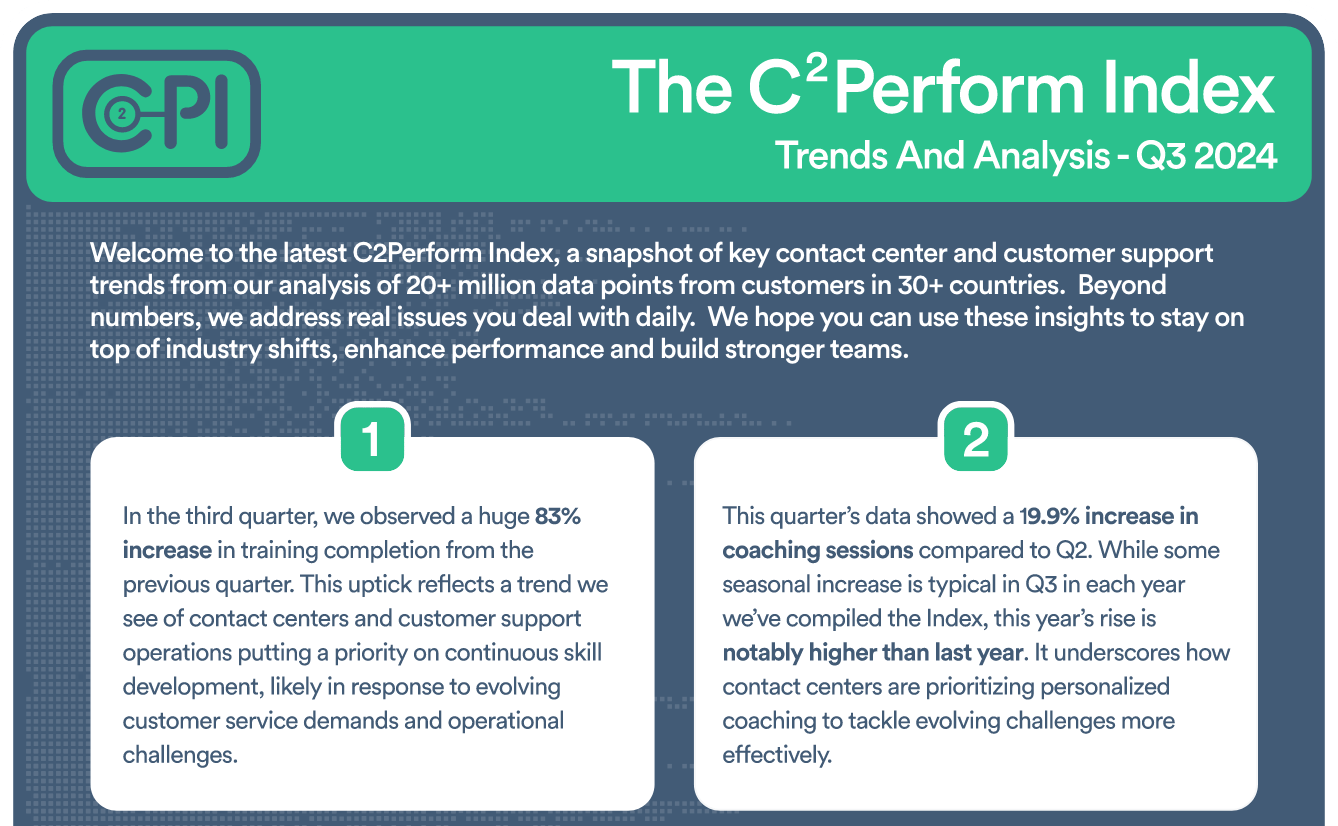
Insightful Analysis on Contact Center and Customer Support Trends

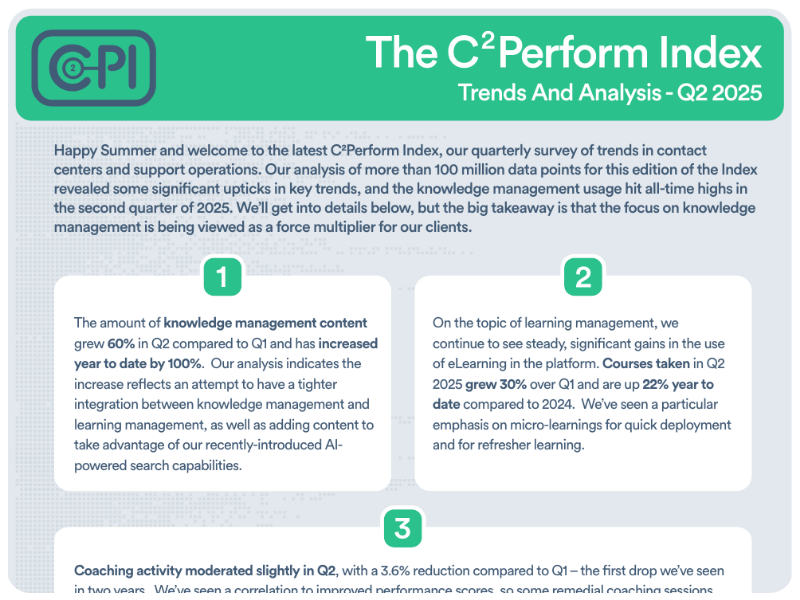
Check out our eBook, New Thinking About an Old Problem

Join contact center and customer support professionals around the world who can’t wait to see the C2PI every quarter.


300 Colonial Center Drive, Suite 100
Roswell, GA 30076
Copyright © 2026 C2Perform. All Rights Reserved. Privacy Policy Acceptable Use Policy